
Years into their relationship, Tim and Millie (Dave Franco and Alison Brie) find themselves at a crossroads as they move to the country, abandoning all that is familiar in their lives except each other. With tensions already flaring, a nightmarish encounter with a mysterious, unnatural force threatens to corrupt their lives, their love, and their flesh.
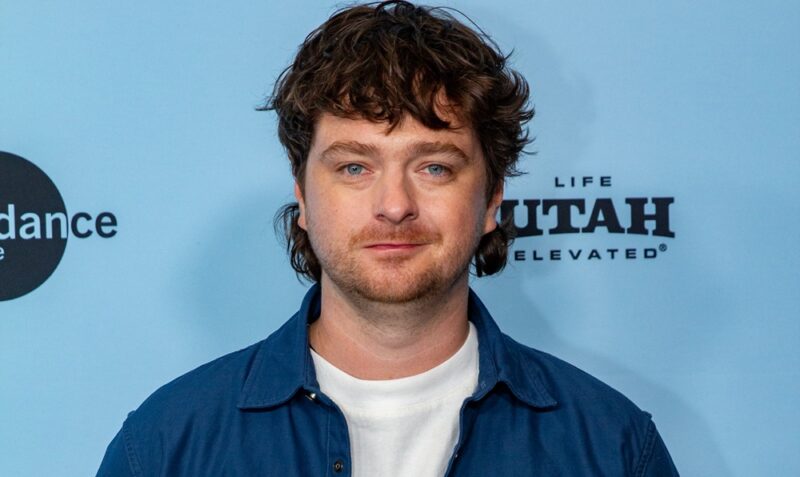
Such is the logline for Together, the directorial debut feature from Australian filmmaker Michael Shanks, who, despite delivering a visceral, oft-gory horror effort, has injected his own life story and relationship experience into proceedings for all audiences to decipher and, hopefully, communally enjoy.
Following rave screening reactions out of both the Sundance and Sydney Film Festivals earlier this year, Together is arriving in theatres across the globe this month (you can read our review here), and to coincide, Peter Gray spoke to Michael about projecting his emotional truth on screen and the benefits of working with a real-life couple as Alison Brie and Dave Franco,
When it comes to something like (Together), which is quite high concept, how do you see it within your own creative evolution? Was it something you envisioned as a storyteller, or did it form on its own as you were writing?
Speaking of high concept, I’ve only ever wanted to make stuff that has a high concept premise to it. Something where you can kind of sum up in a couple of sentences and go, “Oh, I haven’t seen that movie before.” So that was the jumping off point. I thought about people that are in relationships and they’re so intertwined, and what if that sort of commitment became a commitment of not only sharing an emotional life, but a physical life in sharing some flesh. And then from that thinking, I thought it could be a body horror film, which is a genre I love. I thought it would be a lot of fun to explore and really satisfy the genre freak filmmaker in me. But also, I’ve been in a relationship for over 16 years now, met at schoolies and have been dating ever since, basically.
Going through the kind of crucible of falling in love with somebody and beginning to share a life, and also having those anxieties and those fears when you start living together and you realise that I’ve been with this person longer than I can remember. Am I still an individual person? Or is it this thing of I don’t know where I end and she begins? Whilst I already had this kind of top level, kind of absurd, heightened horror construct, what really helped was adding in my own kind of personal, emotional truth and specificity of what it feels like to fall in love and share a life with somebody. And not just from my own relationship, but from relationships of people that I’ve observed. The hope is that this is a film full of crazy horror stuff that’s a fun thrill ride, but, hopefully, if you were to strip out the horror stuff there would be still be a story here of a romantic drama that has emotionally true characters going through this moment of, “Do we hunker down and get closer than ever? Or if this is not working, do we need to split apart?”
When it came to directing and writing something like this, did you learn anything about yourself as a storyteller that surprised you during the process?
During the writing process, actually, before even getting on set, I was surprised at the work…I’ve been in the storytelling profession, I guess, for years, and I’ve always kind of written my own stuff, but it’s always been so ironic. It’s always been so detached and silly and comedic. There’s certainly comedic moments in this film, but I didn’t really realise until I sat down to write this that this was going to be a really personal story. That it had to have specifics from my own experience of relationships to my family and to loss. Even the drug scene, I’ve been prescribed Diazepam so many times, and the more that I got out of my own way and allowed myself to kind of be vulnerable as I was writing it, the better the script got.
It’s such a cliche to say, “Write what you know”, and, obviously, on a top level this is a script that nobody can know, because what happens to these characters is a supernatural experience. But as an emotional experience, it’s coming from a very truthful place. Without giving too my away, we have the runners about the Spice Girls (happening) in the background of the film. But when I was growing up, my older sister was obsessed with the Spice Girls, and she would force me to do dancing competitions with her, but we both danced to the Spice Girls, and then she would decree who was the better dancer. And she would almost always say that she was the better dancer. So, you know, it’s funny when watching this film with audiences, (because) so much of this is coming from my life.
There’s a story early on in the film where Dave’s character is talking about a traumatic thing that happened to him when he was a kid, where his father found a nest of dead rats above the light in his bedroom, and, exactly as described, happened to me as a kid, and it was really scary. We had a family and friends screening, and my brother was sitting two people down from me, and when that story happened I could just hear my brother whisper to somebody, “This actually happened to Michael.” I’m not a very public person, and you put a film in front of, hopefully, millions of people and it’s like, “Here’s all Michael’s bullshit to deal with.”
When it comes to the viewing audience, do you want a polarizing reaction? Do you want your work to provoke discomfort or ambiguity or something visceral? Or do you want it to be more personal?
I think, in terms of the emotional journey and the thematic discussion, it’s been really edifying that people are coming away with, you know, this guy came up to me after a screening saying, “Hey, my wife begged me not to talk to you, but I think this is my life and my relationship.” People are really relating to it. But in terms of just moment to moment, visceral audience reaction, we genuinely really made this movie for an audience with the intention of a wild, fun ride. One of the most amazing privileges of having made this film is that Neon (distributor) have flown me to a few international film festivals to do press or introduce the film, and I’ve seen this in America and Australia, in Mexico and in Italy, and sitting in those crowds they all laugh at the right moments. They gasp at the right moments. It’s really a communal audience experience.
There was one really funny reaction at South By Southwest in Austin. It was a proper midnight screening, so I think everybody was a little bit drunk, but there’s a scene that happens about two thirds of the way through in a hallway, and the scene ends with a fade to black. The whole audience just burst into an applause. That hadn’t happened anywhere else, but put a bunch of drunk Texans in a room and they’ll hoot and holler (laughs). It was great.
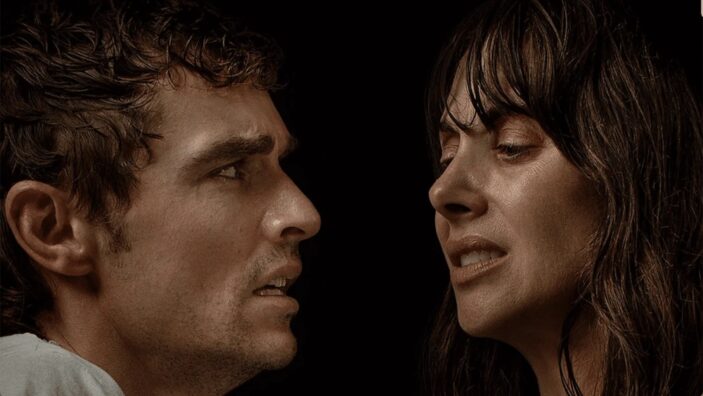
Obviously Dave Franco and Alison Brie being a couple in real-life helps the film. Did you feel their relationship in any way influenced their performances?
They bring a reality and an emotional honesty. But also a historical honesty. These are people that have, as their characters, been together for over a decade. Dave said something really sweet, where he said that he loved acting with or around Alison, because she knows him so well that he can’t be fake. He has to bring his A-game, because she knows him so well, and this film required such vulnerability (from them). Emotional vulnerability and physical intimacy. If we didn’t cast an actual couple, I don’t think we could have done this. We certainly wouldn’t have been able to do with the limited resources we had, because we had such a small budget for this and only a small number of days, and we were jam packing them, because it’s such an ambitious project for the budget we had. If (Alison and Dave) didn’t have a shorthand and weren’t completely connected, including physically…we had days where they were physically connected and would have to go to the bathroom with each other, and you can’t ask actors to do that. But they volunteered and insisted, because they didn’t care and it was the only way it was going to work.
I spoke to Alison a few years ago for Somebody I Used To Know, and it’s hard to find someone more likeable than her. And that obviously helps with (Together), because as much as they’re saying things and doing things we might not necessarily like, we understand them. These are two people that love each other so much that they’re putting up with whatever the other is going through. You want them to succeed as a couple. When you’re pitching this, is there ever any pushback with such an idea? The final shot alone could be too weird for some…
Well, I think that was an advantage of making it is an independent film. We weren’t pitching to studios. We still had to pitch to independent financiers, who have executives and lots of opinions, but because it was so low a budget, and with Dave and Alison’s attachment, it just seemed like a safer gamble. There were changes when we initially pitched to the final product, but the script is pretty much in the same shape. We won’t spoil it, but the final scene you’re referring to, I went back and found my very first draft. Like, my first half draft. It’s only 30 pages long. That scene is exactly as it is in the very first draft, including the camera direction and how it turns to the left and turns to the right. There was just something really instinctual to me about that ending.
I actually think, I don’t know if I’m allowed to say this, but I feel like most films have a great first or second act, and then the third act can be a struggle. I love our first act, but I think the film actually gets better the more it goes on, because we start in this very real place, and it just builds and builds, which is one of my favourite sub-genres of film. Things like Barbarian or the 2013 remake of Evil Dead, where they start in the real world and then there’s chaos.
Going off that, with the horror elements in the film, do you find that easy to execute? You’re writing something and you can envision it in your head…
Honestly? Yeah. I think because I come from a background of real guerilla filmmaking. This is the first time I haven’t edited my own stuff. I do my own visual effects most of the time. I did a lot of the visual effects in this film that as I’m writing the film, I’m drawing storyboards as I go. I know other directors are not built like that, but they have other preferences. But I come from a drawing (point). It’s all a graphic novel.
Together is screening in theatres in the United States from July 30th, 2025, before opening in Australia on July 31st.
