
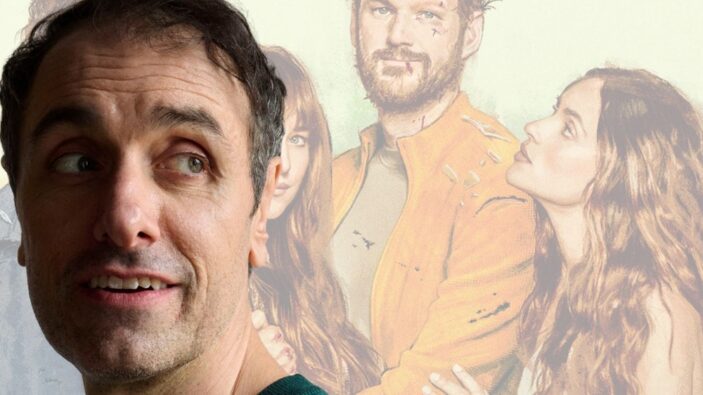
Embracing the “unromantic comedy”, writer/director Michael Angelo Covino assembles one of this year’s finest ensembles for Splitsville, a riotous, emotional dramedy about the perils of honesty and intimacy within relationships.
When Ashley (Adria Arjona) asks for a divorce, the good-natured Carey (Kyle Marvin) runs to his friends, Julie (Dakota Johnson) and Paul (Covino) for support. He’s shocked to discover that the secret to their happiness is an open marriage; that is, until Carey crosses the line and throws all of their relationships into chaos.
Following its rapturous reception out of Cannes earlier in the year, and screenings at both the Sydney and Melbourne International Film Festivals, Splitsville is ready to confront audiences in Australian theatres from September 11th, and to coincide Peter Gray spoke with Covino about what sparked the idea behind the film, being challenged by his cast, and making sure his boundary-pushing comedy always has a sense of truth to it.
Congratulations on Splitsville. I’d love to know what sparked the idea behind this film. Was it the concept of open marriage? The intrusion of a friend? The emotional unravelling? What interested you the most?
There’s a lot of friends, people that (I’m) close with, and certainly the subject comes up a lot lately, and (open marriage) is a point of discussion. Kyle (Marvin) and I know a lot of people who are doing it, or have done it, and have had both positive and negative experiences, and it was never, “We want to explore this subject and really get under the hood of it.” It was more that it was a fun jumping off point for characters who present themselves that they have it all figured out, but at the end of the day, there’s a child-like emotional jealousy (to them) and that comes out.
And I think that’s very relatable. It’s sort of universally understandable. People who present that they are bigger than something and they aren’t. I think it’s a very human thing. So a lot of those ideas were sort of at the kernel of what we were excited about running down. These four characters who are at very different places on this spectrum of jealousy and happiness with the decisions they made and where they’re at and what they want in life. It’s exploring their story in a way where it all intersects and there’s no real judgement.
It’s a very, very funny film, but also discomforting in a way too. It’s just this way this cast is playing it. I will say, that fight scene between yourself and Kyle is quite possibly one of the funniest things I’ve seen. It just kept going! How did you calibrate the comedy when you’re dealing with emotional territory? You have jealousy, boundaries…how do you know where to balance with with the uncomfortableness of that?
It’s actually a tool. It helps (you) go further. I think when you’re rooted deeply in an understandable universal human emotion…it’s like when (Kyle’s character) tells me that he’s had sex with my wife, I turn around and you know this isn’t good. You know I’m not going to process it well, and then it’s just about escalation and how far can this go? It’s all tethered to a deeply understandable human emotion. I feel like we had the latitude to go further with it, right? If that fight scene was just going on and on and on, but we didn’t understand why I was so upset, you wouldn’t buy it. It would get boring really fast, regardless of how funny it is. But because it’s tethered to such a thing that, hopefully, anyone watching it will understand, you get it. He’s not okay. You get it and you like it. So it was actually a learning process for us. We learned about how far we can push the envelope to even more extreme physical absurdity if it’s tethered to deep rooted emotion.
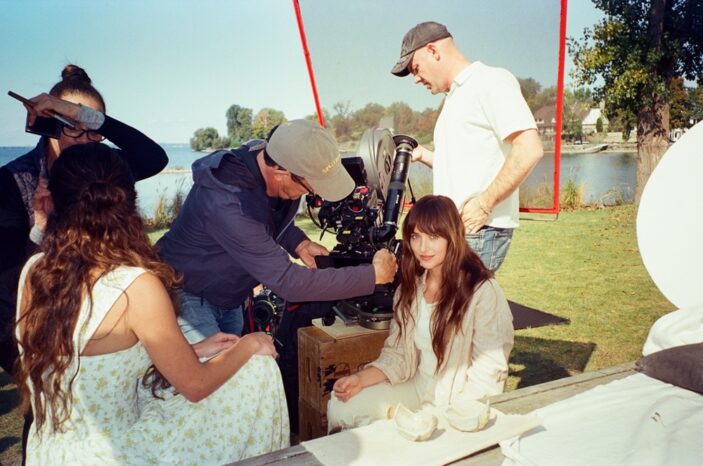
When you’re directing yourself in a role that’s quite emotionally exposed, it’s a character that can be unlikeable at times. How do you stay objective when you’re both in front of the camera and behind it as well?
It’s tough. It depends on the scene. It depends on what I’m doing. But I’m never trying to make likeable characters. It’s about understandable empathy. Characters you can least empathise with, that you can at least say, “Oh, I get why they’re doing this.” And I’ve always found you can go really far with a physical gag if you understand what it’s rooted in emotionally. You can kind of go far with characters and the reprehensible things they do, if you understand the insecurities and what’s broken underneath them, right?
So, for me, my character, I deeply understood that his whole thing is rooted in insecurity. He’s a fucking asshole. He’s not a great guy in a lot of ways. But I love him because he’s trying his best. That’s the fun of bringing together these three dimensional characters. They present this way, but there’s actually this element to it and it all rounds out. I don’t get scared of that on the performance side. I think it’s always really the directing component of it. It’s always a logistical thing, because you have a certain number of days and you’re trying to get through your days, and you have to jump around from one thing to the other. That’s the toughest part.
Looking at male insecurity and emotional avoidance. Do you see Splitsville as something of a spiritual cousin to your previous film The Climb in any way?
Sure. There’s very clear similarities. I think it’s taking themes and elements from that film and just leveling them up. Maybe not leveling them up, but exploring them. If The Climb was a bunch of grown-ups who were really just children flailing, then (Splitsville) is a bunch of grown-ups who are really trying hard to make sure everyone knows that they’re grown-ups, but they’re still children. It’s another layer of, “We really have it figured out. We’re evolved and we’re here.” It’s a bunch of people talking about the ways in which they can avoid these basic, primal feelings.
And looking at the reactions to the film from different audiences. Obviously that sight gag at the beginning is pretty great, and I imagine European audiences at Cannes don’t see that nearly as taboo as an American audience?
Oh, it’ll get a big laugh with the American audience. I think a dick joke is a good dick joke no matter where you are (laughs).
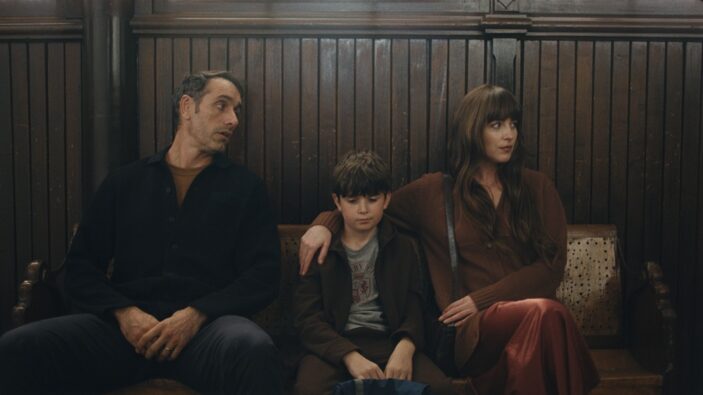
And if we’re talking about big dicks, you have your long time collaborator Kyle Marvin here. But in casting Dakota Johnson and Adria Arjona, they would bring an energy into your ecosystem. How did they challenge you as a director and a scene partner?
I think they greatest creativity comes out of friction, so I don’t think if someone isn’t pushing to make the movie better and to make their work better, then we’re a little passive. I don’t know if that’s the best thing, so I find that all the best actors that I work with push really hard for their characters and their scenes and what they think might align with me perfectly, and it’s great we just keep adding to each other. It might create friction, and create a little bit of push and pull, (but) that’s the beauty of collaboration. Dakota had very strong opinions about the character, and she really understood her and brought the character life in helping us crafting the story to cater to her view of how her character would play it.
And Adria, very similarly, really embraced playing this off the wall character. She always wanted to push it further. I was like, “Fuck yeah!” If she has confidence that she can stick the landing on some of those things, that gets me excited, because you write it and you know some crazy shit is going to happen, and you could talk to an actor and not know if they can do it. There’s actresses like Adria who knew what her character would do, because these people exist in real life. That gets me excited, and that’s the point of cinema. That’s the point of making these movies. To fucking have fun with making things that are wildly entertaining, that we can see ourselves in, but also how much we prefer not to have this as our life, you know?
On the mention of casting, I got to shout out Charlie Gillespie. I saw a movie earlier in the year called Suze, and he is phenomenal. He plays the himbo so well!
I’m putting him in everything I do!
But all the casting was incredible, and this really is a prime example of the types of movies that need to be made. The fact that it’s going to the big screen makes me happy in the current climate, so congratulations again.
Awesome, Peter, that makes me happy that it makes you happy. And I agree. I remember when we finished the movie, I thought, “Why the hell aren’t movies like this being made?” I guess you could call it a screwball comedy in some ways, but it’s off the rails, and a little unhinged in certain moments, and it’s intentionally crazy, right? I grew up where these movies were in theatres. Maybe not the sex comedy, but movies that were constantly shocking you, surprising you, making you laugh. I hope the movie does well, but even if it ushers in just the slightest bit of inspiration for movies like this to be made. As an audience member, I’d be stoked.
Splitsville is screening in Australian theatres from September 11th, 2025.
