
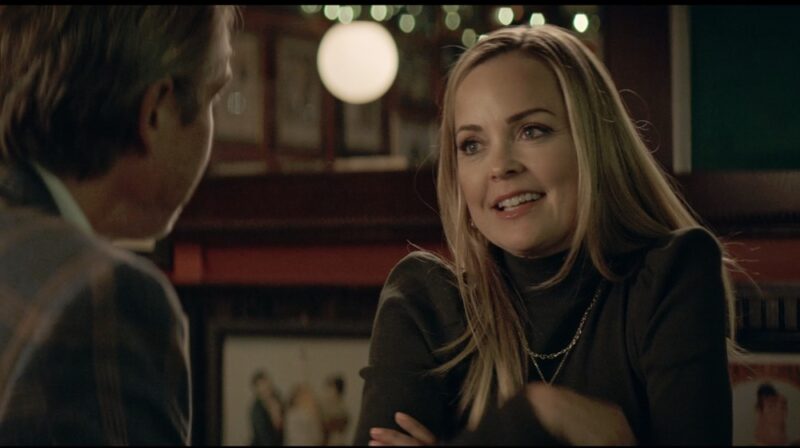
When Jane Messina returns home to visit her two sisters and her ailing father, she’s forced to re-evaluate her life, and to wonder what could have been.
Blue Eyed Girl is a coming-of-age story at forty-something, not fifteen. It’s about midlife and marriage, chasing dreams, letting go of regrets, and most of all, reconciling who you are with who you thought you might be.
Written, produced and headlined by actress Marisa Coughlan, Blue Eyed Girl is her love letter to the place she calls home, and the father she lost too soon.
As the film arrives on Digital and Demand in the United States, Peter Gray spoke with the multi-hyphenate about creating such a personal piece of art and releasing it into the world, the conversations with her father the script made her revisit, and trusting that the more niche a story, the more universal it proves to be.
I’m very excited to chat with you, because as a gay man who had taste at 15-years-old, Teaching Mrs. Tingle was everything! And your performance in that was incredible.
Thank you. Well, thank God for that movie, because the director of Super Troopers cast me because he saw me do that exorcist scene, and now we’re on our third (Super Troopers). A lot of good things came from that movie, so thank you. I appreciate that.
Well, I want to congratulate you on this film. Not only leading it, but producing it and writing. We love to see women being able to tell stories. I’m going to get the emotional stuff out of the way first, because I lost my father when I was very, very young, so I felt an immediate connection to that thread in your story. I wanted to ask, when you were writing those scenes of Jane returning him, caring for him and revisiting everything, do you find almost speaking to your dad through the script in some way?
It’s weird, because I wrote it kind of like a stream of consciousness. I’d get up early and just write, because I’d come back to Minnesota, and all of a sudden it was like this flood of memories of things I did with my dad, and conversations we had. I just wrote. I didn’t outline. I’d put it down, and then I picked it back up a few months later. I’d close it and I cried. Not because it was so moving, but it was like I got to have a conversation with my dad. I didn’t realise how much of him I’d remembered and put subconsciously into there.
The story is loosely based on my life. I don’t have sisters, but it was my dad, and I do miss him a lot, and coming home here, I’d lived in LA for so long, that coming home just brought it all back. Writing (the script), it was strange to kind of connect with him again, in a way.
The movie is a coming-of-age story, but you’re in your 40s. It’s such a refreshing concept. What do you think we learn about ourselves in midlife that we couldn’t have possibly understood in our 20s, no matter how hard we tried? Do you feel there’s something that you knew you had to wait to this age to learn?
That’s a really good question. What I find being this age is that I am saddened by how many people around me are giving off “give up” vibes. They’re 40, and they’re like, “It’s over!” They didn’t get to where they wanted to do, and now they’re just going to roll over and die? You could live until you’re 90! I don’t know. Being this age, I lean as much as I can towards the people who think their life is just getting started. This movie, it mirrored my life in so many ways. Obviously I wrote it, but when I was in LA I felt stuck, and then writing this sort of unblocked me and it made me start my next chapter. It was this kind of Russian nesting doll of things. But, it’s a tricky age. Whether it’s your romantic life, or you don’t have kids, or you’re not where you thought you’d be career-wise, it’s really easy to get discouraged and lose your momentum. I hope, on some level, people watch (this movie) and come away from it thinking, “Maybe I don’t need to roll over and die. Maybe there’s a next chapter that looks different in my marriage or in my career.”
I liked how the film explored that space between what could have been and what still can be. Did writing the story change your own relationship with regret and acceptance in any way?
Our business is so strange, because it’s so easy to be like, “Oh, if I had taken that job instead of that job, where would it all have gone?” But everything plays out for a reason, and all you have is agency over what’s next. You learn throughout the movie, as her dad kind of talks her through, it’s really easy to look and to wonder what could have been. All those things look shiny and perfect, but everything has its ups and downs. That’s one of the biggest takeaways for me at this age, that I could waste my time regretting or I could think about all the good things that came because I didn’t take that job. Or I went left when it could have gone right.
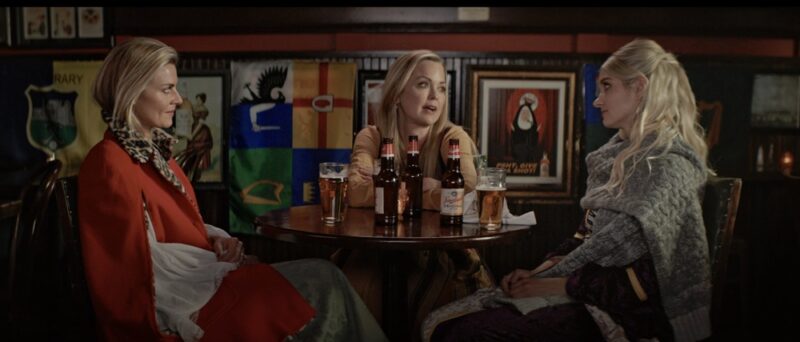
Yeah, it’s like when Eliza Coupe’s character, Alex, says that she’s on her third marriage, but the first was the best one. Your character reconnects with an old flame, but it makes you realise that your marriage is actually good. I liked that it was showing you the grass isn’t greener on the other side. Some things are hard, but you got to work through them, and it’s ultimately what’s best for you. And on the mention of Eliza, she’s so great in this! The quips between you and her felt so organic. Did you write that sisterly dialogue specifically? Or did you kind of improv and let yourselves just see where the conversation went on its own?
Good question. I mean, most of it was scripted. But Eliza is so naturally funny. There’s the scene where Bridey’s character (Cici) starts to cry, and I tell her that she can’t do that in front of our father, so Eliza says something like, “I saw a jello cart in the hallway,” and it’s stuff like that that’s pure Eliza. You don’t want to ever cut anything she says, because she’s so naturally funny. We ended up keeping a lot of Eliza’s one liners.
With this film, you’re showing how much of a creative life you’ve lived. Actor, mother, writer, producer. Were there moments during this film where you felt like you’re almost meeting yourself again for the first time?
Actually, this week, I feel like there’s so much energy going all of a sudden. We’ve been in post-production, and you’re mired in editing and music, and all these things, you sort of lose perspective on what you’re doing. Now, we have this finished thing that’s going out into the world, and I kind of can’t believe it. We finished this thing and it’s tied up in a bow, and it’s going out into the world. It’s a really wonderful moment. It’s easy as a creative person to be bogged down with fears and insecurities, and for a long I was just an actress, and then I was an actress and a writer, but then I wasn’t considered as an actress when I became a writer. It’s like they stopped remembering I was an actress. Like, “I did a show for you a year ago, and now you won’t cast me in this new show?” It’s like you’re always being pigeonholed. In a lot of ways, it’s fun to put on all the hats at once. I didn’t have a studio over my head or anyone else’s creative imprint. (This film) was really just our team, and what we wanted to make. It’s incredibly gratifying to be honest.
Given that you are writing from such a personal experience, how did you know when the story was ready to be shared? Is there a moment it stops being yours alone and belongs to everyone?
I truly wrote this as a sort of therapy, and then I didn’t touch it, because I’ve mostly written (television) in the past, and I’d never written a feature. I just sort of sat on it, and I didn’t really show it to anyone. And then Mills Goodloe, who ended up directing the movie, we were working on something, and he asked if I had ever written a feature. I told him I had written one, and because we were friends, and I trusted him, I showed it to him. He asked why I had never shown anyone, and because it was so personal to me. But it was only then that I found out that it was relatable. It really tracked for him. It didn’t matter that it was a female lead. So I started showing more people, and I realised a lot of people related to it. I think the lesson I learned as a writer is the more painfully honest about your own specific, niche experience, the more universal it becomes, which is weird, but true. If it’s general, no one cares. If you get to the nitty gritty of how you feel and you get to the part that hurts, it feels like people are like, “Oh, yes. I’ve felt that.”
And you’ve worked with so many incredible collaborators across television and film. What surprised you the most about producing and leading your own story? Were there new parts of yourself that you unlocked?
I really enjoyed the post-production process. As an actor, you’re sort of a cog in someone else’s wheel. Right? You stand on your mark, you do your thing, and then you never really see it again until it’s done. In doing all this, I can actually make choices about the edits, and to see how much creative power there really is in the post-production process was kind of mind-blowing to me. There might be a performance that’s uneven, but you can see if you can carve into something that can really sing, you know? That was really fun. I feel like I’ve learned so incredibly much. It’s like I went to 10 film schools at once. Putting this out in the universe, I will definitely do this again.
Blue Eyed Girl is available On Digital and On Demand from November 21st, 2025 in the United States.
