
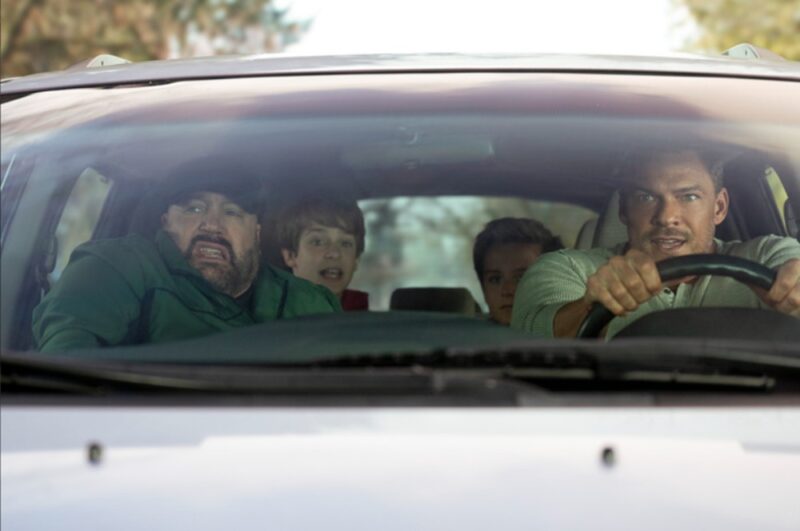
When recently unemployed accountant Brian (Kevin James) agrees to a playdate with charismatic stay-at-home dad Jeff (Alan Ritchson) and their sons, he expects an easy afternoon of small talk and football tossing. Instead, he’s thrust into a chaotic scramble to stay alive as they are pursued by a ruthless team of mercenaries. Brian stumbles through one ridiculous obstacle after another, his zero tactical skills a stark contrast to Jeff’s oddly prepared demeanor. Safe to say, this is one Playdate neither will forget!
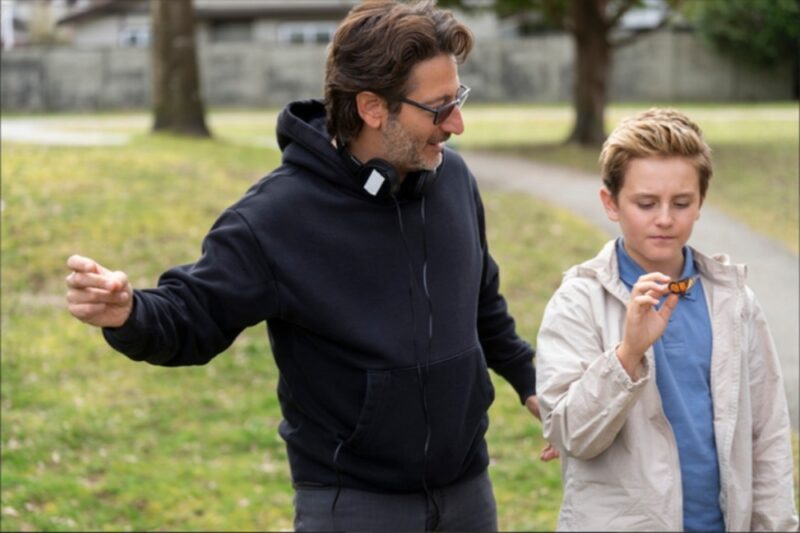
Director Luke Greenfield (Let’s Be Cops, The Girl Next Door) hilariously collides suburban dad life with high-stakes thrills, transforming an ordinary afternoon into an absurd action-packed adventure where minivan mayhem meets professional hitmen. And as Playdate arrives to stream on Prime Video, Peter Gray spoke with the filmmaker about merging spontaneous comedy and emotional resonance together, what he hopes audiences will take away, and the joy he had in changing people’s perception of star Ritchson.
First of all, I’m very happy that you have given Alan Ritchson the opportunity to let his comedic freak flag fly here. And I know you’ve said before that you love stories about ordinary people that are caught in extraordinary situations. What made Playdate feel like the right canvas for you to push that idea further? And what surprised you about how far you could go?
It’s a great question. I normally write my own movies in the past, but this script came to me, and Neil Goldman, this fantastic writer, asked me if I wanted to direct it, and I just loved the idea of it. There was a great opportunity here to really bring some pathos and some heart, and to really not just made this a straight comedy, but to make something relatable in regards to what makes a good parent, and do we feel we’re good parents. Kevin (James) really embodies that. He’s the relatable person dealing in a situation with Alan, who plays a nutcase in this movie, and I’m really glad that you were excited about Alan, again, showing the world what a comedic genius he really is.
We had wanted to work together a few years back, and as soon as I got the script in good condition with Neil, we sent it to (Alan) right away. I’m like, “This is the guy.” Most people today know him as Reacher, and I knew this other side of him, and Alan would even turn to me on set and be like, “God, I haven’t done this in so long.” He hasn’t had the chance to go nuts and be him, you know? And we always talked early on about acting as if he was a 14-year-old kid. And the world really doesn’t know yet how unpredictable this film is, because it definitely goes to places that (no one) will see coming.
Yeah, I’m going to call BS on people who think they predict where this goes! And, you know, Kevin and Alan are such a visual and tonal mismatch. The anxiety of one, the invincibility of the other. Was there a particular moment during shooting where you realised their chemistry was locked in? “We have a movie now!”
Great question. The park scene, that whole football scene, that’s where I was just giddy. I was laughing. I was breaking takes, Peter, I was. You could hear me laughing in the background. When they’re playing football, I said to them that that was the movie right there. It was gold. And they knew it. Actors can feel it, and from day one they had chemistry. They’re pros, but when we were shooting that scene, I was just very proud of what we were getting in the park. It really does surprise people.
Look, there was a part of me that wouldn’t hate Alan Ritchson staring into my eyes the way he does Kevin. But in that scene, there’s a shot where Alan stands up and briefly loses his balance. It’s hilarious, because it sort of humanizes this absolute superhuman. I wanted to ask was that a happy accident? Or was it something you encouraged him to break the illusion of perfection?
That was totally a happy accident, completely and utterly. The way we did this movie was very spontaneous and we played with things, and Alan is fantastic at that. Alan can do anything. And I think this movie proves it. There are scenes that are really going to take people by surprise, because they’re sad. When he visits his father, that’s not funny. It’s very hurtful. And growing up on movies like Midnight Run, that really go into that territory and make you laugh out loud, I think that’s what a movie should be, right? You should get everything.
More broadly from that, do you look at those unplanned life-leaking-into-the-frame moments in your comedies, those imperfect gestures that make it all real, as something to encourage?
Accidents are the best. They really are. Being a writer on all my other films, you see it one way, but then you have to sit back, and because the accidents and the things that are unexpected are always the best. There’s so many lines in this movie that I just started laughing. Like, there’s a line from Alan in the kitchen when they’re talking about his deceased wife, and he all of a sudden says, “Oh, it’s okay, she was going to die anyway.” I think Alan looked at me like he thought it was in the script, and I said that it wasn’t, but it’s one of my favourite lines in the movie.
As you said, there’s a lot more to this film, because on the surface we’re seeing this movie about two dads dodging mercenaries. Underneath there is this theme of male loneliness and how men connect through chaos. How conscious were you of exploring that emotional layer?
Extremely conscious. I truly believe that you have to touch people and audiences and hit home to them, because then you care and root for these characters. It’s not just balloon animals. It’s more of a movie, and it’s an experience. In showing the movie all over the country right now, it’s really hitting home with a lot of people. There’s this concern of “Are you the best parent you can be? Are you screwing up your kid?” You know, not making the same mistakes as your dad, and the challenges of being a stepfather. We really wanted to go there.
And before wrapping up, do you see this film as a love letter to one part of modern life, friendship, fatherhood, or suburban absurdity?
All of it, for sure. I think fatherhood. I think the journey of these two guys trying to connect with their kids, that’s really what (it’s about). The real emotional challenge is them caring most about connecting with their kids. That big hug at the end between Alan and his kid, that got such a big cheer at the screening. Audiences are invested. They’re invested in these kinds of relationships. And if you bring authenticity, if you mold that into the movie and bring a real personal story, you get real emotion.
Playdate is now available to stream on Prime Video.
