
Inspired by Adam Baldwin’s song “Lighthouse in Little Lorraine”, and based upon on a true story of a cocaine smuggling ring that ran through the eponymous small Nova Scotian town in the 80s, Little Lorraine is a harrowing dramatic thriller that served as one of the prime Canadian spotlight titles at this year’s Toronto International Film Festival.
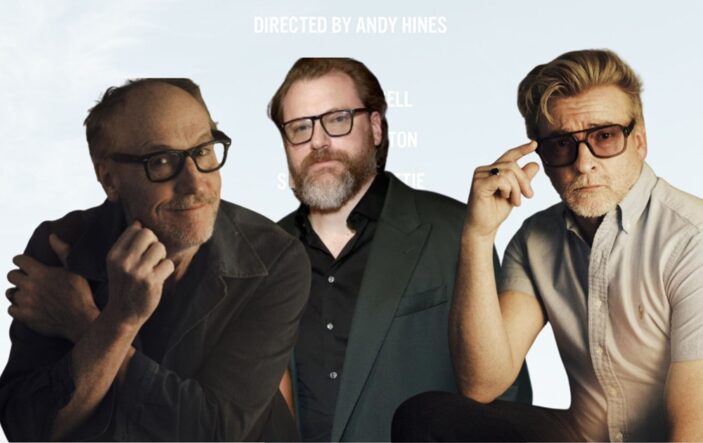
The debut feature film from predominant music video director Andy Hines, Little Lorraine brings together a strong universal cast of musical talent (J Balvin making his film debut), local Canadian names as Stephen Amell, and international stars, including Matt Walsh and Rhys Darby, who, along with Hines, spoke with our Peter Gray on the ground in Toronto following the film’s premiere, touching on the importance of authenticity and who surprised them the most when working together.
There’s a universality in stories about people who think they’re making a small compromise, but they’re getting in much deeper than they expect. Was that something that resonated with you personally at all?
Matt Walsh: I mean, for me, unfortunately I think of this, and it’s not relevant but I’ll share it. Sometimes you’re in a relationship where you stay in it too long. You know what I mean? You fall in love and that’s good, and then you see things, and you’re like, “Oh, I don’t know (about this),” but you’re in too far…It’s human nature to feel guilty to step away, or it’s hard to step away from anything. So, I think that is built into our humanity.
Andy Hines: I think that feeling you’re describing is a shared feeling, whether it’s a small thing like you said yes to going something you didn’t want to go to, and then you were there and you don’t want to be. The feeling is the same, it’s just expanded emotionally. But the feeling is, “What have I done? I shouldn’t be here. I don’t want to be here. And I can’t leave.”
And Andy you’ve got a music video background. With that sensibility, how did you feel that was deepened within the structure of filmic storytelling?
Andy Hines: I’ll give Matt and Rhys some context too, music videos tend to be either performance, like the band is playing, or it’s storytelling. Usually, music video directors sort of do one or the other. I’ve always wanted to do both. I’ve really always tried to do a lot more narrative work in my music videos, specifically because I was wanting to experiment with storytelling in a five minute maximum. That was a really great way to practice my big dream of doing long form storytelling.
You’re working with actors and musicians in this ensemble. Was there anyone who surprised you the most, in terms of being funnier than expected, or unexpected depth? Something that took you aback?
Andy Hines: All of them, because I hadn’t worked with any of them (before). The only person that I had worked with was not an actor. J Balvin, not an actor, right? He was the only person in the cast that I had ever worked with. There were special surprises with everyone, (and) that was a gift for me. And so many great relationships have been forged out of this cast, and working with people like Matt and Rhys, these are great friendships that will be lifelong.
Matt Walsh: Yeah, all my scenes are with J Balvin. And for an international pop star he’s surprisingly grounded and vulnerable. That was really interesting to me. And then a couple of disappointments (gestures to Rhys), people who create boundaries (laughs).
Rhys Darby: They say don’t work with your heroes (laughs). I know I was a disappointment for (Matt). But my character was based on a boat the whole time, and this dope here (gestures to Matt) never got quite time to spend (with me).
I know the dialect coach mentioned how everyone deeply got into the specific accent. With you, Matt and Rhys, having an improv background, what was the most surprising thing to discover about the East Coast language?
Matt Walsh: It was just specific vernacular. Like, “Jesus, Mary, Joseph,” is something we threw in there. Very maritime. I think it was just about being immersed. Everybody who populated our crew, and many of the actors, it was all about absorbing them.
Rhys Darby: You never know who you’re working with too. Like, my character is technically a baddie, but he’s kind of a real tough henchman. Those are the vibes. In reality, he’s just a really cheeky, fun guy. I just want to find the true essence of a person and pull that through their character, because then I think you’re going to get a really good, authentic character. He has a glint in his eye. He has a good sense of humour.
It all ties into authenticity. This is a movie that’s very steeped in place. The water, the accents, the working class struggles. What did you feel most responsible for in getting right about Cape Breton life?
Andy Hines: I think the accent really kept me up at night. It was the one thing that was so specific. And not everybody stays in it on their days off, right? So it’s really about maintaining that authenticity through all the scenes. People that have seen Robin Hood: Prince of Thieves with Kevin Costner are aware certain things can happen if (authenticity) is ignored (laughs).
Rhys Darby: Wait, what do you mean?
Matt Walsh: Is he doing a British accent?
Andy Hines: Sometimes (laughs). It’s actually really worth watching. It’s a great film. But he’s just straight up doing a handsome American dude in the woods in England for a lot of the film. It sort of feels like someone said, “Oh, Kevin, can you get back (to the accent)?” And he said, “Not today. Not feeling it.” It’s keeping stuff like that together, because it can really knock your audience out. (But) this is such a great story, and we really want to bring people into it and keep them there. So keeping attention to the details (is important).
The Cape Breton humour, Rhys, how comparative do you feel it is to New Zealand humour?
Rhys Darby: I think there is an overlap. When I think of New Zealand, we’ve got a real sea situation. We’re surrounded. We’re islands, we’re big islands, but we’re islands. We have mining towns, especially down on the South Island, and we have ports, so there’s an overlap in terms of that. We don’t have a sea shanty kind of thing going. We don’t have the musical stuff that Cape Breton has. But I definitely think there’s a sort of slight maritime humour. We’re more about getting out on the water, as opposed to fishing the shit out of it.
Little Lorraine screened as part of this year’s Toronto International Film Festival, which ran between September 4th and 14th, 2025.
