
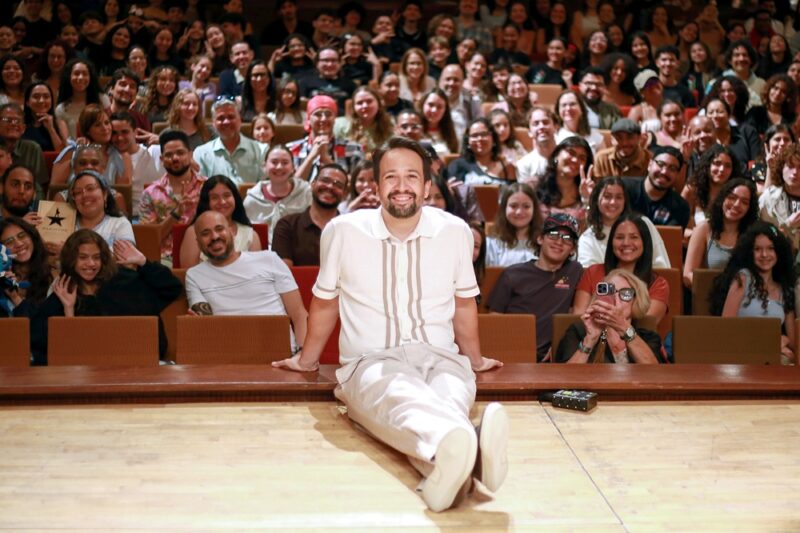
Ten years after audiences first sailed beyond the reef with Moana, Lin-Manuel Miranda has returned to one of the defining works of his career – not because the songs needed rewriting, but because the story deserved to be experienced in an entirely new way.
The Pulitzer Prize, Tony, Emmy and Grammy-winning songwriter, who penned the original film’s unforgettable soundtrack alongside Opetaia Foaʻi and Mark Mancina, has reunited with longtime collaborator Thomas Kail for Disney’s live-action reimagining. While the new film introduces just one brand-new song, “Along The Way”, Miranda insists that restraint was always part of the plan.
“I didn’t want to add songs just for the sake of adding songs,” he explained during a recent global press conference. “In fact, the only advice I gave Tommy in my role as producer was: make the movie less than two hours and you win.”
Instead, the inspiration for the film’s lone addition came from something neither version of Moana had ever possessed before.
“There are only two women in the world who know what it’s like to actually be Moana.”
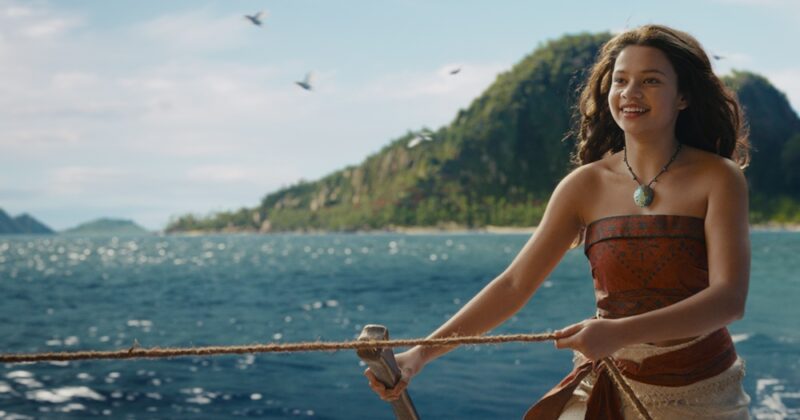
That realisation – from director Kail – sparked the idea of creating a musical conversation between original animated star Auliʻi Cravalho and newcomer Catherine Lagaʻaia, who assumes the role in live action.
“As soon as Tommy said that,” Miranda laughed, “‘Shut up, hang up the phone, I’ll call you in a week with the song.'”
For Miranda, revisiting Moana never felt like reopening an old project because, in many ways, the film never left.
“It still sits near the top of streaming charts around the world,” he said. “There’s not a week that goes by where someone doesn’t send me a classroom singing Moana or a school production of Moana Jr.“
That continued life has given the songwriter a unique perspective on the legacy of his work.
“My kids are actually my beta testers,” he smiled. “They wander into my office while I’m writing. If I catch them humming one of the songs later, I know I’ve got something.”
His youngest son recently provided perhaps the ultimate seal of approval.
“He came home from school and said, ‘Daddy, it was so hard not to sing your song today – it was stuck in my head.’ I thought, ‘Okay… this one’s ready.'”
For someone whose catalogue includes Hamilton, In the Heights, Encanto and Mufasa, songwriting rarely begins with melody.
“It starts with the culture,” Miranda explained.
He describes every project as an opportunity to immerse himself in a different part of the world, crediting his collaborations with cultural experts – particularly Samoan musician Foaʻi – as the foundation upon which every lyric is built.
“My two biggest tools are research and empathy.”
Research provides the historical and cultural framework; empathy allows him to step into a character’s shoes until the emotional truth emerges.
That philosophy shaped one of Moana‘s most beloved songs, “You’re Welcome.” Although the song’s swagger emerged almost instantly once Dwayne Johnson was cast as Maui, the lyrics themselves were carefully constructed from authentic Pacific Island stories surrounding the legendary demigod. “His brags are all deeply based in research,” Miranda said. “Every one comes from myths that differ from island to island.”
It’s a process that reflects something larger than songwriting. Every Disney project, Miranda says, gives him what he jokingly calls “a passport to the world.” “I’m such a New Yorker,” he laughed. “I wrote a whole musical about never wanting to leave.”
Yet through Disney he has explored the Pacific Islands, Colombia, Africa and beyond – journeys made possible through extensive collaboration with cultural trusts assembled for each production. Those partnerships, he believes, become even more important in live action. “The responsibility is greater,” he said. “The difference between an animated film and this version is that now you have hundreds of Pacific Islanders on screen representing their own culture, ancestry and heritage.”
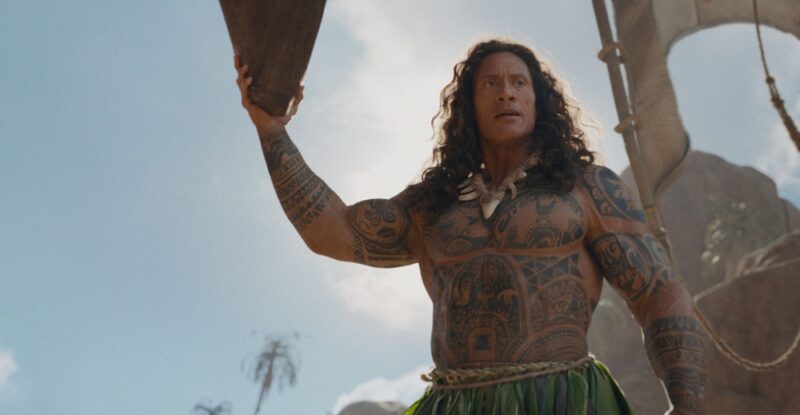
For Miranda, that authenticity is one of the primary reasons the remake exists at all. “You want people from this part of the world to watch it and say, ‘They got it right.'” That commitment extends to details audiences might never consciously notice. One early design for Maui closely resembled Johnson – except he was bald. “The cultural trust immediately said, ‘No way,'” Miranda laughed.
“‘Maui gets his mana from his hair.'”
The result is perhaps one of the year’s most amusing creative decisions. “Now everyone asks, ‘Why does The Rock have hair? Because culturally, that’s who Maui is.”
Miranda sees representation not as a trend but as the through-line connecting his entire career.
“I loved musicals growing up,” he reflected. “But as a Puerto Rican kid, I didn’t see roles for myself.”
That frustration ultimately became In the Heights. “There had to be stories where we were more than just the Sharks.”
That same philosophy now extends beyond his own writing through initiatives like the Miranda Fellows Program, which helps emerging artists of colour access internships and theatre opportunities that financial barriers often place out of reach.
“My work isn’t just writing songs anymore,” he said. “It’s making sure the next generation has an easier path into doing what they love.”
Asked where his own “beyond the reef” moment occurred, Miranda didn’t hesitate. It wasn’t Hamilton. It wasn’t winning a Pulitzer Prize. It wasn’t Disney. It was 2007, when In the Heights was first staged while he was still working as a substitute teacher.
“There’s a timeline where I’m still Mr Holland,” he laughed. “I teach full-time and write musicals in my spare time but never finish them.”
Instead, he took the leap.
“I don’t think I’ll ever make a jump as big as substitute teacher to Broadway composer.”
Even after decades of extraordinary success, Miranda still returns to the same creative principle that powers Moana itself. When writing “How Far I’ll Go”, he deliberately travelled back to his parents’ home and wrote inside his childhood bedroom. “I had to reconnect with what it felt like to be sixteen and desperate to see the world – but terrified to leave.”
That, he believes, remains the secret to writing stories that endure. “You have to keep your inner kid alive.”
As for the future of Moana, Miranda isn’t interested in predicting sequels or spin-offs. Instead, he hopes audiences simply embrace the opportunity to see Kail’s live-action vision on the biggest screen possible. “I think a lot of people first discovered Moana at home,” he said. “This version deserves to be experienced in a cinema.”
After all, he knows better than most that opening weekend is only the beginning. “The opening weekend,” he smiled, “is just the rough draft of the life of a movie.”
