
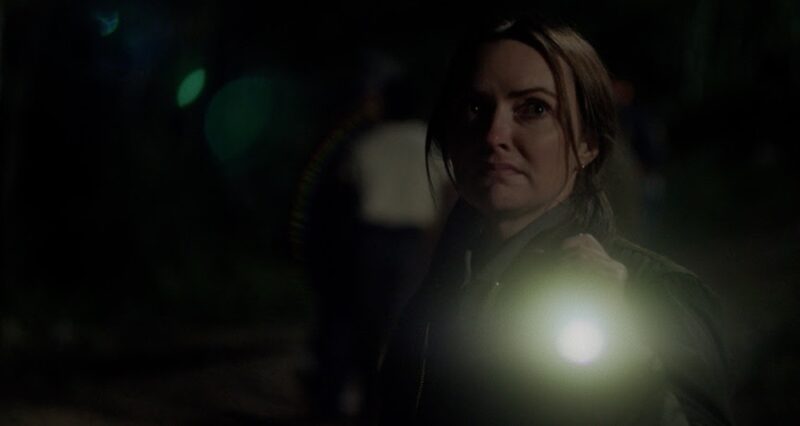
Lauren Call is, in many ways, used to navigating dual roles. A fourth-generation Californian born and raised in Costa Mesa, she has been in front of cameras and on stages since she was six years old – from local and regional theatre across the state, to honing her craft at Orange County School of the Arts and later earning a BFA in Screen Acting at Chapman University. In recent years, she has been balancing motherhood, running her own business, and selectively returning to sets that truly speak to her. With Grizzly Night, she steps fully back into both sides of the industry – producing and starring as rookie park ranger Joan Devereaux in a visceral, true-story survival thriller that transforms a tranquil evening in Glacier National Park into a terrifying descent into chaos.
Based on real events, Grizzly Night follows Joan as she is forced to take command when deadly grizzly attacks shatter the wilderness’s calm, communication collapses, and a group of frightened strangers must be led through the darkness. It’s a film about fear, leadership, and our fraught relationship with nature, and for Call, it was also a dream collaboration, surrounded by friends and Utah’s formidable film community. Discussing the film with our Peter Gray, she reflects on returning to acting after years away, the adrenaline of producing, and what it means to find your voice when everything – and everyone – is on the line.
Before getting into the film itself, I wanted to ask – because I know you started acting very young, around six years old – and over the years you’ve stepped in and out of the industry, especially while raising a family. Coming back with a film like this, did it feel like returning home? Or did you feel like a brand-new artist in the way you approached it?
I think, on the whole, it felt like coming home a little bit. There are definitely aspects of things that I’ve learned as I’ve grown up, and, of course, having kids has changed how I approach certain things. But it was so fun to get back on set in a meaningful way. Producing was new to me too, but even if I hadn’t produced this project, it was a lot of days on set. That was really fun – being able to block out time and fully immerse myself in something, as opposed to the one or two days here and there that are more typical of projects I’ve done in Utah.
Since you’ve now lived on both sides of the camera, is there one that scares you more – acting or producing?
Producing is super scary. It’s really fun, but there’s so much at stake and so many logistics. Luckily, we surrounded ourselves with people who really knew what they were doing, so on the producing side, it was more an opportunity to observe and learn. I had a great time helping cast local talent because I know a lot of people in Utah, and it was nice reconnecting with crew members I’d worked with before. But there is so much that goes into producing, it was exciting to learn about, and I’m currently producing another film where I’m much more hands-on with logistics. That’s been even scarier.
I imagine there must have been a mix of excitement, fear, and responsibility when you first read the script. What was your initial reaction?
When we first read it, the script was so well written and genuinely enjoyable, almost like reading a novel. Katie (Katrina Mathewson) and Tanner (Bean) structured it in a way where you meet everyone, then revisit them later, which I really loved. I could also picture where we were going to film it, which was exciting because it was important to Tyson (Call, executive producer) and me that we bring the project to Utah. But only if it made sense for the story.
And then there was (my character) Joan. We weren’t specifically looking for a role for me to play a major part, though I was always going to be in it in some capacity. But Joan was a surprise in the story. I had heard about the real events before, but hadn’t known much about her until reading the script.
So yes, it was excitement, fear, and responsibility all mixed together. It only got scarier after we bought the script and committed, when we realized, “Oh, we need a bear, a helicopter, a 20-plus main cast, and we’re filming mostly outdoors at night.” That’s when the weight of responsibility really hit.
The location looked stunning, one of those places where you think, “I’d love to hike there.” But at the same time, the film really makes it clear that we’re in their land, not the other way around. I appreciated that the film never demonized the bear.
Absolutely. When Katie and Tanner first sent us the script, they mentioned that they had read about how the writer of Jaws later regretted not including more of that perspective, that sharks aren’t villains, they’re just animals acting naturally. That was really important to them in writing this, and to us in making it.
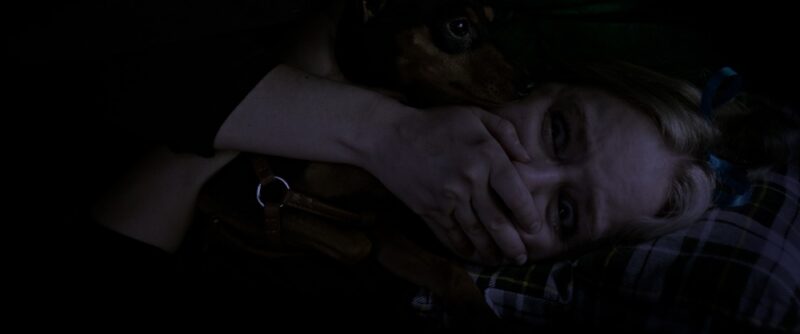
Joan is clearly finding her voice as a leader in literal life-and-death chaos. Did you personally relate to that arc?
Yes, very much so. I struggle with imposter syndrome all the time, and I think Joan does too. Early on, you can sense that she wants the job, but maybe isn’t being taken as seriously as she should be. She’s getting the “fluffy” side assignments, so to speak. There are moments where suddenly she has to step up, not because she wanted a tragedy to happen, but because circumstances force her into leadership. I’ve experienced that in my own life, including on this film as a producer. It’s terrifying, but also empowering.
Given that this is based on real events, did that add pressure to “get it right”? And what did “getting it right” mean to you?
In some ways, there was less pressure because the “villain” of the story isn’t human – it’s nature. No one in this story is malicious or vindictive. So it was more about telling the story accurately and respectfully. Katie and Tanner worked hard to reflect the time period and how people might have spoken. For me, it was about trying to put myself in these people’s shoes. Most of them were just on vacation or enjoying their weekend when everything went horribly wrong. That sense of unexpected emergency was key.
The ending really lingers with you – especially knowing that the two attacks still can’t be fully explained.
Exactly. That uncertainty is chilling.
With Joan specifically, do you think her bravery comes from confidence, or simply having no choice?
A bit of both. I think she starts from a place of being underestimated and thinking, “Okay, I’ll just put my time in.” There were actually more scenes in the script that highlighted how she was the first woman in her role and wasn’t fully welcomed, but some of that got cut. There’s definitely courage there, but also necessity – she has to act. I’ve been in situations like that where you think, “Maybe I should stay in my place… but I know I’m capable of more.” Playing that tension was really interesting.
Was there a scene that emotionally affected you more than you expected?
Yes, the scene where they find Julie (Brec Bassinger’s character) in the woods. By that point, we’d all been on set together for over two weeks, so we really knew each other. We filmed that sequence in order – finding her, putting her on the door, and carrying her back – which made it feel very real.
Even though I’d seen the prosthetics and makeup beforehand, experiencing it in person was much more intense. In between takes, a lot of what you see – like people putting jackets on her – wasn’t scripted; it was just us reacting naturally. That made it hit harder. Carrying her on the door was physically heavier than I expected, and there’s a moment where she looks up at me and reaches for my hand…in that moment, she felt less like a fellow actor and more like a child. That really got to me.
Does any part of Joan still live in you now?
A little bit, yes. I’ve always seen myself as laid-back and agreeable, which I consider a good trait, but I’ve realized that sometimes being too laid-back means I don’t speak up when I should. Between this project and becoming a mom, I’ve learned that if something truly matters to me, I need to advocate for myself. There’s a moment in the film where Joan stops people from rushing out into danger – that moment of speaking up really resonated with me.
How did being a producer change the way you walked onto set as an actor?
I was nervous about that dynamic at first. But many of the actors we cast have produced their own work, so instead of feeling awkward, it actually made things more relaxed. The reaction was mostly, “That’s so cool that you’re doing this.” Because we did so much prep, I was able to set aside my producer hat about 95% of the time when I was acting. Occasionally, I had insights that helped move things along behind the scenes, but overall, it was a very collaborative, welcoming environment.
Do you have a proudest behind-the-scenes moment as a producer?
Our very first day of filming. We were moving into our main location, filming with the bear for the first time, and shooting a scene with child actors – all on day one. The bear took much longer than expected (as bears do), and the kids had strict working-hour limits, so everything felt chaotic. But we made our day. When we wrapped, it felt like, “Okay — if we survived this, we can survive anything.”
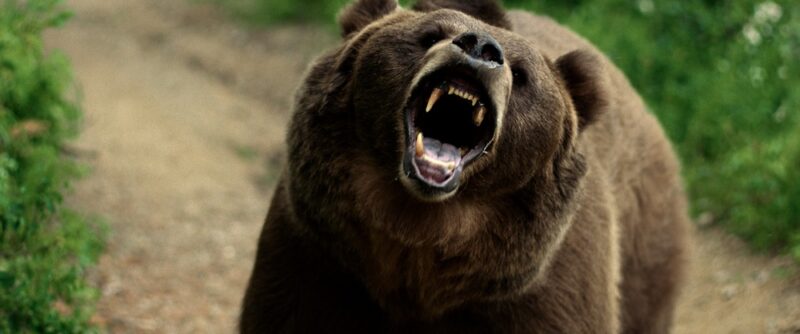
I have to ask about the bear, because watching it, I genuinely thought, “That is a real bear.” What was that process like?
It was incredible. We worked with a company called Gentle Jungle, and their bear, Tag, was trained specifically for the film. They worked with him in advance to do things like dragging a weighted sleeping bag, which is actually quite difficult for a bear. Interestingly, because Tag is part of the Screen Actors Guild, he started “working” weeks before the human actors – and that actually helped us secure our SAG waiver during the 2023 strike. On set, he was adorable – which made it hard to make him look scary. If he looked angry, it was usually because a trainer was holding a donut just out of frame. He would also sit down randomly, and then it would take 20 minutes to coax him back up – with the trainers talking to him like you would a dog. It was hilarious.
What do you hope audiences take away from the film?
I hope people walk away thinking more about how we interact with nature. So often, we treat wilderness as something that exists purely for our enjoyment – hiking, camping, vacation – without fully considering that we’re entering someone else’s home. Living in Utah has made me more outdoorsy, and I love taking my kids hiking and camping. But I also want them to understand respect for wildlife, to leave places better than they found them, and to recognize that we are not the only beings who belong there.
And just as I’m wrapping up, what do you hope Lauren the producer remembers about Lauren the actor on this film?
That’s interesting. There were moments where we could have cast a more recognizable name as Joan. It’s a great role, and at times I wondered, “Am I standing in the way of what’s best for the film?” But I stuck to my instincts, did the job, and proved to myself that I was capable. On those first days on set, I had this realization of, “Oh – I’ve been doing this my whole life. I do know what I’m doing.” As I continue producing, I want to carry that confidence with me — knowing what I know, being honest about what I don’t, and learning from people who are better than me.
Grizzly Night is now available on Digital and On Demand in the United States, the UK and Ireland. It will be available on Digital and on DVD in Australia from April 8th, 2026.
