


Apple TV’s Dark Matter has always used its high-concept science fiction to ask deeply human questions. Its multiverse may offer infinite realities and innumerable versions of the lives we could have lived, but beneath the physics, the Box and the alternate worlds is something far more intimate: if you could see every path you didn’t take, would you still choose the life you have?
Season one literalised that idea through Jason Dessen (Joel Edgerton), a physicist, professor, husband and father who is abducted and thrown into an alternate version of his own life. His desperate journey home forced him to confront not only the possibilities of who he could have become, but the value of the family he had built with his wife, Daniela (Jennifer Connelly).
But returning home doesn’t necessarily mean returning to normal.
Season two finds the Dessens attempting to settle into a quiet existence in a world that finally appears safe. That stability proves increasingly fragile, however, as Jason’s obsession with the Box intensifies and Daniela’s growing paranoia threatens the family they fought so hard to preserve.
During a press conference for the second season, our Peter Gray asked Edgerton and Connelly whether the experience of the first season fundamentally alters what it means for Jason and Daniela to choose one another.
Season one asks this enormous question about the road not taken, but season two seems to pose an even harder one. Once you’ve actually seen the roads not taken, how do you recommit to the life you chose? Do you think Jason and Daniela can ever love each other innocently again, or does knowing all those other versions of themselves exist fundamentally change what choosing each other means?
For Edgerton, the abundance of possibilities available to Jason ultimately makes the act of choosing more meaningful, rather than less.
“That’s a good question,” he responded. “I think they can, and you’re right, it is a bigger question. Once you have the abundance of choice and you know you have access to all these things, how do you intentionally choose? And how do you cut off the ability to escape?”
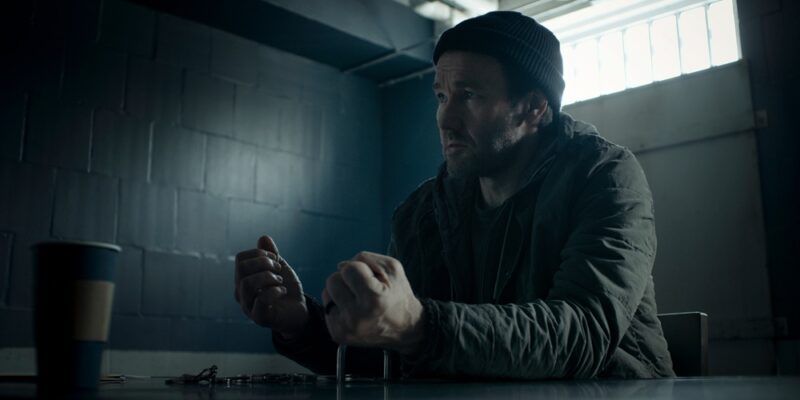
It’s a dilemma that Edgerton sees as extending well beyond the science-fiction mechanics of Dark Matter. The Box might give Jason a literal means of escape, but the temptation to flee rather than commit is something recognisable within any relationship.
“I feel like we all have that in our own lives. We can commit to a relationship, or we could run away from it. There are reasons why we stay, and there are reasons why we make those convicted decisions.”
Edgerton was less certain that “innocence” was the right way to describe what Jason and Daniela might regain. What they have endured cannot simply be erased, and returning to one another doesn’t mean returning to who they were before.
“I do think that they can be together, and I don’t know if innocent is necessarily the right word. There’s baggage, but I think that’s the great complexity of a relationship: continuously moving forward together while understanding the newness and the conditions that you’ve entered into on any daily basis.”
For Edgerton, then, the loss of innocence isn’t necessarily tragic. There can be something richer on the other side of it.
“It’s not the old innocence; it’s a new complexity and a beauty that you need to move forward with. And that means a deeper understanding, a deeper complicity and a deeper acceptance.”
Connelly similarly questioned the idea of innocence, particularly because Jason and Daniela’s marriage was never presented as untouched by pain in the first place. Before alternate realities, multiple Jasons and the Box entered their lives, the couple had already survived an unimaginable loss.
“I think that in season one – I also think it’s the word innocent, I don’t really know what it means in the context – but I think that they do love each other,” Connelly said. “Their love had been proven in their actions, not just with feelings.”
When audiences first met the Dessens, their marriage had already been shaped by the trauma of losing a child. For Connelly, that history is crucial to understanding Daniela’s commitment to Jason and the family they have built.
“They had been through an extreme trauma, having lost a child when we met them in season one. Their love had already been tested through that experience, and their commitment to each other. I think this is a new level of challenge that they experience now.”
That distinction becomes particularly important in season two. Rather than presenting love as something that simply exists between Jason and Daniela, Dark Matter increasingly treats it as something requiring conscious action. For Daniela especially, commitment is not passive.
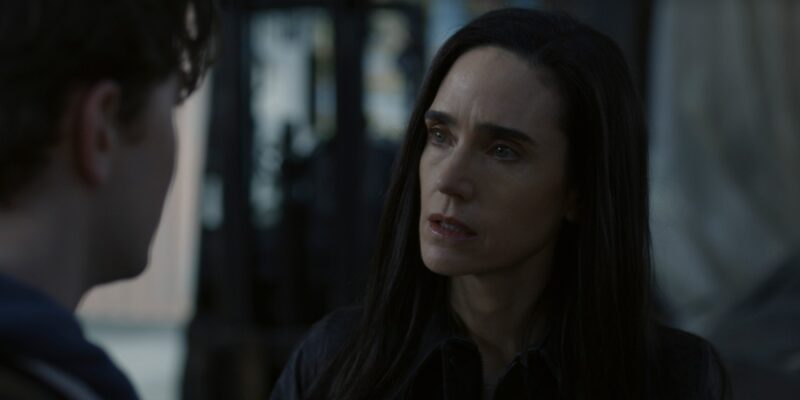
“I think they do really love each other,” Connelly continued. “From Daniela’s point of view, she really loves her husband, and she loves her family, and she’s deeply committed.”
Season two, she suggested, demonstrates that commitment through what Daniela is prepared to actually do in order to preserve both herself and her marriage.
“What we see in season two is how much she’s willing to express that love through her actions, and that her love – the marriage, the love in the marriage – is a process of doing, to be able to be there in the marriage. It’s not just like, ‘Oh, it feels great all the time.’”
That process also demands that Daniela confront parts of herself she might otherwise prefer to leave unexplored.
“It’s an act of love that she goes on this journey to try and heal herself and reckon with the things that she’s done and the things she may have become.”
It’s perhaps here that Dark Matter’s central metaphor becomes most potent. Season one asked whether the life we didn’t choose might have been better. Season two appears more interested in what happens after that illusion has been shattered.
Jason and Daniela now know that other possibilities exist. They know there are other versions of themselves, other lives, other choices and, potentially, other escapes. They cannot unknow any of it.
But Edgerton and Connelly’s answers suggest that this knowledge doesn’t necessarily diminish their relationship. Instead, it changes the nature of choosing each other. Their love can no longer depend on innocence or the comforting belief that theirs was the only possible path. It has to survive the knowledge that it wasn’t.
In a series built around infinite choice, that may ultimately be Dark Matter’s most romantic proposition: love isn’t meaningful because there was never another road available. It’s meaningful because, knowing that there are countless other roads, you still decide which one you want to walk together.
Dark Matter Season 2 will make its global debut with the first episode on August 28th, 2026, followed by one new episode every Friday through October 30, 2026.
