Interview: Joel Edgerton on The Plague, bullying, and the horror of adolescence

Few environments capture the fragile hierarchies of adolescence quite like summer camp. Friendships form quickly, loyalties shift overnight, and the unspoken rules of belonging can be as ruthless as they are invisible. The Plague taps directly into that volatile world, following a 12-year-old boy who becomes entangled in a cruel camp tradition targeting an outcast suffering from a mysterious illness. What begins as a game soon blurs into something far more unsettling, forcing the boys to confront the uneasy line between cruelty, fear, and the possibility that the joke might be hiding something real.

It’s a premise that blends psychological drama with creeping horror, exploring the formative age where children begin to understand the weight of their actions – sometimes too late. Our Peter Gray spoke with Joel Edgerton about what drew him to the project, the film’s unsettling portrait of boyhood, and why stories that live in morally uncomfortable spaces continue to fascinate him.

I know that when you first heard about the project – when you first read the script – your instinct was to direct it. What was it about the material that sparked that impulse?

A friend of mine who’s an agent – though not my agent – sent me the script because he thought I’d be taken with it. My first film as a director, The Gift, deals with bullying, but from the perspective of two grown men revisiting the way they treated each other 20 years after school. I’ve always been fascinated by that formative age – kids and adolescence – and the way they treat one another.

There’s a moment in growing up when you begin to realise that you can really hurt another person without even meaning to. Kids can be careless in the games they play or the things they say, almost like someone waving a hammer around without realising that if it hits someone’s head, it could crack their skull open. There’s this dawning awareness that intention and impact aren’t the same thing.

Those ideas really interest me. They’re rich material for drama – and even for danger and horror. So when I read the script, I thought, “I know how I’d make this movie.” Then I learned that Charlie (Polinger), who wrote it, was also a filmmaker and wanted to direct it himself. So I watched his short films and basically said, “Alright, I’ll help however I can.” If he wanted me to play the adult character, great. I’d also introduce him to people who might help get the film made, because I know how difficult it is for a first-time filmmaker.

I had this instinct, just from his shorts and the script, that he was going to do something special. And I’ll say this: he went beyond even my expectations. I thought he’d do a good job, but when I saw the film at Cannes, the sophistication of the craft and the unsettling feeling he created – it was extraordinary.

That unsettling feeling really stood out to me too. Watching it, you’re constantly expecting the worst. There’s this lingering sense of dread throughout, and I loved the ambiguity of it. I know Charlie has cited films like The Shining and Full Metal Jacket as inspirations. Those films deal a lot with group psychology and systems of power. Did those references shape how you saw the world of the camp?

When I read the script, I actually thought I was reading the closest thing to Lord of the Flies that I’d encountered in a long time. And I described it to friends as a bit like Full Metal Jacket – that same pressure-cooker environment where everyone is bunked together and tensions start to build.

I once saw a documentary about a shrinking African watering hole where all these animals had to gather to drink – hippos, crocodiles, little antelope, all trying to share the same space. To me, that felt like a perfect metaphor for school or summer camp. We’re all different animals with different natures. Some people are apex predators, some are bullies, and some are just trying to survive.

Cinematically, though, I definitely thought of things like Full Metal Jacket. There’s also a kind of restrained body horror element that reminded me of films like The Fly or Black Swan – stories about deep psychological trauma manifesting physically. And then there are movies like Stand by Me in there too. But beyond the cinematography or the music, I think one of the film’s greatest triumphs is the casting.

Setting the film in the early 2000s was fascinating too. It’s strange to think of that era as nostalgic or retro now – it’s only about twenty years ago – but the dialogue felt incredibly authentic. The way the kids spoke reminded me exactly of how people talked when I was in school. And so much of the film’s emotional weight rests on those young actors. What was it like working opposite them? How did you help create an environment where they could go to such vulnerable places on screen?
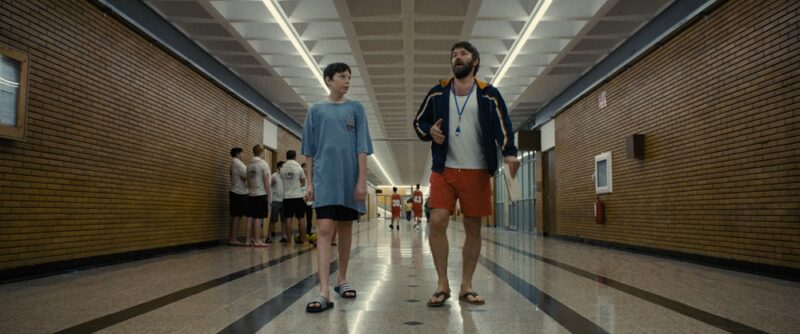
The dialogue really is spot-on, as you said. And while Charlie allowed the kids to improvise here and there, most of it is actually very scripted and incredibly well constructed. By the time I arrived on set, they’d already formed this great bond as a group. They were close, supportive, and having the time of their lives together. Importantly, they didn’t carry the dynamics of the film into real life. Even though Kenny (Rasmussen), who plays Eli, is ostracised in the story, the group was very inclusive with him off-camera.

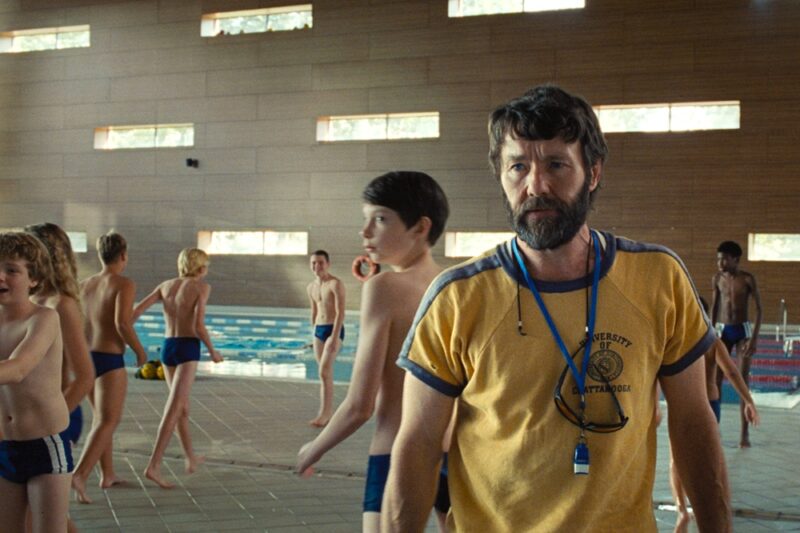
At the same time, when it came time to perform, they knew how to switch into those roles. There was real talent there, even among the kids who didn’t have much experience. Then there’s me – the seasoned actor with a gazillion films under my belt – suddenly working with this group of teenagers who were more than capable of making me uncomfortable. In fact, they kind of bullied me a little, especially during the scene where my character dresses them down about Eli having an erection. They made that moment genuinely awkward, which actually helped the film.

So the dynamic on set was fantastic. They supported each other while still delivering those performances. And that kind of wisdom—being able to play cruelty on screen while caring for each other in real life—is exactly the kind of lesson the film is ultimately about.

Speaking of your character, he has this really ambiguous presence. He’s an authority figure, but also a bit of a distant observer. Did you approach him as someone who understands what’s happening among the boys but feels powerless to stop it, or as someone who’s fundamentally blind to it?

I wanted Daddy Wags to feel a bit apathetic on a career level. Like, “Here we go again”every week there’s a new batch of kids and he’s just going through the motions. That apathy is partly tied to his own disappointments in life. But I didn’t want that to mean he doesn’t care. Once things become serious, he does care about Eli and Ben and the other boys. Maybe that empathy comes from his own experiences as a kid.

At the same time, Charlie and I talked about how limited adult authority can be in these environments. There’s only so much a grown-up can do. Kids operate in their own world, and sometimes when adults intervene, it actually makes things worse. In this story, the moment my character steps in is the moment things escalate for Ben. It highlights that gap between the adult world and the world of kids. You can try to impose rules or wisdom, but it doesn’t always translate. Sometimes it’s like two railroad tracks with different gauges – they simply don’t line up, and something derails.

That’s the hard truth of being an adult looking at childhood. You want to help, but there are limits to what you can control.

It’s interesting too that the story is set more than twenty years ago, but it feels incredibly relevant today. It deals with shame, masculinity, and the fear of being “othered.” Do you think stories about boyhood cruelty resonate differently now than they did back then?

I think so. For a long time there’s been almost a subgenre of “girls in trouble” movies – stories where a girl goes missing or is harmed and the plot revolves around solving that mystery. Some of them are great, but they’re often very plot-driven.

What we’re seeing now is a growing focus on the nuances of boyhood and the pressures boys face as they grow into men. Films and shows are asking bigger questions: Where do we get it wrong? What kind of men are we shaping? What guardrails should exist?

As a father, I think about that a lot. What can I teach my son so that he’s good to the world? Of course I want the world to be good to him, but for that to happen, he also needs to treat people well. So I do think there’s a shift toward exploring those questions more deeply.

It’s interesting hearing that, because when I think back to my own school years – I graduated in 2002 – I feel like I was lucky. I wasn’t bullied, and I didn’t see a lot of it firsthand. That doesn’t mean it wasn’t happening, but it didn’t feel as visible as it does now. Maybe that’s partly because of social media.

I don’t think the nature of it has changed. Bullying existed then, and it exists now. The difference is the form it takes. Today you have the digital world layered on top of everything. Bullying isn’t just something that happens in person – it can follow kids online. But what hasn’t changed is human nature. People will always be capable of kindness, and people will always be capable of cruelty. Those are universal behaviours. The question is simply how they manifest and how we manage them.

Despite how harrowing the subject matter is, the film is so beautifully made – the score, the atmosphere. It almost feels like a horror film, even though it’s not horror in the traditional sense. And before we wrap up, I wanted to ask more broadly about your career. You seem drawn to morally complex stories. Is there something about those uncomfortable spaces that particularly interests you?

That’s a good observation, and it’s true. I’ve realised over time that I’m always drawn to morally complex material. It’s easy to watch stories that are very binary: here’s the hero, here’s the villain. It’s comforting because you know exactly who to root for and who to reject. But I think when audiences sit in a cinema, their moral compass becomes more conservative than it is in real life.

What interests me is our ability to change – to learn, evolve, and shift perspectives. The Gift was very much about that. I wanted to challenge the idea of clear heroes and villains. Most of us aren’t purely virtuous or purely bad. On any given day, we can move between those states.

I often use this little thought exercise: if you’re about to do something questionable, imagine you’re watching a movie of yourself doing it. Then ask yourself, “Am I the hero in this scene, or the villain?”

That’s a great way to look at it.

It helps you step outside yourself. And honestly, the best movies do the same thing – they make you question the hero and maybe even sympathise with the villain.

The Plague is now screening in Australian theatres.

*Images provided.

Peter Gray

Seasoned film critic and editor. Gives a great interview. Penchant for horror. Unashamed fan of Michelle Pfeiffer and Jason Momoa. Contact: [email protected]