

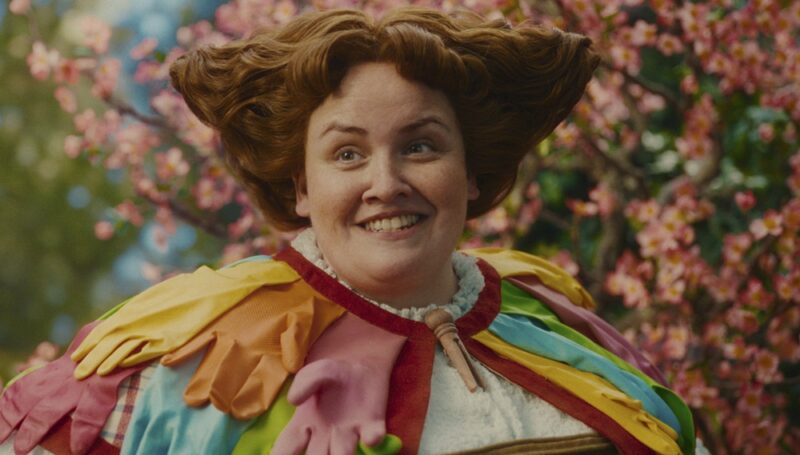
There’s a delicate balance at the heart of The Magic Faraway Tree – between whimsy and emotional truth, chaos and comfort – and few characters embody that better than Dame Washalot. In this vibrant new adaptation, based on Enid Blyton’s beloved classic, audiences are reintroduced to a world where fantastical lands spin into place atop a magical tree, and where a modern family must rediscover connection through adventure.
Among the tree’s eccentric residents, Dame Washalot stands out as both comic relief and quiet anchor – an endlessly busy, water-flinging whirlwind who may understand more than she lets on. In conversation with our Peter Gray, Jessica Gunning reflects on finding the balance between broad physical comedy and grounded sincerity, the unexpected theatricality of the production, and why even the most chaotic characters can carry a surprising emotional weight.
It’s so nice to have a film like this in the world, so first of all – congratulations.
Thank you so much. I’m so glad you’ve seen it.
With a character like Dame Washalot, it’s such a physical, comedic, almost cartoonish role. Did you find yourself drawing from classic comedy influences at all, like silent film performances?
That’s nice. I think because of Simon’s (Farnaby) writing, the characters really came to life on the page straight away. The costume obviously helped, and the style of the film and Ben’s (Gregor) direction really guided how big or small to go. We experimented a lot on the day, because when she’s right up in the children’s faces, it could easily become very broad – much bigger than it ended up being. It was about finding that balance. There’s a realism to what Claire (Foy) and Andrew (Garfield) bring, and then these more fantastical characters, but hopefully everything is still grounded in believability. So it was about gauging the ensemble and finding the right tone, with the director helping guide that.
I was going to ask about that, because you have the opportunity to really lean into the chaos, or to ground her in sincerity. There’s something inherently funny about someone throwing dirty water on everyone, but I love her kind of obliviousness. Were you playing her as someone fully aware, or completely in her own world?
(Laughs) I like the idea that she might be a bit of both. She’s definitely in her own world in some ways, but I also quite like the thought of her being a bit of a gatekeeper to the lands at the top of the tree. Maybe she’s more knowing than she lets on – like one of those adults who lets the kids go and explore but is still a safe place for them to come back to.
Going off that – if you could send her to one of the lands, where do you think she’d absolutely lose her mind?
Oh my gosh, that’s great. There are so many. I think she’s quite practical, so somewhere she can get her hands involved. Maybe “be whoever you want” land – she’d thrive there.
And for you personally, thinking back to childhood, which land would you want to go to?
Well, we obviously had the big dial on set with all the lands – land of giants, land of dreams… I was always a bit of a daydreamer, so probably the land of dreams. My siblings loved the land of goodies – after watching Charlie and the Chocolate Factory, I think that’s every kid’s dream. And the film depicts that so well. Kids can really go wild there.
When you’re playing a character like this, was there anything you discovered about yourself – playing someone so unapologetically odd?
I think it reminded me to be playful. It also took me back to when I first started acting (and) being part of an ensemble. It felt very theatrical because everything was so tangible. Everyone was there in full costume, the set was fully built – it wasn’t green screen. It almost felt like doing a play. Sometimes the cameras were far away or moving around us, and other times it felt very old-school. We even shot things in order, which was really nice. It reminded me of my training, and that sense of being part of a group, with space to improvise and ad-lib.
This might be overthinking it, but she’s someone constantly dealing with other people’s mess – do you think she absorbs other people’s chaos, or avoids her own by focusing outward?
That’s such an interesting question. I think it’s a balance. She ignores the fact that she’s shrunk the little girl’s clothes (laughs), so there’s a bit of head-in-the-sand there. But I also think there’s a rightness to her – she cares when the lands are about to turn, she wants the children to get back safely. She’s not scattered in that way. She’s the kind of person who’d brush you off and send you on your way.
One of the great things about her is that she almost knows too much, but doesn’t realise it. Do you protect your characters from judgment, or do you enjoy exposing them?
That’s such an interesting question. It was like that with my character in Baby Reindeer as well. I try to see all sides of the characters in the truest way possible. I always try and play how they are. Am I explaining myself well? I don’t think I would ever play in a way that wasn’t her.
Your performances often feel like there’s something just beneath the surface. What’s your process for deciding what stays unspoken?
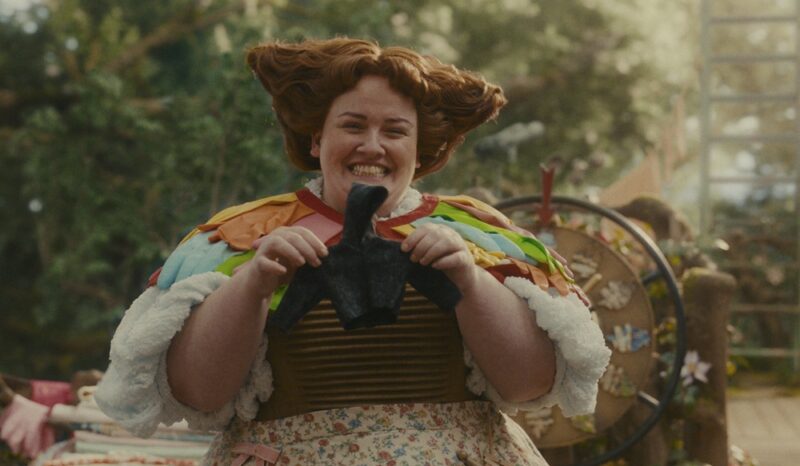
I’m not someone who writes a big backstory, especially for something like this. With theatre, maybe – but here, I focus on keeping it real. With Dame Washalot, it’s hard because she’s such a fantastical character, so I anchored her in something practical – she’s literally washing clothes, fixing things, keeping things in order. That grounded me. She’s the one preparing people to move on to the next place, which I found quite interesting.
What I love about the film is that, while it’s escapist, it also feels very modern. Dame Washalot is trying to impose order on something constantly changing. Did that resonate with you?
I love that take. Simon’s done a great job modernising it. There are little nods to the original books, but also a very current message about technology and family. I love that moment where they realise the life they have is the one they always dreamed of. That’s really moving. And I like your idea – she is trying to bring order to something she can’t control. That’s left to the magic of the tree.
And finally – if Dame Washalot ever stopped for a moment and just sat still, what do you think would catch up with her?
That’s a great question. Maybe something similar to Moonface – missing the children when they’re gone. I think they all enjoy the comings and goings, so if that stopped, she might feel that absence.
The Magic Faraway Tree is now screening in Australian theatres.
