
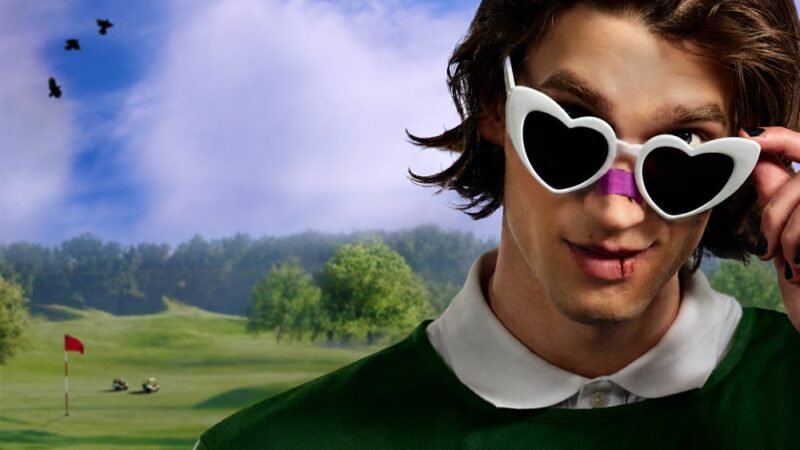
Being called a mooch isn’t usually the type of insult one spends a decade transforming into a feature film, but Jeff Ryan has never seemed particularly interested in taking the expected route.
Following YouthMin: A Mockumentary and the horror-comedy Mean Spirited, Ryan once again writes, directs and stars in Mooch (read our full review here), a scrappy comedy-noir that turns some of his own less-than-glamorous experiences into the foundation for an unlikely detective story. Ryan plays Shane, an almost-30 caddie whose talent for getting something for nothing takes an unexpected professional turn when wealthy nightclub owner Don Simisomo catches him stealing and, rather than turning him in, hires him to investigate his wife ahead of their divorce.
What follows is a wonderfully messy collision of Raymond Chandler-esque detective fiction and slacker comedy, anchored by a character who desperately wants to be accepted whilst repeatedly proving himself his own greatest obstacle. That contradiction isn’t far removed from Ryan’s own experiences, with the filmmaker admitting that Shane’s desire to do good despite continually coming up short is one of the most personal elements he brought to the character.
Speaking with our Peter Gray, Ryan discussed turning an insult that stayed with him into something he’s now immensely proud of, why his character needed to be a surprisingly competent private dick, the influence of Kiss Kiss Bang Bang, The Big Lebowski and Hot Fuzz on the film’s rapid-fire humour, and writing roles that reconcile how others see him with how he sees himself.
Your film opens on the statement of “Based on a pathetic true story.” When you’re turning your dirty laundry into comedy, do you know which parts of yourself deserve sympathy and which parts deserve no mercy at all?
That’s a really excellent question. I think I have my own take on it, and then other people view it differently. With Mooch, for instance, I see Shane as an empathetic character. There’s a point where he realises everyone was offered the same job and he’s just the idiot who actually took it, and I think that’s where most people start to feel for him.
But for me, the empathy comes from his desire to do good and his inability to always do so. That’s very true to my own life. I always want to be the best person I can be, but I feel like I’m constantly coming up short. So I take versions of myself and put them into these characters. If I’m playing them – which my narcissistic little self always thinks I might (laughs) – I know I can hide behind the humour, even when there’s something deeper I’m actually trying to say.
I feel like someone calling you a mooch stayed with you. Did making the film exorcise that insult? Or have you now immortalized in the worst possible way?
Yeah, I think it’s a little bit of both. I’m past feeling like a mooch in life, but it’s still a part of me. Someone sat me down early on and called me a mooch, and for whatever reason, that really stuck with me.
Even making the film, we had to cancel a day of shooting and let an actor know we weren’t going to use them. They responded, “It’s pretty fitting your title’s Mooch. You guys are just a bunch of mooches, leeching off people.” It weirdly triggered me because that was never my intention. I was trying to be respectful, and I didn’t want to cut the scene.
It’s interesting how that fear can still come up – that you’re asking too much of people or not giving them enough in return. It manifests itself in ways I don’t always understand or even acknowledge.
Yeah, that sucks. But I understand that idea of someone saying something to you, holding onto it, and then almost turning it into a superpower. I still remember the person who called me the F-slur very early in my life, and now I can look back and think, “Well, I probably have a much better life and outlook than that person does.
That’s the beauty of art, too. You can take something painful and turn it into something meaningful, address it head-on, but use humour to make it universal. There’s something incredibly vulnerable about taking a potentially embarrassing period of your life and saying, “Look at this.” Was there anything you wrote into Mooch that made you think, “Fuck, do I really want people knowing this about me?”
You want to prove something to the person who was rude to you or put you in a box – to show them you’re not in that box.
With Mooch, there wasn’t really anything I was afraid to share. I have another script based on when I was a model in New York. I’ve turned that experience into a very dark comedy that we’ve been trying to develop for about 10 years. I want to act in it, but I don’t want to direct it. That one scares me because, even though it’s funny and I’m making light of the experience, it’s still too close to me.
With Mooch, I was taking all the silly, stupid things I’d done. Being a mooch wasn’t something that made me question sharing it because, ultimately, it was just me being kind of an annoying person.
This character is still enormously likeable despite this list of reasons not to like him. When you’re writing him, is there ever a line for you in terms of, “What do we cross without losing the audience?”
Every single page of the script was gone over a million times. We watched so many movies about mean main characters because, on the page, Shane read as much meaner than I think he comes across in the film.
I knew I could play him as this bumbling kind of idiot, and that would be inherently more likeable than someone who’s deliberately trying to take advantage of people. It was really about the tactics. If you’re trying to get things from people in stupid ways and showing your hand too much, people almost feel bad for you rather than seeing you as someone who’s genuinely malicious.
Well, you have him steal from the rich asshole…
Yeah, that guy is shown as not being particularly nice to his son, and maybe he’s homophobic – we don’t really know. He’s weird, and I think that made it easier for us to feel like stealing from him wasn’t such a big deal.
Did you ever think about once the film finishes and where Shane goes? Do you feel he genuinely grew up? Or do you think adulthood is something that he’s more inconvenienced by?
I think that part is very true to my own life – trying to figure out where I fit in the world. Shane desperately wants to be liked by everyone, yet he dresses the way he does for attention and tries hard not to be put in a box. In reality, he just wants to be accepted for who he is, rather than who people want him to be.
Most of my life, I watched people around me get married, have kids, find the right job and buy a home, while I was this weird emo kid trying to make movies and be an actor. People would tell me, “You’re probably not going to make it,” because that’s the nature of this business.
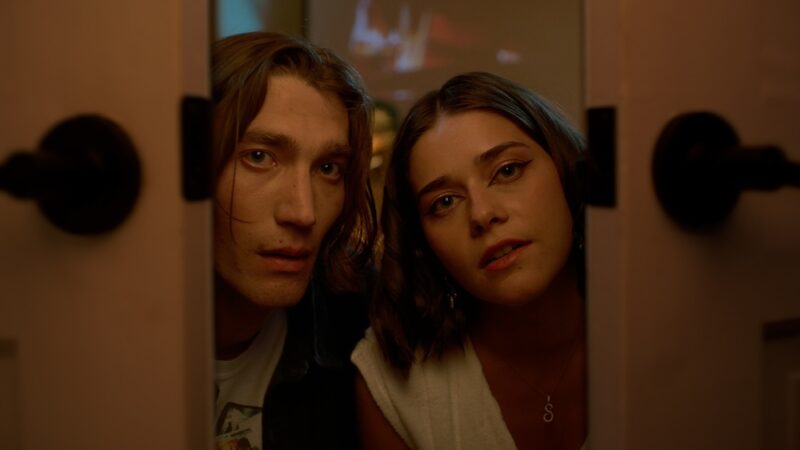
So when you meet someone who sees you for who you are and believes you have something to offer the world, that person becomes a deeper part of you. For Shane, Dina (Molly Brown’s character) is one of the only characters who really sees and likes him for who he is. On a shallower level, I imagine they dated for a little while after the movie and then broke up. That’s where I think it went.
Looking at the comedy noir of it all, because the private eye conceit is that Shane starts taking it seriously. I feel like the movie would be much easier if the joke was simply, “This idiot thinks he’s a detective.” But you see that he’s actually decent at this job. Was that important for you so the audience would then believe he’s actually good at being a private dick?
The biggest influence on the movie, outside of the personal stuff, was reading Raymond Chandler novels like The Big Sleep and Farewell, My Lovely. I found those books so funny. The detective could be such an idiot, and his internal monologue was snarky and took the piss out of every conversation, but he was also really good at what he did.
I wanted that for Shane. I didn’t want him to be great at being a detective, but I didn’t want him to be bad either. It needed to feel like someone doing something for the first time – he pieces it together, but in a messy way.
How he ultimately pieces everything together changed about 30 times. Once Joey (Ashby Gentry’s character) became a more important part of the story, things started to click. That’s when I realised Shane should actually figure it out, and we could start flipping everything on its head, including what you initially think about Don (Scott Cohen’s character).
With those detectives, they traditionally understand everybody else’s secret while being bad at understanding themselves. Did that contradiction make noir the perfect genre for Shane as a character and for Mooch as a film?
Oh, 100%. But I can’t take credit for that being intentional. That was a happy accident, to be honest. I understand it from the noir research I did, but a lot of it just luckily fell into place that way – or unluckily, if people don’t like it. I wish I could say it was intentional, but I don’t think I’m smart enough to analyse it that deeply (laughs).
You’ve played with mockumentary, found footage, and now noir. These aren’t the easiest genres to make successfully. What attracts you to genres that come with such recognizable rules? Do you feel restrictions help make you more playful as a filmmaker?
I wish I didn’t stumble into genres for the reasons I did, because I usually learn to love the genre and its rules after production, which is pretty annoying.
Our first movie, YouthMin, was a mockumentary because we didn’t know what we were doing. We loved Christopher Guest and The Office and thought, “This looks cheap. We’ll be forgiven if a microphone is visible.” We were literally learning as we went. Then we made Mass Hysteria, which was us trying to do Edgar Wright for no money.
Mean Spirited came out of COVID. We had seven people, a free cabin and about 12 days, so found footage made sense. The frustrating thing is I didn’t really love horror until after making it. Then I became obsessed with horror movies and thought, “Oh my God, there are so many things I’d do differently now.” I still really enjoy the movie, but I wish I’d had that affinity for the genre beforehand.
With noir comedy, Kiss Kiss Bang Bang completely changed the way I write. Shane Black said a script should read like you’re telling a story at a bar, and I’ve carried that through my entire writing career. I love The Nice Guys, Under the Silver Lake and The Big Lebowski, and Burn After Reading was actually one of the biggest inspirations for Mooch. I think it’s the Coens’ second-best movie, and everyone else seems to think it’s one of their worst, so maybe I just have bad taste (laughs).
But I’ve never really set out thinking, “I want to try this genre.” I get passionate about the story first and the genre follows. I’d like to be a little smarter about it now, though, because you make a horror movie, build all these connections in horror, and then make something completely different and realise, “Well, none of you can help me with this one.”
If you make a horror movie going forward, I’m all for it. I love horror.
That’s actually what I really want to do. I’m trying to figure out what kind of horror movie I could make – something that’s fully horror, not a comedy. It could have comedic moments, but I’m struggling to put my head in that space.
The only thing I’m working on right now is a mockumentary about serial killers, but it’s hilarious. It’s not really horror at all; it’s a straight-up comedy. Drop Dead Gorgeous is probably our biggest comparison.
As I’ve said in reviews, you have this conventional leading man look, and you could play these characters very differently. Do you feel there’s something funny about watching someone who looks like they should have their shit together, but they absolutely don’t?
I do think it’s funny, but one of the biggest critiques I’ve heard about the movie is that people don’t buy someone who looks like me being this bumbling idiot at a country club. I think I look pretty gross in the movie, so I don’t totally agree.
What I’ve always struggled with in this industry is being sent out for the jock roles because that’s just not who I am. If I was casting and someone who genuinely embodied that came in after me, I’d probably say, “It’s that guy.” I can do certain things in that world, but I don’t really know where I fit.
That’s actually why I’ve started writing these roles for myself. I don’t know how to reconcile the way the world sees me with how I see myself. I was never the guy in school succeeding with women or being the cool jock. I was always the weirdo doing something stupid for attention because I wanted to be Jim Carrey.
Now I’m being told I fit into this completely different category. It’s not a problem – for the most part, it’s a good thing – but I don’t really know how to handle it or what that means for my career.
And Shane has so much confidence when it comes to getting something for nothing. He has less confidence when something actually matters. Do you think charm can be a defense mechanism when someone’s relied on it for so long?
I think he struggles with that, 100%. I remember watching some show where there was this bully who was visibly mean to his friend, but then would quietly say, “I love you so much. You’re my best friend.” That dynamic really stuck with me.
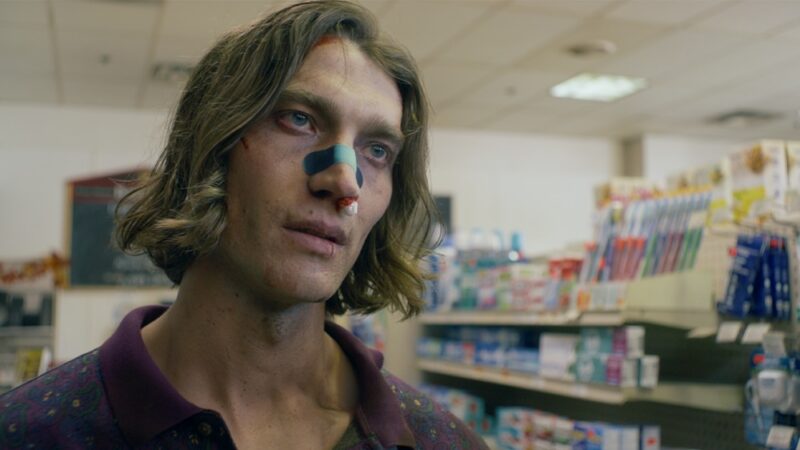
There’s a line in the movie where Shane says something like, “I know we have the kind of relationship where we act like we hate each other, but secretly we’re best friends.” He’s being completely genuine, but Rollie (Oscar Williams’s character) doesn’t feel the same way. Shane thinks, “This is our thing, right? This is how we’re friends.”
He’s so used to communicating that way that when someone doesn’t engage with him on that level, he doesn’t know how to be genuine. So he hides behind that tougher exterior.
That was exactly the kind of thing I was talking about. There are so many great lines, but you never linger on the joke. A lot of comedies know they have a funny line and play it too long, to the point where it can undermine the joke. Here, you say it and move on, which makes it even funnier.
One of my favourites is when Shane is talking to the housekeeper and she says something about them not understanding her, and he just responds, “Yeah, it’s probably the accent.” It’s such an asshole thing to say, but it’s delivered so casually and then the movie moves on. I think that was probably my favourite line.
To me, those are the funniest moments, especially when the joke comes back at the end and he says, “She loves you. I think she’s hard to understand.” He’s such a moron.
Again, Kiss Kiss Bang Bang and The Big Lebowski are always moving, and I’ve probably watched Hot Fuzz 5,000 times. That movie is a joke a minute and never waits for you. There’s something very British about that humour: if you don’t get it, sorry, keep up.
I love that because I can go back to The Big Lebowski and discover different jokes every time. That’s the best kind of comedy because it makes something endlessly rewatchable. You’re always discovering a joke or callback you didn’t catch before.
As an actor-writer-director, are you harder on yourself because you know what every position is responsible for? Do you have to almost pull rank on yourself?
Yeah, for sure. On Mean Spirited, which I wrote with my producing partner Joe (Adams), we had a lot more script conversations on set. With this one, I tried incredibly hard to prepare beforehand. I pre-visualised and storyboarded the entire movie, even editing the first 30 minutes through storyboards before we started shooting.
I printed this massive book for every department head with every shot mapped out. Everyone said, “Thank you,” and probably threw it straight in the trash because they were still going to ask me what we were filming that day.
Ultimately, all that planning goes out the window on set, but the exercise was invaluable for me. I knew the script, story and shots so well that when someone asked me a question, I didn’t have to think too hard. I already had an answer for the most part. That preparation helped me focus on other aspects of the film. But when I watch it, I can still see where I gave a bad performance or wasn’t fully present that day because I was worried about some other detail.
I also edited the movie, so I had to watch all the raw footage of myself going, “I don’t know, I don’t know… um, action.”
How precious are you when it comes to the script? Is there a lot of improvisation on set? Is it encouraged?
It’s a good question. That’s such a prevalent thing when you’re acting as well, because you’re wondering, “Am I really going to give notes to someone who’s more experienced than me while I’m in the scene with them, knowing we’re about to turn around and shoot my coverage?” There’s a weird ego element where I don’t want to act like I know better.
But I think 90% of the job is casting. You cast people for a reason, and their interpretation of the character is part of why they’re there. We talk about tone and reference films beforehand, so nine times out of ten their delivery was exactly what I wanted. That’s a credit to the actors, who all did such a great job.
Being an editor also affects how I shoot. I’ll usually get a couple of different sizes, starting wide to establish the blocking before moving into mediums and close-ups. Once I know I have what I need, we can play around, linger or improvise. If we find something great, we can go back and capture it properly.
I know what I need to complete a scene and how to cut around a performance if necessary – mostly because I’ve had to learn how to cut around my own performance, to be honest.
As you said, you grew up wanting to be Jim Carrey. If teenage Jeff could see that being called a mooch eventually resulted in writing, directing, editing, and starring in a film called Mooch – do you feel he would feel vindicated? Or would he be impressed he got away with it?
I think he’d feel like, “Yeah, I showed you.” The irony is I’m still very close friends with the guy whose dad called me that – he’s one of my best friends. I think he told his dad about the movie and his response was basically, “Yeah, I said that. That’s weird.”
It was this nothing moment that somehow turned into a movie 10 years later, which I think is hilarious and kind of awesome. It clearly affected me, but I wasn’t holding a grudge all those years. The movie is much more about making fun of myself than saying, “Look how mean this person was to me.”
And going off that, because you’ve taken this judgement of your character – “You’re a mooch, you’re gonna fail!” – and turned it into something you can be proud of, has the meaning of that word changed for you now?
Yeah, totally. I love the word. It wasn’t until the movie came out and someone mentioned what a good title it was that I thought, “Yeah, it is a cool title.” It fits perfectly – it’s a movie about a mooch detective. From the beginning, it just felt obvious that it had to be called Mooch.
The word has now taken on this wonderful meaning for me because I’m really proud of the movie. I don’t know whether people will love it or hate it, but I can watch this one back and genuinely feel good about it in a way I don’t with my other movies.
I still laugh at it, too. Maybe that makes me a narcissist, but I still think it’s funny.
Mooch is now available On Digital in the United States.
*Images provided.
Related Posts:
- Film Review: Mooch; Jeff Ryan continues to prove his star power in…
- Interview: Drew van Steenbergen on turning his dating-app addiction and…
- Interview: Macario de Souza on documentary In Pieces Together and…
- Interview: John Patton Ford on How To Make A Killing and turning moral…
- Belle and Sebastian announce Australian tour to celebrate If You're…
- Interview: Producer Jeff Purser on why authentic stories will always…
