
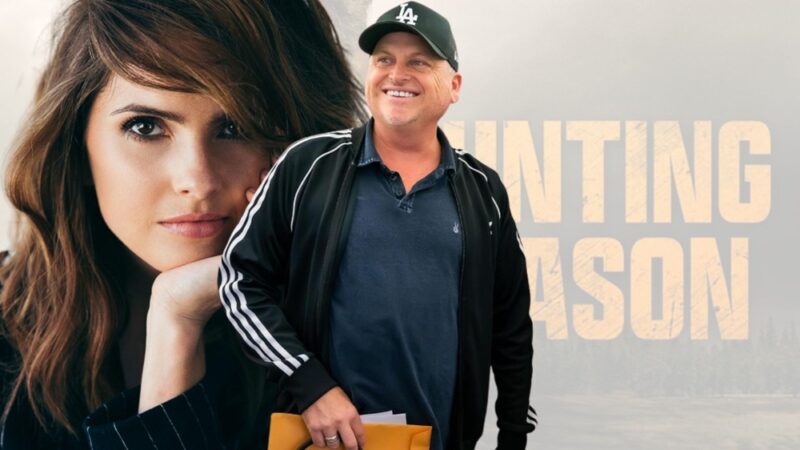
When a mysterious young woman washes up on the bank of a local river, both the feisty twelve-year-old-girl who discovers her and her overprotective father are forever changed by both the arrival of this stranger into their home, and the ruthless drug lord who will stop at nothing to kill her once and for all.
A tense, emotional thriller, Hunting Season arrives in theatres in the United States and On Digital/On Demand from December 5th, and to coincide Peter Gray spoke to the film’s director, Raja Collins, and lead actress, Shelley Hennig, about their collaborative experience, how they found the light in such a dark story, and what they personally learnt from Mel Gibson on set that surprised them.
Raja, when you’re directing a character like Shelley’s, who enters this story as a mystery, how do you decide what the audience should know and when they should know it?
Raja Collins: Yeah, that’s a compliment to the writer of the script too, right? You don’t know much about her, or even you don’t know much about (Mel’s character either) or that family dynamic. Why are they living where there’s no internet? They’re off the grid, but they find this girl in the river. They’re living their everyday life, hunting and cleaning their guns, living off the Earth. Then this girl comes in, and they don’t know who she is and they don’t really trust her. But they want to help her out, because they don’t want to let her die on their bed. They say no good deed goes unpunished, and the guys that were after her that tried to kill her the first time are looking, hence why they come to this house. Now everybody’s compromised and all hell breaks loose.
Shelley Hennig: Raja and I talked a lot on the day, and I can only speak for myself, but I like to be adaptable. I like to see what other people are going to bring. I bring what I am connected to, and I remember on the day thinking that my character isn’t that trusting yet, either. It’s a weird dynamic between (Mel’s character) and his daughter. She seems a little behind for her age, and he’s trying to protect her, but she’s isolated and it’s weird to me. Raja allowed me to play a lot more weariness before that moment where it’s clear I’m in good hands, but (my character) is now just causing them danger. Everybody’s trying to figure out how to be a good human, but also protect their number one, which, for Bowdrie (Mel Gibson’s character) is his daughter (Tag, played by Sofia Hublitz).
With a role like January, where so much is expressed non-verbally, what becomes your strongest tool for communicating her inner world? Were there physical or emotional anchors that you relied on?
Shelley Hennig: Backstory. And asking a lot of questions in my head. It’s fight or flight when I’m looking at Tag and listening to her, like, wondering if she’s okay? Am I okay? Where’s Bowdrie? What’s the dynamic? As an actor, we want those layers. I think just creating backstory, but not going too crazy, like, “Oh, when I was five…”
Raja Collins: Yeah, and Shelley did bring that up, and was great. The one thing that I really give my actors is freedom to bring it. I talk about the story, how I see their character. I want them to tell me how they see things, and we collaborate, and on the day I just let them bring it. We’ll tweak things if they don’t quite work, but everyone was so into their character and so perfect on the casting. They always say that 90% of the movies is casting and location. Well, we did that right on this one. 10% was just the connection that we all had together and the cohesiveness of every single actor on our set really fit the role. We all got along so well. Even Mel, he’s a phenomenal director, actor, and he was such a great collaborator and fun to be around, We all did our thing and it seemed to work out fairly well.
You watch a film like this, and it’s so serious, but you hear stories that it was clearly a jovial set. What’s something that brought the both of you genuine joy? Whether it’s on set or off?
Shelley Hennig: You know, at the end of the day, my job on this was to be an actor, right? So a lot of my focus is on my co-stars and being there for them and creating a dynamic with them. I felt so connected to what Sofia was playing as Tag and what Mel was playing as Bowdrie that I didn’t feel like I had to work so hard. If I ever got overwhelmed with all the elements and ailments that I had to play, all I had to do was look at both of them in the eyes and just sit there. One really fun moment happened with me and Sofia, because we came quite close and are still very good friends, where we were potentially saying goodbye, and neither of us knew how to be physically affectionate with each other. We’re kind of like that in real life, but also our characters. I don’t know if you remember that, RJ?
Raja Collins: They formed that kind of sisterly love for each other through the movie, character wise and personal, and you can just see it in the film. To answer your question about what brought me joy, well, it’s crazy, but right before this movie started, I lost my mother and I dedicated it to her. She was so supportive of my life in LA and the career I have. When you’re at the monitor and you’ve assembled this amazing cast, and you have a good script, you’re like, “This is going to be fun.” From day one of shooting, I was just geeking out behind the monitor thinking, “Man, this is when your job becomes easy.” Sofia is a phenomenal actor. She was so in it, and so great with Mel. Their chemistry as father and daughter was phenomenal. And Shelly was such a great outsider coming in.
Sounds like so much of it was an easy, creatively flowing experience. Tonally, logistically, or emotionally, was there a part of the film for both of you that was the hardest to get right? And how did you both go about solving that?
Raja Collins: I think the hardest part to get right is that we only read and hear about human trafficking and drug cartels and brotherhood, and all that. And we got Jordi Mollà to play the antagonist in this film, and he’s a great villain. He’s out of his mind! He’s so good. It was probably the most challenging in that there’s this constant battle right now with the media and fighting the crime out there in the world. It just seems like it’s getting worse, right? So you’re doing a story where it’s the light against the dark. I think it’s always hard to do the super dark side of things. I’m kind of a nerd, and I geek out and make bad dad jokes all the time, so it’s hard for me. It’s easier for me to play the lighter side of things and make jokes than it is to go dark.
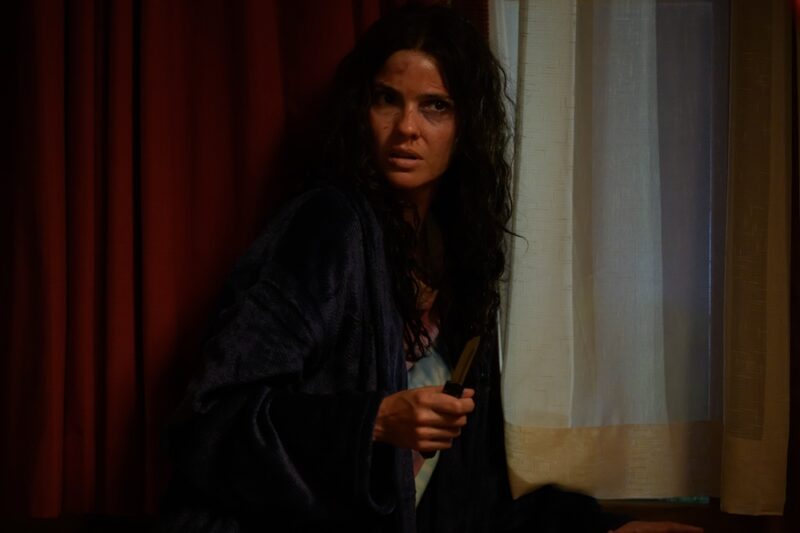
Shelley Hennig: You made your actors go dark, and you have to create the light that wins in the end. That was fun for me. It’s hard to follow (what Raja said) because it’s going to sound like my job was easy, but, for me, it was the physical ailments that were hard. I just wanted to make sure I wasn’t overplaying it or underplaying it. (My character) gets shot and she has that wound pretty much the whole (film). I’m used to doing more of the action side where I’m the hero, so it was a little harder for me to be the one in bed.
Going off that, Shelley, when you’re shaping your performance, how do you decide what to hold back and what to reveal? Are you more instinct driven? Or do you map those choices out?
Shelley Hennig: I usually start out physically, and even if that means weak, right? But I like to start out asking, “Is she someone who’s always sitting forward? Always back?” Starting out physically means energy. Reading the script I was picking up clues, and then asking myself questions. I don’t know, I’ve kind of created my own little process. It’s boring and hard to share. Really, at the end of the day, it’s just so many pieces that came together. Raja and I had conversations, Sofia and I had conversations, Mel and I had conversations. It was very open. No one held back.
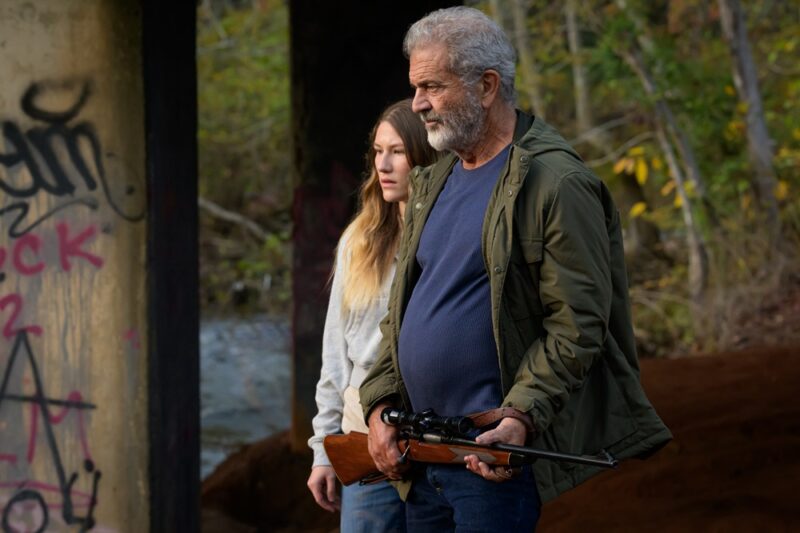
Well, speaking of Mel Gibson, as an actor and director, did you both learn something from him that you hadn’t thought of across your careers thus far? Something he said or did that changed the way you thought about your respective performances?
Raja Collins: That’s a great question, Peter. By the way, I love Aussies. I grew up surfing, and I used to be friends with a lot of surfers, and they were all Aussies, so I’ve always hung out with you guys. I think with Mel, it was funny, because you’re at first thinking how you’ve grown up watching his films, right? You love his movies, but also you have a job to do and a story to tell. But Mel, I was thinking how it was going to work? After our first meeting and talking about the character, we just hit it off. I could tell from a personal level that we were going to be good. I could communicate to him what I wanted, and I gave him the freedom. It was more organic that way.
Mel really stuck to being an actor. He didn’t really do the directing side of things. He was an actor, and he was so fun. I think maybe learning from Mel, what I did was just note his humble, confident appearance and demeanor, and how he treated everybody on set. He was just so kind to everybody. And fun. It just shows that you can be the nice guy and still succeed and have fun, no matter what the media thinks of you. He’s made some mistakes, but I’ll tell you, he’s phenomenal for a reason. He’s a big bear. I loved working with him, and I would do it any day. And Shelley was the same. She was so collaborative and smart. And Sofia is so ahead of her years. She’s so brilliant and fun. They made my job easy. What I learned was making sure the casting is right and your script is solid. You can’t fix that in post. All the right elements came together.
Shelley Hennig: I have one embarrassing moment. I love doing a million takes. But one day I woke up and I thought, “You know what? I have a lot to get done today, on camera, so just nail it and don’t ask for another one.” I’m good. I’m good in the scene. It was weirdly, like, an intention I set for myself. Which I’ve never done. We do one of the scenes, and it’s a very important scene between me and Mel, and Raja was like, “We got it after one take.” And I thought, “Yeah, I think so too.” Raja asked me if I wanted another one and, honestly, I didn’t. Mel just goes, “If they’re lit, do another one.” And I just about fell out of the chair. I was straight up with him and asked him why? I thought maybe because it sucked, and he was like, “No, but if they’re lit, do another one.” And I was so mad at myself, because he doesn’t know me that well at this point, and he doesn’t know that I’ll do a million takes but I was trying something new that day. So, I went home and I was so angry at myself. Then the next day, Raja was like, “You want another one?” And I looked over at Mel and went, “If they’re lit, do another one.”
Hunting Season is in theatres in the United States and available On Digital and On Demand from December 5th, 2025.
