

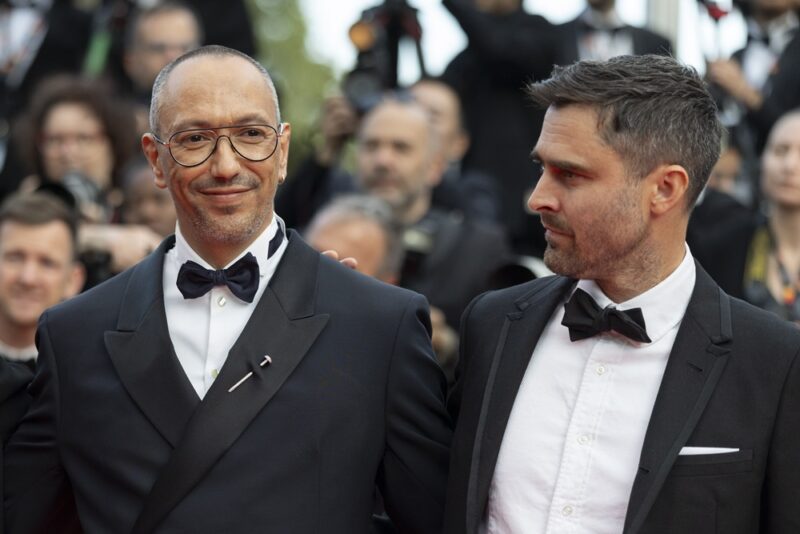
Quiet, searching, and deeply felt, The History of Sound unfolds like a folk song passed carefully from hand to hand. Set in the aftermath of the First World War, Oliver Hermanus’ adaptation of Ben Shattuck’s short story traces the intimate bond between two young music students, Lionel and David, as their shared devotion to folk music becomes a language for longing, memory, and love.
Anchored by the resonant performances of Paul Mescal and Josh O’Connor – actors who have each come to represent a new, introspective masculinity on screen – the film listens as much as it speaks. Our Peter Gray spoke with Hermanus and Shattuck about why these performers feel like cultural touchstones, how folk traditions shaped the film’s soul, and the careful research that went into assembling the emotional architecture of a love story built on sound, silence, and what endures long after the music fades.
This film carries a sense of listening to history and to music and to memory. For both of you, was the act of listening as a creative or moral gesture something you thought of with the film?
Ben Shattuck: Such an interesting question
Oliver Hermanus: The act of listening is an interesting turning point for the characters in the film. Lionel says he just wants to listen, and that was not who he was when he starts out. I think that definitely became from the directing side of things. For me, it became an interesting unlocking, in terms of the bigger film itself and the idea that an audience would be looking and listening to the film, not being able to participate, but acting to absorb.
Ben Shattuck: I think what the attentive viewer would see is that we frame Lionel’s life almost as if he is a central character in one of these old ballads. Like, you could write a ballad about the life of Lionel Worthing. There’s adjacent songs to his experience, but, in a way, that final scene with Chris Cooper is about Lionel listening to the sound of his own life. I think he’s realising what he’s receiving and the truth of what actually happened in his life. It’s so easy to blast through life, yelling and talking and asserting. But when you actually hold your ear to the resonance and hear what’s coming back, it can be startling.
Well that goes into what I wanted to ask next, because recording sound becomes this way of preserving these vanishing voices, but it’s also this act of intimacy. Did you, Oliver, think about this story as archiving love as much as it’s archiving music?
Oliver Hermanus: Very much so. Obviously, this is a love story at the heart of it. There is this echo, this shadow, this lingering relationship in Lionel’s life. There’s this unanswered question, in some sense, and it’s related to the physical act of a recording journey with somebody else. I was very drawn to the material, in a way, because I saw it as the story of a man’s life, but it was the story of a man’s great love affair. Or great love, I suppose. That was, for me, something I hadn’t done before. I’ve done somebody’s great death and somebody’s great shaming, somebody’s great unraveling, but I’ve never done somebody’s great life and love.
On the mention of love, Paul and Josh feel like they are cultural touchstones of a certain type of masculinity. Was there anything that they brought to these roles that shifted your understanding of these men, both as a writer and a director? Was there any surprise interpretation on their end?
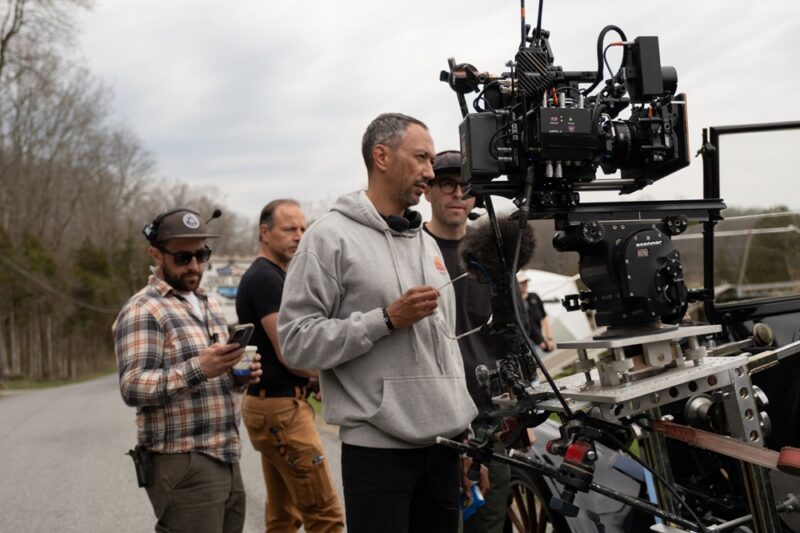
Oliver Hermanus: For me, the interpretation is never a surprise, because I always know that it’s going to be…it never can be what I fully imagine. I’m aware that I have to be open to it and not constructing or controlling. But these are also two of the most incredible actors of their generation. There’s a real kind of pedigree to the process of working with Paul and Josh, and there’s so much care and attention and texture and focus and preparation to how they arrive at uttering a word or sentence. They breathe life into lines of dialogue and to description. My job, in that context, is to make sure the lights are on and the camera’s rolling. That’s kind of it. I’m there to capture that. I know there are other directors who literally shout at actors to do their lines over and over, and that’s just not me.
Ben Shattuck: Yeah, so much of this story in the film is about what’s unsaid and about gestures that are made and not made. The genius of these performances is partly in the dialogue, but also everything between the dialogue and between what I had written in the screenplay. Just to see those moments come alive in the alchemical reaction between Oliver, Josh and Paul was a real privilege to see.
Ben, your stories share this sense of recovering voices from the past. How did your research into early recordings inform not just the plot, but the emotional architecture of the story as well?
Ben Shattuck: I love that phrase, emotional architecture. You can still find these very early wax cylinder recordings online, and I found one, this very specific recording of a grandfather who was making a recording for his grandchildren. His daughter, their mother, had just passed away and, this is over 100 years ago, he’s describing their mother to them, because he realises they’re never going to know her. That’s an example of the type of urgent messages that are still put down in voice recordings. And it’s a great example of what this story is about, which is about capturing a specific message or voice from the past that can change somebody’s identity, or puncture their sense of their own story about their own life. It was very wax cylinder voice-recording specific, because there’s something about a voice from the past that can really be shattering for somebody.
And Oliver, working in these mediums of memory and what images can sound like, did this film change how you think about what it means to preserve an emotion across all different art forms?
Oliver Hermanus: It’s the life of a director, a filmmaker, that the movies you make, they exist as these things outside of yourself once they’re done. At this stage in the world, movies are made and them they are forever more accessible. They live in the ether inside the computer, and they might be here longer than I’ll be here. I don’t know. You think about that like it’s forever more, and we will never touch it again in any way. And people in 30 years might look at this (differently), but I think of The History of Sound, or any movie I’ve made, as a certain timestamp of my own life. So if you ask me what I was doing in 2024, I think in movies. This was the film I was making. It was that reality. It’s how I place my memory and my existence, being tied to the timeline of making the movies I’ve made, and then tied to that is how people reexamine those films.
The History of Sound is screening in Australian theatres from December 18th, 2025.
