
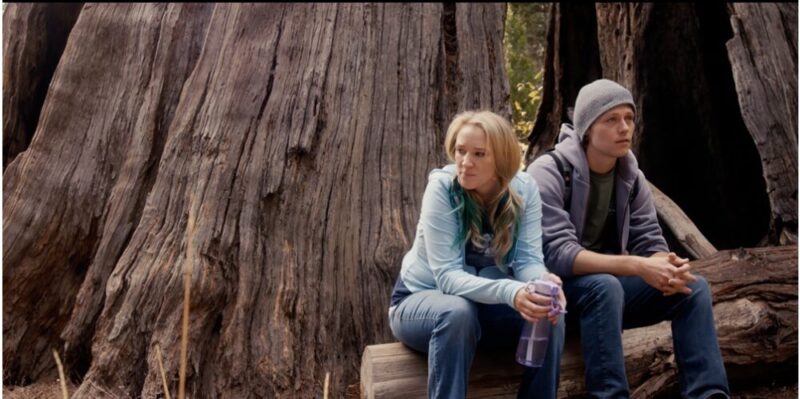
A true When Harry Met Sally for a new generation, Dear Luke, Love, Me is a groundbreaking story of Penny and Luke, two best friends, who find love in unconventional ways. A nostalgic look back into the early-mid 2000’s, we watch these two music-loving tree-huggers grow from college Freshman to 30-something adults. We peek into pockets of time to see their otherworldly friendship turn to romance, turn to friendship again, all while they discover who they are and who they want to be. But while Luke grapples with his asexual identity, mental health, and pressures from the outside heteronormative world, their once-perfect friendship starts to fissure, and Penny begins to lose herself in salvaging the one thing in the world she can’t bear to lose.
Guillermo Diaz’s directorial debut, Dear Luke, Love, Me explores the nuances of asexuality, the importance of male to female platonic bonds, and the terrible beauty of growing up and the inevitable changes it brings. This immensely humanizing film is guaranteed to strike chords in audiences of all ages and experiences, as it is a true ode to love, friendship, and soulmates of all kinds. After all, love is a pretty big word to fit inside such a small box.
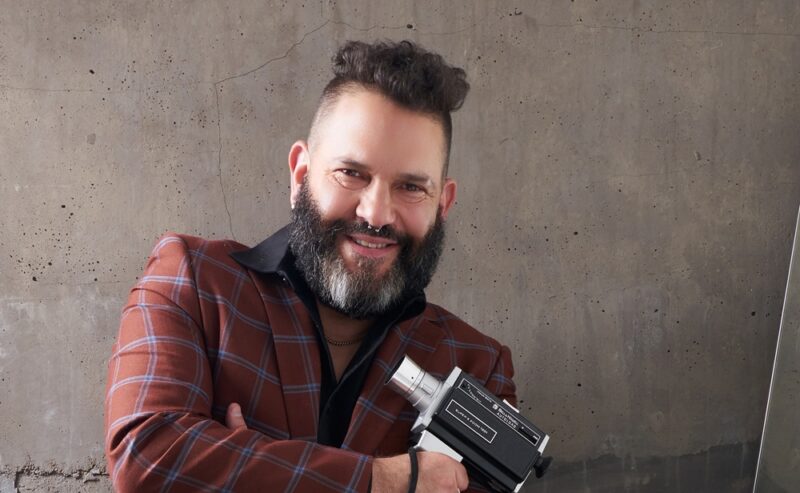
Following a series of successful festival screenings, Diaz’s film has arrived to stream on Apple TV, and to coincide, Peter Gray spoke with the actor-turned-filmmaker about how he knew this was the project he was to make behind the camera, nurturing his leading actors, and what he hopes all communities will take away from the film.
Dear Luke, Love, Me centers on a kind of intimacy that cinema rarely spotlights. What drew you personally to a story about platonic love and asexual identity, and how early on did you know you wanted to direct it rather than just support it as an actor or producer?
What actually drew me to this project was the beautiful script that Mallie McCown wrote. I related to the ups and downs of the relationship, as well as the gut wrenching heartbreak and pain, then finally breaking through the darkness! The sexuality of the characters was secondary, although I am extremely proud to have directed a movie where the Asexual community can hopefully feel seen and represented in a positive light. I knew quite early on in the process that I wanted to direct Dear Luke… it has been a long and challenging journey but so very worth it.
Platonic relationships are often undervalued in storytelling compared to romantic ones. What conversations were you hoping to ignite by positioning friendship – and not romance – as the defining love story here?
I am hoping that regardless of the kind of relationship someone is in, that through this film they find comfort and peace knowing that their relationship does not have to be put in a box or have a label slapped on it or look like anyone else’s. It’s okay to be unique and different in the love they have…love is the thing, you know?
Did your long experience as an actor shape the way you communicated with Nick Eversman and Mallie McCown? Were there things you knew to protect or nurture because you’ve been in their shoes?
Oh, absolutely. I know what great performances can come out of an actor when the director allows them freedom and encourages them to explore and take risks on set, and I certainly understand the vulnerability you sometimes feel in front of the camera, so I hope I gave them lots of support and love and guidance at the same time.
Was stepping into the role of director creatively liberating, intimidating, or a mix of both? And did it change how you see yourself as an artist going forward?
Yes! All of those things. I have never felt more intimidated and creatively stimulated at the same time. It was such a rush. Plus I had some pretty remarkable crew members around me that definitely had my back along the way, like my first AD, Kea Zemans, and my producer, Lindsey McGowen. I could not have gotten through this experience without them.
The film has the potential to resonate with both queer communities and broader audiences. What were the challenges of making it accessible without diluting its specificity?
Fortunately, love is a universal language. There was no need to dilute or tweak anything in this movie, which is filled with heart and wonderment, and beautiful stop motion animation. Animation is also a universal language (laughs).
Looking back, what was the biggest triumph of bringing Dear Luke, Love, Me to life? And what did it teach you about yourself as a storyteller?
One of the biggest triumphs in bringing Dear Luke… to life is the rare opportunity to make a movie that I 100 percent believe in, and to be able to be a part of it from the very beginning stages with my producing team. Literally from helping with casting, to raising the money, to directing, then hiring an amazing editor, Billy Durden, to choosing musical artists I believe in, like Rey Papi, and so on and so on…it has been an extremely gratifying and humbling experience as an artist.
If the characters of Penny and Luke had written you a letter at the start of this journey – before filming – what do you think they would’ve wanted you to know as their director?
I think the letter would have started with, “Dear Guillermo, we trust you whole heartedly with our story.” And ended with, “DON’’T fuck it up!” (Laughs).
Dear Luke, Love, Me is now available on Apple TV.
