

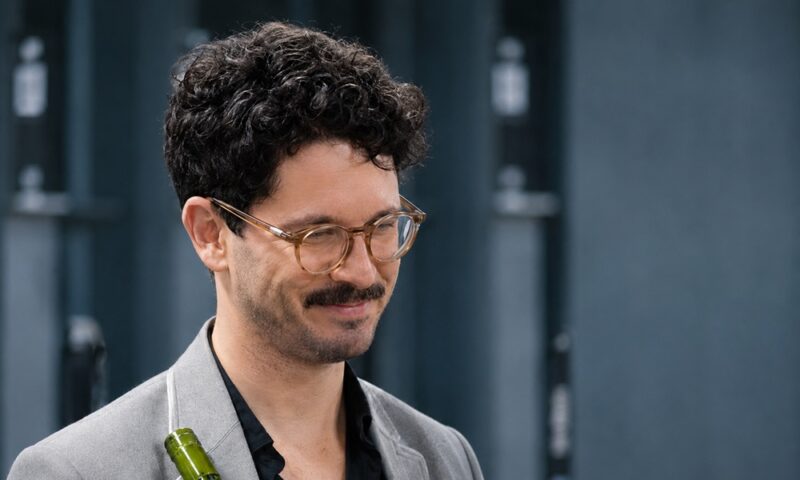
In Gabe Klinger‘s quietly affecting Isabel, success is never quite as simple as opening the door to your dream. Following a fifty-something sommelier determined to break free from a suffocating professional life and carve out a space of her own in São Paulo’s vibrant natural wine scene, the film becomes something far richer than a story about entrepreneurship. It’s a meditation on ambition, self-worth, creative conviction and the often uncomfortable realisation that the obstacles standing in our way aren’t always external.
Produced by the team behind I’m Still Here, Isabel is a warm, wry love letter to community, craftsmanship and the imperfect beauty of both people and the things they create. Ahead of the film’s release, Peter Gray spoke with writer-director Klinger about vulnerability, resisting convention, the parallels between natural wine and independent filmmaking, and why optimism remains an act of defiance in an increasingly standardised world.
One of the things I found fascinating about Isabel is that she’s not simply blocked by external forces. Often, she seems to be her own greatest obstacle. Do you think that’s a particularly universal experience among ambitious people?
I think about that a lot. We’d all like to blame external forces, and São Paulo is a pretty hostile external force. It’s the biggest city in Latin America. It’s congested, there’s crime, corporations are taking over and ruling our lives. It’s easy to blame your unhappiness on those things.
But sometimes you have to look inward. That’s where we found Isabel’s interiority. She looks at imperfect wines as an analogy for her own imperfect life. There’s a key scene where a group of wine professionals debate whether wines need to be perfect or not. We put that burden on objects and the things we create, but do we put that burden on ourselves?
The film asks whether Isabel actually needs the thing she believes will make her happy. Does she need to open a wine bar? Or is the wine bar simply a step toward something else? I feel that way about filmmaking. You think you’re making a film for one reason, and then you discover it with an audience and realise it’s about something completely different.
She spends so much of the film trying to prove herself professionally. What do you think she’s really searching for emotionally?
There are definitely patriarchal questions embedded in that. She’s working for an awful boss who treats her terribly. At one point, they shared a vision together, but that relationship has soured.
We joke that it’s a film about all the men in her life abandoning ship. The chef leaves. Her husband leaves for France. Even Nico eventually disappears from her orbit. So in some ways, it’s about Isabel learning how to exist in the world without relying on these men around her.
But I think it goes deeper than that. Isabel knows she has value, but she isn’t always able to communicate it. Sometimes people don’t recognise your worth. Other times, you struggle to articulate your vulnerabilities and imperfections.
We’re taught to project success. In business, in life, we’re encouraged to hide our flaws. I think that’s nonsense. Hopefully, as human beings, we mature enough to be vulnerable with each other. Isabel is caught between those two impulses. She wants to wear her heart on her sleeve, but she also understands that she has to project confidence in order to navigate the world.
You’ve described the film as a thinly veiled metaphor for filmmaking. Looking back now, were there uncomfortable truths about your own profession that writing Isabel allowed you to confront?
Absolutely. One of the biggest lessons was learning to trust conviction over convention. The industry wants you to make films a certain way. They want you to use proven locations, proven actors, proven formulas. Everything is about minimising risk.
We did the opposite. Half the cast are non-actors. The actor who plays Isabel’s husband is literally my neighbour. He’s not an actor at all. We cast people from the food and wine industries because they belonged in that world. That increases risk. You don’t know how people will behave on set. You might need more takes. But I think the film had to embrace that chaos. It had to feel alive.
After COVID and after spending time away from features, I realised I didn’t want to be overly controlling. I wanted to let things happen. I wanted to defend my convictions and trust that the film would tell me when something wasn’t working. That’s the challenge of independent filmmaking. You’re constantly fighting against systems that reward safety.
It feels like that struggle has become even harder as the industry consolidates around franchises and giant studio releases.
Completely. We used to have a much broader ecosystem. Hollywood, Hong Kong cinema, all these industries produced a wide variety of films. Now everything revolves around massive tentpoles. Studios don’t want to make fifty interesting films. They want to make ten giant franchise movies. That affects everyone. You feel that fight in your bones when you’re making an independent film. You’re constantly pushing against forces that want everything to be bigger, safer and more commercial.
That’s why I think films like Isabel matter. They’re alternatives. They’re designed to be discovered by audiences looking for something more intimate and personal.
One of the things I loved most about the film was how natural it felt. At times it almost plays like a documentary. I found myself wondering whether I was supposed to be watching these conversations.
That’s wonderful to hear because that was very intentional.
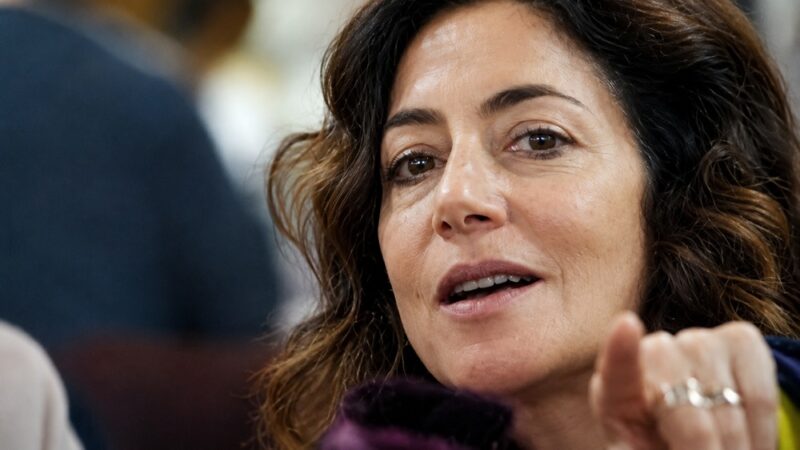
A lot of that comes from Marina (Person). She already loved the world of natural wine and small-scale craftsmanship. She embodied the values of the film before we even started shooting. To me, she simply was Isabel.
She also has a fascinating screen presence. She’s determined and forward-moving, but she’s also dreamy. When we were selecting stills for posters and festival materials, I noticed she was constantly looking slightly away from people, almost drifting through conversations.
I don’t even know if it was conscious on her part, but it created this wonderful quality where she felt completely natural. We also leaned heavily on documentary techniques. We used zoom lenses. We stayed flexible. We could move closer or wider depending on what was happening in the moment. That allowed us to create the illusion that events were unfolding naturally, even though everything had been carefully staged.
You’ve described the film as being about finding coherence in a hostile environment. Looking at your own life, do you think you’ve found that coherence?
No. I think it’s a constant process.
People move to the countryside because they’re tired of cities, and then they get bored and want to move back. I don’t think there’s a solution. The world feels increasingly unsustainable and chaotic.
What matters is continuing to search.
Marina has a beautiful way of describing the film. She says Isabel is her idealised version of the city she’d like to live in. Not the real city, but a dream of city living. A place full of interesting people opening small businesses, creating things, building communities and resisting the forces that want everything standardised and corporatised.
That’s the world the film is reaching for.
The ending really struck me. When Isabel is pouring wine for people on the street, it feels like she’s finally arrived at where she’s supposed to be.
Some people find the ending frustrating because we wanted to inhabit two emotional spaces at once. We wanted both melancholy and joy. We wanted optimism without pretending that all the problems had disappeared.
If you give everyone a perfect Hollywood ending, you lose something.
What interested us was the possibility that both emotions could exist together. That you can experience disappointment, loss and uncertainty while still holding onto hope. That’s where the pleasure of the film lives for me. Not in the idea that everything works out perfectly, but in the belief that optimism can survive despite all the challenges.
Isabel is screening as part of this year’s HSBC Spanish & Latin American Film Festival, running across multiple Australian cities throughout June and July; Canberra – 10th June to 5th July: Palace Electric Cinema; Adelaide – 10th June to 5th July: Palace Nova Eastend Cinemas and Palace Nova Prospect Cinemas; Brisbane 11th June to 5th July: Palace James Street and Palace Barracks; Perth – 11th June to 1st July: Palace Raine Square, Luna Leederville and Luna on SX; Melbourne – 12th June to 5th July: The Astor Theatre, Palace Cinema Como, Palace Brighton Bay, Palace Church St, Palace Penny Lane, Palace Westgarth, The Kino, Palace Balwyn and Pentridge Cinema; Ballarat – 12th June to 5th July: Palace Regent Cinema; Sydney – 18th June to 12 July: Palace Norton Street, Palace Moore Park and Palace Central; Byron Bay/Ballina – 18th June to 12th July: Palace Byron Bay, Ballina Fair Cinemas.
For more information on screening sessions, head to the official site here.
