


On paper, Furious sounds like a familiar crime thriller. Emmy Rossum plays FBI agent Alice Black, a former NYPD detective hunting Catherine (Lola Petticrew), a calculating serial killer who targets powerful men. But creator Elizabeth Meriwether (The Dropout, Dying for Sex) is far less interested in asking who committed the crimes than why these women have become the people they are.
That distinction shaped almost every conversation during the show’s recent press conference, which our Peter Gray was invited to speak with the creatives, with Meriwether and her cast repeatedly returning to one idea: Furious isn’t asking audiences to excuse its characters. It’s asking them to understand them.
For Rossum, who also serves as an executive producer, that became one of the defining challenges of bringing Alice to life.
Asked where she drew the line between encouraging empathy for the show’s damaged characters without accidentally inviting sympathy for their actions, Rossum admitted it wasn’t something she consciously mapped out during production – but perhaps should have.
“I think that as an actor, when you approach a role, if you’re playing the good guy or the bad guy, your job is to approach everything with empathy,” she explained.
Rather than judging Alice or Catherine, Rossum believes an actor’s responsibility is to excavate the darkest parts of themselves in service of the character.
“Storytelling is at its strongest when it confronts something in us,” she said. “It’s an opportunity to think about the world differently.”
That philosophy sits at the heart of Furious. Both Alice and Catherine have experienced profound violence, but neither woman responds to it in ways television traditionally expects. Alice buries herself inside the rigid structures of law enforcement, emotionally disconnected and unable to properly process her own trauma. Catherine channels hers into calculated vengeance.
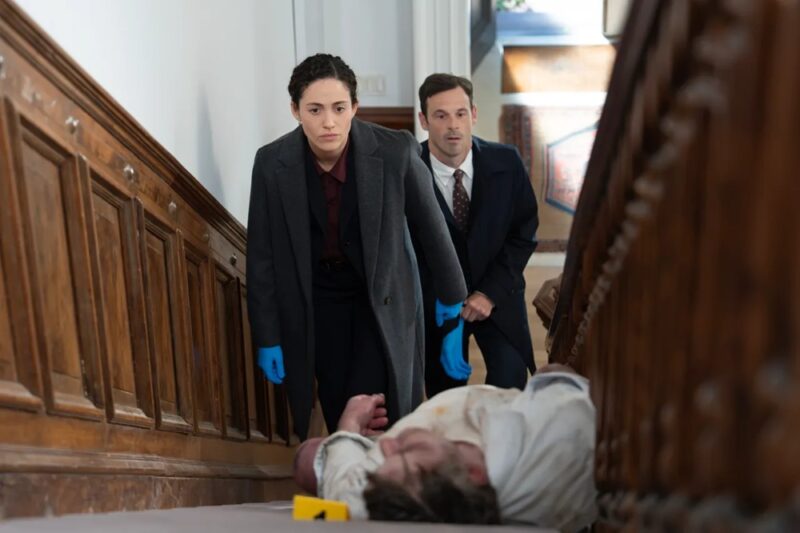
Rossum described them as women who have become so disconnected from themselves that they require emotional extremes simply to feel anything at all.
“It’s a very different character than I’ve ever played,” she said. “Someone who’s much more internal, much more reserved, who’s very disconnected from herself.”
Research played a major role in grounding that performance. Rossum and co-star Quincy Tyler Bernstine spent time with FBI agents and investigators working sex trafficking cases, discovering that the emotional compartmentalisation required by the job often comes at an enormous personal cost.
“You have to disconnect from some of the softer parts of yourself in order to do the job,” Rossum explained, noting that surviving within both law enforcement and male-dominated institutions often requires building emotional armour.
Meriwether said those conversations with investigators shaped far more than procedural details.
“I wanted the tension of this show to really come from the characters,” she explained. “I wanted the audience to feel constantly on their toes about their own feelings… never comfortable with ‘this is the good guy, this is the bad guy.'”
That uncertainty extends well beyond the show’s central cat-and-mouse dynamic.
Rossum described Alice and Catherine as mirrors of one another, both underestimated women pursuing justice through radically different means.
“My character is still operating within the framework of the law,” Rossum said. “Catherine is going about getting justice in a very explosive and external way.”
It’s an idea Petticrew embraced wholeheartedly.
“You can’t come in with your own moral judgments,” she said of playing Catherine. “It’s not for me to decide whether what Catherine does is good or bad. That’s for the audience.”
Later, Petticrew argued that one of the show’s greatest strengths is refusing to present women as either saints or monsters.
“What the series does incredibly well is allow these women to be completely complex and complicated and hard and grey,” she said. “The audience comes in with their own moral lines, and then we push them further and further.”
For Meriwether, those uncomfortable grey areas are precisely the point.
Although Furious inevitably invites comparisons to contemporary conversations surrounding institutional abuse and failures of justice, she resisted framing the series as a direct commentary on any single headline.
“I don’t have an answer,” she admitted. “I wanted to talk about these issues and dig into them.”
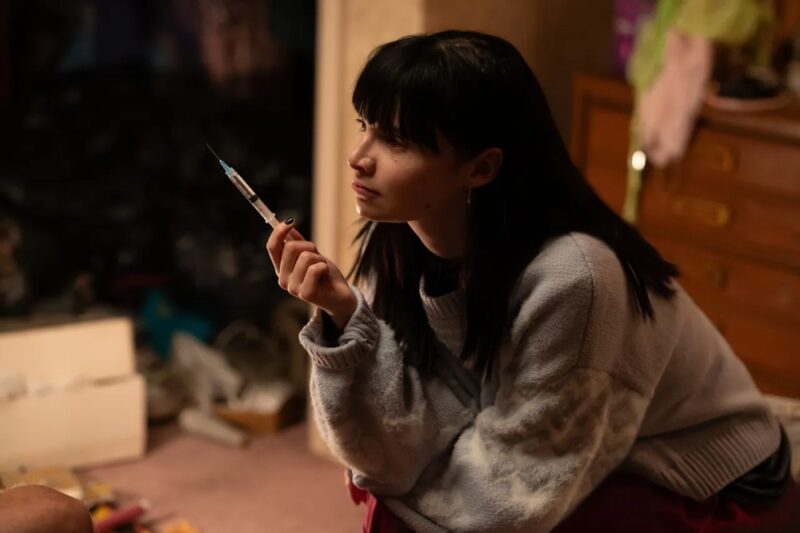
Instead, she became fascinated by what anger itself does to people.
“Anger can be a release. It can also trap you,” she said. “When anger consumes you, you lose a part of yourself.”
Rossum echoed that broader perspective, arguing that while audiences may inevitably draw parallels to high-profile abuse scandals, the story is ultimately much bigger than any one individual.
“Our show is really about the women,” she said. “I wish we knew those women’s names.”
That commitment to emotional honesty also extends to the supporting cast.
Jake Lacy said he deliberately avoided portraying Alice’s abusive former partner as a one-dimensional villain, instead exploring someone capable of recognising he’d caused enormous harm but lacking the emotional tools to change.
Similarly, Scoot McNairy found himself less interested in detective work than the emotional toll investigators carry home with them after spending years confronting humanity’s darkest crimes.
Those observations reinforce what Furious appears determined to argue from beginning to end: that trauma rarely produces simple people.
Whether audiences ultimately find themselves rooting for Alice, Catherine or somewhere uncomfortably between them may vary. Meriwether almost hopes it does.
After all, if Furious has one mission beyond delivering a gripping thriller, it’s forcing viewers to question why they instinctively divide people into heroes and villains in the first place.
As Rossum put it, the best stories don’t reassure us.
“They confront something in us.”
Furious premieres its first three episodes on Hulu in the United States and on Disney+ internationally on July 27th, 2026. It will subsequently air each episode weekly before its season finale on August 31st.
