

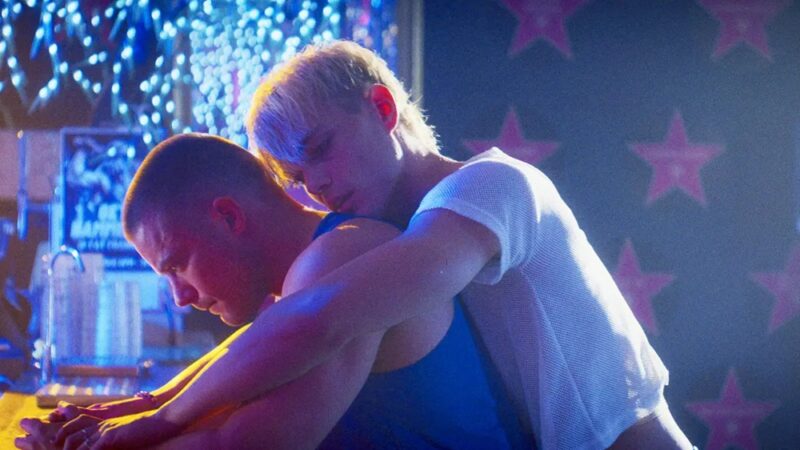
Neon lights, sweaty dancefloors, dangerous attraction, and a hero caught between duty and desire – Body Blow proudly wears the DNA of the classic erotic thriller. Yet beneath its stylish noir exterior lies a deeply contemporary exploration of queer identity, masculinity, and the institutions that shape both.
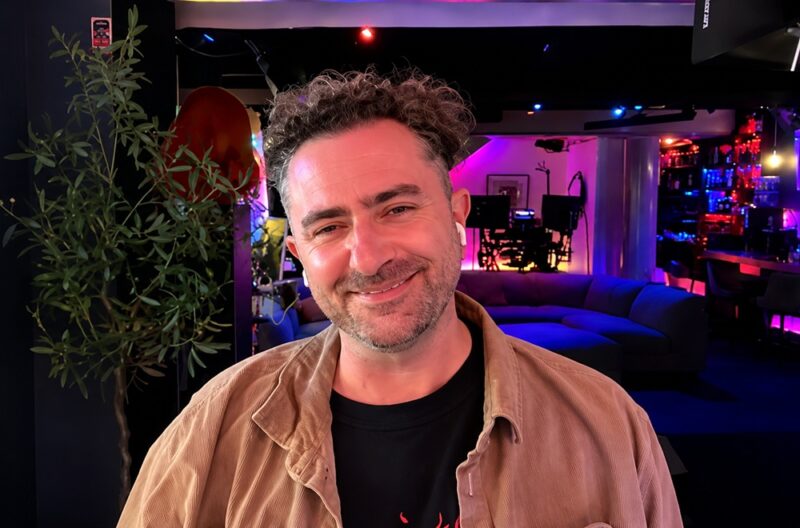
Ahead of the film’s Sydney Film Festival premiere, our Peter Gray spoke with writer-director Dean Francis to discuss resurrecting a genre that Hollywood has largely abandoned, the influence of Sydney’s queer nightlife on the story, the complicated legacy of police and LGBTQIA+ communities, and why queer characters deserve to be every bit as messy, flawed, and fascinating as everyone else.
The film feels simultaneously contemporary while also being rooted in classic noir traditions, I’m curious: at what point in the process did you realise this story wanted to be a noir rather than a straight police procedural?
I think it was there right from the start, probably even before the story itself. The initial impulse was wanting to explore the erotic thriller as a genre, alongside the traditions of film noir. My starting point was actually Double Indemnity, and then, of course, Body Heat, which is almost a reinterpretation of Double Indemnity that pushes things further into erotic-thriller territory.
I felt the erotic thriller is a genre that’s largely disappeared over the last few decades, and it’s one that really deserves a comeback. At the same time, as a queer filmmaker, I was aware that most of the erotic thrillers from the ’80s and ’90s were very heterocentric. It felt like there was a lot of potential in exploring that style of storytelling through a queer lens.
From there, it became a matter of finding the right story that could support those stylistic ambitions and allow me to investigate those themes in a meaningful way.
The film is unapologetically erotic, and it feels very aware of exactly what kind of movie it wants to be. When you first started writing the character of Aiden, what questions were you asking yourself about masculinity, sexuality, and desire through that character?
Yeah, great question. I think I was approaching it from a post-gay-liberation perspective, where we sometimes take gay identity a little for granted. We now have institutions that are designed to accommodate LGBT people, like the police unit in the film, CLAG, which is Cop, Lesbian and Gays Guardians.
But what does it mean to exist within those institutions when there are still so many contradictions, both internal and external, created by the broader socio-political climate? I’m sure it’s not lost on audiences that police in New South Wales have a long history of violence against the LGBT community. Even today, there are ongoing tensions and incidents that continue to shape that relationship.
So, by definition, placing a character who is a gay police officer into that environment creates a fundamental dilemma. Then, when you layer on all the expectations around masculinity that the film explores, and the influences of noir and the erotic thriller, you start to build a picture of someone who’s essentially a pressure cooker.
Aiden is doing everything he can, emotionally and physically, to contain those contradictions and keep them under control. He’s constantly trying to cage parts of himself to stop them from spilling out. But, of course, that repression can only last for so long.
Ultimately, that’s what leads to the character’s implosion. Ironically, it’s only through that collapse that he becomes capable of opening himself up to the possibility of genuine intimacy and love.
And it’s not that Aiden is just struggling with being gay, he seems to view desire as a kind of enemy. Were you more interested in exploring sexual repression, addiction, self-hatred…or was it something else entirely? Or was it a mixture of those?
Yeah, I think it’s a mixture of all those things. There’s this idea that, in certain circles – and in Aiden’s case, within the police force – it’s perfectly acceptable to have a queer identity, as long as you’re not too queer. As long as you’re not too sexual, too expressive, or too visibly embracing that part of yourself. I think that creates a lot of confusion for Aiden. He’s constantly trying to work out what he’s allowed to do and how he’s allowed to express his identity without crossing some imagined line. There’s a sense that acceptance comes with conditions attached.
At the same time, he’s never really had to fight for his equality in the way previous generations did. Yet the hyper-masculine environment he inhabits as a police officer hasn’t necessarily evolved to accommodate alternative forms of masculinity. So he’s caught between those realities and ends up feeling quite lost within that culture.
Then you add the pressure-cooker environment of policing itself, along with the situation he finds himself in with this seductive and disruptive young man, and that’s really where the core conflict comes from. All of those tensions are bubbling beneath the surface, and eventually something has to give.
And then you have a character like Cody, who could have so easily been written as the classic femme fatale figure – but he’s far more complicated than that. What interested you about reimagining that archetype through a queer lens?
Well, I think, as you say, Cody is very much an archetype. He occupies the role of the femme fatale, which is a trope we’ve seen for decades across some wonderful films. But what I wanted to do was ground that archetype in something truthful.
The character was actually inspired by a number of people I’ve known throughout my life. Unfortunately, it is a reality that some young men who are heavily fetishised within the queer community can be manipulated and exploited, and that can leave them with a very distorted view of both the world and themselves.
In Cody’s case, he believes he’s doing what he needs to do in order to survive and maintain some sense of power or control. But what we gradually realise is that he’s actually playing into the hands of the very people who have exploited him. In trying to protect himself, he’s perpetuating the cycle that’s harmed him.
His relationship with Aiden is particularly interesting because it’s so fraught from the outset. Aiden is a police officer, and the film is very conscious of the power structures and forms of authority that come with that. We see some of those dynamics emerge early in their relationship.
But as they begin to move beyond those barriers and confront some uncomfortable truths about themselves, they start to understand each other on a deeper level. Through that process, both characters find a degree of redemption. At least, that’s how I see it.
Obviously, Sydney’s queer nightlife is not just a backdrop here, it very much feels like a character in itself. What aspects of the city did you want to capture that audiences outside Australia might not immediately recognise?
Yeah, I think we’re incredibly lucky in Australia to have such beautiful locations to shoot in, and it’s relatively easy to film in our cities, which is a huge advantage. When you’re working with a low budget, you have to maximise every bit of production value you can get, and our landscapes and cityscapes give you that for free.
This is a very Australian story. It’s rooted in Australian history and draws on experiences I’ve had here in Sydney, so I wanted to lean into that authenticity. We certainly weren’t shy about using some of the touristy shots – the Opera House, the Harbour Bridge, those classic Sydney vistas all make appearances in the film.
But what I was really interested in capturing was the unique character of the Oxford Street gay scene. It’s unlike any queer scene I’ve encountered elsewhere in the world. It has its own distinct culture, energy, and contradictions. For many years, the heart of that world was the Stonewall Hotel, so we actually wrote the film with that venue very much in mind. It’s a place that has this gritty, slightly grimy quality to it, but at the same time it’s larger-than-life, glamorous, and completely unapologetic. It embodies a lot of what makes that community and that part of Sydney so distinctive.
There’s also something bittersweet about it now, because the film has inadvertently become a tribute to a venue that no longer exists. As we know, Stonewall closed its doors a few months ago, which is a real loss. But at least the film preserves a version of it, allowing it to live on as part of this story.
Oxford Street really is such a unique, beautifully queer space. And on that topic, you have such a fascinating character in Fat Frankie. He’s so flamboyant, but genuinely terrifying. Were you interested in challenging assumptions audiences might make about power based on appearance with a character like that?
Oh, definitely. I think over the past decade there’s been a real sanitisation of queer culture. It’s often about presenting the most acceptable version of ourselves for a straight audience. A good example is RuPaul’s Drag Race, which has undeniably sanitised the drag world. That’s not a criticism of the show at all – it’s fabulous and has done incredible things – but the roots of drag culture, particularly in Sydney through the ’80s and ’90s, were much grittier, much dirtier, and far more dangerous.
Admittedly, that era was a little before my time, but Paul Capsis, who plays Fat Frankie, talks about remembering drag queens who would practically cut your throat. They were nothing like the camp-friendly figures many people associate with drag today. They were tough business owners operating in a time when it was illegal to be gay. They were uniquely vulnerable and often had to make deals with police, navigate organised crime, and survive in a world that was openly hostile to them.
Our film draws on that history and those stories from Sydney. More broadly, though, it’s also about expanding how queer characters are portrayed on screen. We don’t always have to present gay characters as completely sympathetic or unproblematic. People are complicated, and queer characters should be allowed to be complicated too. Those are often the more interesting stories to tell.
The film really is arriving during this period where there’s renewed conversations around masculinity. Were you conscious of engaging with the ideas that are often associated with the manosphere culture – like self-mastery movements and masculine identity?
Yeah, absolutely. I was only just becoming aware of that world myself and ended up going down a bit of a rabbit hole while writing the script. I think it was around the time Andrew Tate was constantly in the headlines and facing legal scrutiny, and I was really shocked by how predatory a lot of that culture felt.
What struck me was how vulnerable young people, particularly young men, were to those influences. Coming out of the pandemic, many had grown up in isolation, whether because of lockdowns or, in Sydney’s case, because years of lockout laws had already stripped away much of the city’s nightlife and social culture. There were fewer opportunities for real-world connection, and those relationships are often what help us figure out who we are.
Into that vacuum step these online figures who prey on insecurity and sell a completely fantastical version of masculinity. They encourage people down these increasingly delusional paths that eventually become self-reinforcing. It was something I felt strongly about exploring in the story.
I experimented with a few different ways of incorporating those ideas during the drafting process, but ultimately I settled on the approach you see in the film because it reminded me of the first-person narration in post-war film noir – the unreliable narrator guiding the audience through their perspective. It’s not a literal version of that device, but the influencer character essentially functions as an exaggerated manifestation of Aidan’s inner thoughts and insecurities.
It’s interesting that these themes feel so topical now. When we were writing the script, it felt like we were only just beginning to recognise and grapple with some of these issues, but they’ve only become more relevant since.
Yeah, it feels like the film is arriving at exactly the right moment, given everything that’s happening around online masculinity and figures like Andrew Tate. Before I let you go, Body Blow ultimately feels like the story of a man at war with himself. Throughout the film, Aiden is constantly wrestling with competing versions of who he thinks he should be. In your mind, what is the moment where he comes closest to truly understanding who he is?
Look, I think it’s when he allows himself to let his guard down – when he finally lets himself be uncaged, metaphorically speaking. I don’t want to spoil the film, but there’s a point where he allows himself to be in a position that isn’t dominant. He discovers a sense of comfort in not being in control, and that’s a really important moment for him.
Once that happens, an equilibrium begins to develop between him and Cody. Their relationship starts to find a balance that wasn’t possible before. And then, of course, there’s the major decision he has to make regarding the police. I won’t give away the specifics, but recognising that the police are corrupt and deciding to reject that authority is another significant step on Aiden’s path towards emancipation and self-acceptance.
Body Blow is screening as part of this year’s Sydney Film Festival, running between June 3rd and 14th, 2026. For more information on session times and ticket sales, head to the official site here.
