

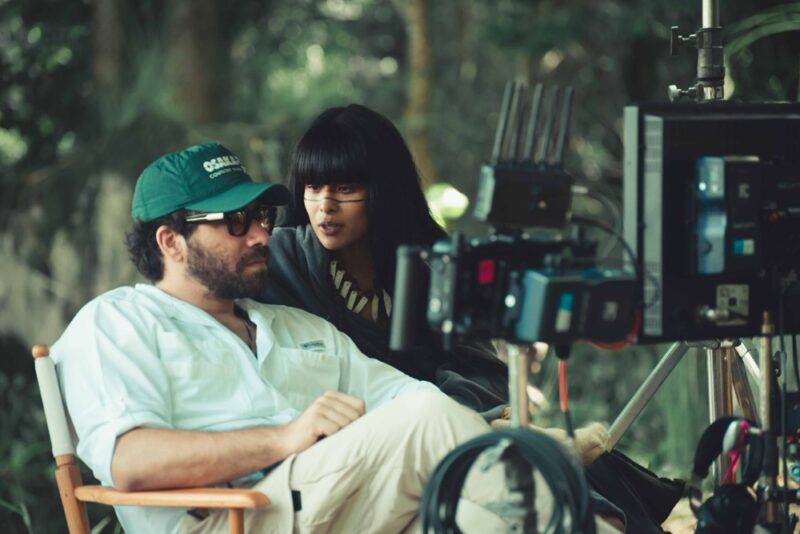
History is often told in sweeping gestures – conquest, empire, survival. But in Zumeca, David Maler narrows the lens. Set against the violent collision of worlds in the early days of the Americas, the film reframes the so-called “discovery” of the New World through something far more intimate: the relationship between a Spaniard, Miguel, and a Taíno woman, Zumeca.
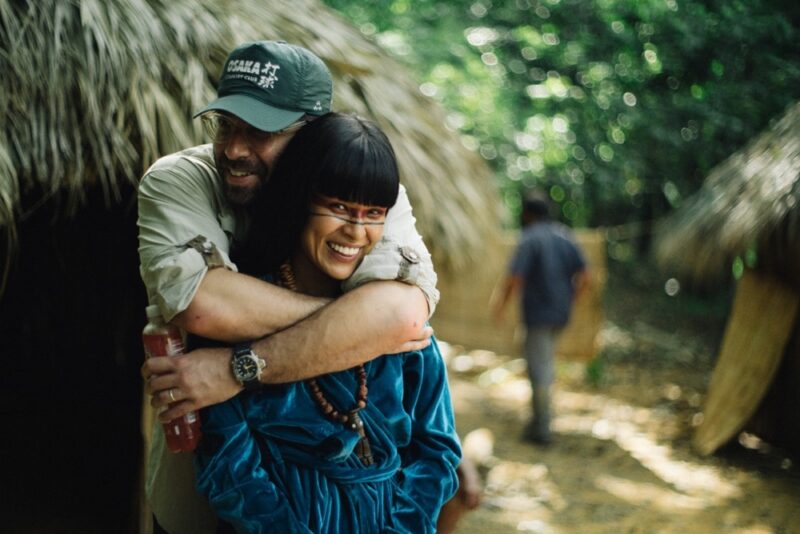
Written, directed and produced by Maler, and based on the book by Lucía Amelia Cabral, Zumeca is grounded in a true story yet driven by emotional immediacy. Filmed on location in the Dominican Republic, the film examines conquest not as abstraction, but as lived experience – as love, cultural rupture, faith, and survival contained within two people.
Maler is no stranger to shaping Dominican cinema. A leading actor and filmmaker trained in New York, he has become one of the defining figures of the country’s modern film industry, both on screen and behind the camera. His previous feature, Cuarencena, was selected as the Dominican Republic’s official submission for Best International Feature Film at the 2024 Academy Awards®, and his work has earned multiple La Silla Awards, the nation’s highest film honors. From commercially successful comedies to more politically resonant dramas, Maler’s career bridges popular appeal and artistic ambition.
With Zumeca premiering at this year’s Slamdance in Los Angeles, the filmmaker turns his focus to one of the foundational – and fraught – origin stories of the Americas. In conversation with our Peter Gray, Maler reflects on balancing historical truth with emotional storytelling, the responsibility of portraying Taíno heritage on screen, and why this project marks a deeply personal evolution in his work.
I wanted to start by making sure my research is right – you were born in a fishing village bordering the Caribbean Sea, and this film is so tied to rivers, caves and coastlines. Do you feel like you’ve been visually preparing for this film your entire life?
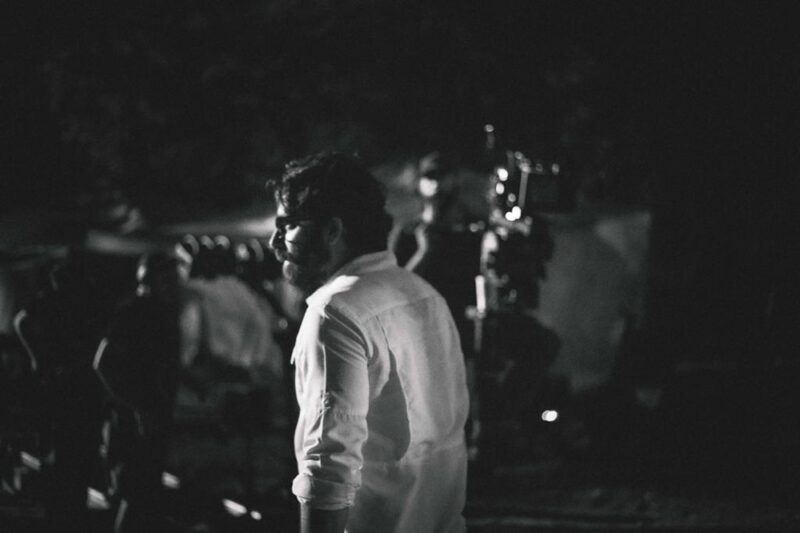
Absolutely. One of the most important decisions for me was shooting in black and white. Where I grew up, we didn’t have electricity until I was about fourteen or fifteen. We had a generator that worked sometimes, but there was no artificial light at night. So when there was moonlight, the world was black and white – there was no colour. Those nights were magical, sometimes a little scary, but that kind of fear makes you curious and fascinated. I wanted to translate that feeling into the film.
And growing up so close to the river – I mean, I’d wake up and five steps later I’d be at the water – that intimacy with nature and with community stayed with me. The town was only about 400 people. That closeness, that energy, I wanted to bring that into the film.
There’s also the historical presence. Where I grew up, there were many Taíno settlements during the time of Columbus and the Spanish conquest. There were caves everywhere. As a kid, you’d go to the river and find arrowheads. I found one once. That presence was always there – and not to sound eccentric, but the energy was there too. So yes, there’s a lot of me and a lot of my childhood in this film.
The black and white feels so striking – and those still-life compositions. Were you consciously borrowing from visual art traditions, or was that instinctive? I know your father is a visual artist.
It’s in the DNA, for sure. My father’s work has influenced everything I’ve done. In most of my films there’s some kind of tableau vivant – compositions that feel like paintings. But this film was different. It was incredibly ambitious and we shot it in five and a half weeks – it should’ve been twenty. It should’ve had five times the budget. So instead of my usual very detailed shot lists – I’m normally extremely structured – we had to be more instinctive.
Ironically, that removed filters. When you make decisions in the moment, there’s more of you in them. You don’t have time to overthink. My DP and I would rehearse and then decide on the spot. That urgency meant a lot of my lifelong references, including my father’s influence, surfaced naturally.
Identity is so central to the film. You left the Dominican Republic at 18, lived abroad, then returned. Did that distance change how you saw the Caribbean and stories of conquest and identity?
Absolutely. The style of my work has been shaped by what I absorbed abroad – European cinema, Italian neorealism, the Nouvelle Vague, Orson Welles’ adaptations. But the substance of this film is 100% Dominican. There’s a saying in the Dominican Republic: identity is built abroad. You’ll find the most Dominican Dominican is the one living in New York. Sometimes you need distance to appreciate what you have. When I returned, I felt like a stranger in my own land. This film became a way of reclaiming my roots and reconnecting to a collective memory that we’ve partly lost.
You can feel your theatre background in the staging – the blocking, the stillness. And you co-founded Cacique Films at a young age. Do you see this film as part of a larger mission to shape Dominican cinema globally?
Hearing you say that gives me goosebumps. I’ve always been cautious about going too personal. You only get one shot at that, and it’s scary (because) you can lose objectivity. But this film helped me lose that fear. My next project is deeply personal – about the town where I grew up. This changed my course. I’m much more interested now in telling our stories from a personal perspective.
Since the film deals with historical events, how did you balance documented history with emotional truth?
It was crucial to be as historically accurate as possible – but we’ve lost so much information. The eradication of the Taíno happened so quickly. What survives exists in fragments – language, food, knowledge of nature – but it’s not consolidated.
Once we had the research framework, I focused on the emotional story: two people who loved each other deeply but didn’t know how. They processed reality differently – one emotionally, one intellectually. Both valid. But love alone isn’t enough. There’s also this Greek tragedy element – trying to escape prophecy and running straight into it. That felt central to the story.
Miguel feels haunted by the old world, while Zumeca is spiritually anchored in the land. Did you see them as two ways of understanding existence?
Yes, absolutely. Trying to understand Zumeca’s worldview was transformative for me. It’s impossible to fully deprogram ourselves from Western frameworks, but I tried to get as close as I could. That process alone made the film worth making for me, personally.
You wrote, directed and produced this. Did wearing all those hats affect the emotional tone?
Everything happened so fast – I wrote the script in a week and a half. I had been developing it in my head for years, but the physical writing was intense. We started pre-production almost immediately. There was no time to separate roles. It was chaos, but a productive chaos. I had to be fluid. That intensity shaped the emotional tone.
Was there something non-negotiable for you? One image or moment that had to survive?
Yes. The image of the tree and the hanging body – that foreboding image – was non-negotiable. The dream with the horse too. And the way the nights were shot. That was incredibly complicated. We built scaffolding towers and used old lights from the ’80s and ’90s instead of modern LEDs. It gave it that texture.
You can tell this is made by someone who loves cinema. With no electricity growing up, what was the first film that made you think: this is what I want to do?
We didn’t have cable. Just a VHS player. My father would bring tapes back from his travels. But he was 55 when I was born, so what were “kids’ movies” to him were Chaplin, Buster Keaton, Jacques Tati. But when I was about twelve, family friends gave me a DVD player and some DVDs – Bertolucci’s The Conformist, Antonioni, Fellini, Pasolini. Probably things I shouldn’t have been watching at that age. But those films shook me. They didn’t just entertain me – they affected me deeply. That’s when I knew. I didn’t know if I wanted to act or write or direct – but I knew I wanted to keep feeling that, and hopefully make others feel it too.
I have this theory – if you weren’t watching films you shouldn’t have been watching as a kid, you don’t truly love cinema.
Exactly. It imprints on you.
This film feels like proof of what’s possible outside the world of IP and remakes. It’s so refreshing. Thank you for making it – and for taking the time to chat.
Thank you, Peter. It was an absolute pleasure.
Zumeca is screening as part of this year’s Slamdance Film Festival, running in-person from February 19th to 25th, 2026, in Los Angeles, and virtually from February 24th to March 6th, 2026, on the Slamdance Channel.
