

Nia DaCosta’s 28 Years Later: The Bone Temple takes the world Danny Boyle and Alex Garland built and flips it on its head, and the result is both shocking and mesmerizing. While it shares some of the DNA of its predecessor, this is very much DaCosta’s film: audacious, unflinching, and surprisingly beautiful.
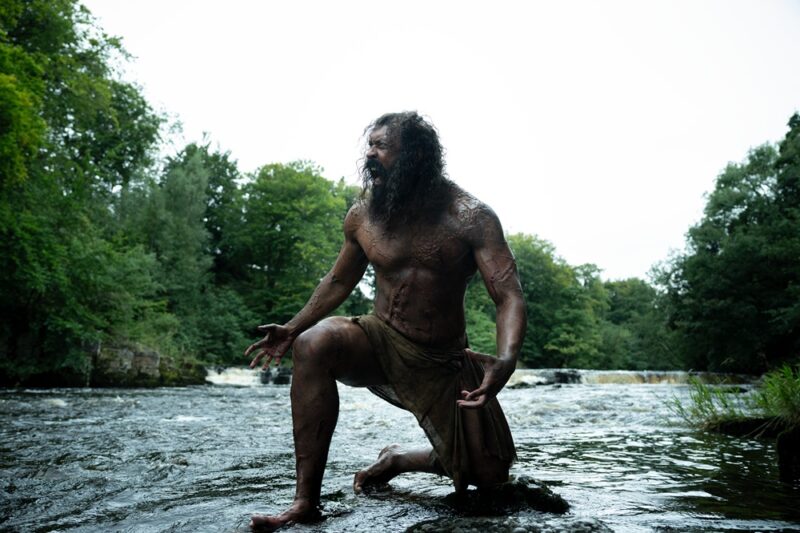
The story expands the mythology of the infection, but in a brilliant twist, the greatest threat isn’t the infected anymore – it’s the inhumanity of the survivors themselves. A riveting Ralph Fiennes returns as Dr. Kelson, a man devoted to the creation of the Bone Temple, whose bond with Samson, the Alpha infected, is one of the film’s most compelling and unexpected emotional cores. Fiennes navigates this complex relationship with both restraint and intensity, making Kelson a figure of both hope and profound melancholy. Chi Lewis-Parry’s imposing Samson is terrifying, awe-inspiring, and, gradually, heartbreakingly human, a testament to the film’s ability to marry horror with deep emotional stakes.
In The Bone Temple, Spike (Alfie Williams) finds himself forced into the twisted world of Jimmy Crystal (Jack O’Connell), a sadistic cult leader whose violent and manipulative ideology has created a roaming band of devoted followers known as the Jimmies; their appearance at the tail-end of 28 Years Later making much more sense in the grand scheme of The Bone Temple‘s temperament. Spike must navigate their deadly initiation rites while discovering allies in unlikely places, including the morally conflicted Jimmy Ink (Erin Kellyman). Meanwhile, Kelson continues to care for Samson and maintain the Bone Temple, a monument to the dead that holds secrets, hope, and a strange kind of power. As the paths of Kelson, Spike, and Jimmy Crystal converge, loyalties are tested, humanity is questioned, and survival becomes more than just a fight against the infected – it’s a battle for what remains of the human soul.
Visually, the film is a masterclass. DaCosta and cinematographer Sean Bobbitt craft two contrasting worlds – Kelson’s Bone Temple is pastoral, almost transcendent in its eerie stillness, while the Jimmies’ chaotic realm pulses with tension, violence, and color. Production designer Gareth Pugh and costume designer Carson McColl turn post-apocalyptic detritus into art, from the bone-laden grandeur of the Temple to the patchwork tracksuits of the cult, creating a fully realized, immersive universe.
And yes, it is violently intense – at times shockingly so – but it’s never gratuitous. The brutality underscores the film’s central question: who are the real monsters in a world stripped of civilization? Hildur Guðnadóttir’s score heightens every moment, balancing dread with melancholy, and the meticulous editing by Jake Roberts keeps the story taut even as it traverses sprawling emotional and physical landscapes.
28 Years Later: The Bone Temple is a daring, exhilarating ride. It’s torturous and harrowingly beautiful in equal measure, a film that will leave audiences stunned, unsettled, and ultimately in awe. DaCosta has made a horror epic that is emotionally resonant, visually striking, and unapologetically her own. For fans of the franchise – and anyone who loves bold, intelligent horror – it’s an unforgettable cinematic experience.


FOUR AND A HALF STARS (OUT OF FIVE)
28 Years Later: The Bone Temple is screening in Australian theatres from January 15th, 2026.
