
There’s an undeniably sharp hook at the centre of Deepfake – a near-future (or arguably present-day) world where friendship, identity and self-worth can be outsourced with the tap of an app. It’s a premise that feels both heightened and uncomfortably familiar, tapping into a culture where validation is currency and the lives we curate online rarely resemble the ones we actually live.
Writer-director Matt Eames leans heavily into that discomfort. His film exists in the same emotional space as his director’s statement – that push-pull relationship with the internet where disgust and dependency coexist. Deepfake understands that contradiction well, and at its best, it finds a darkly comedic rhythm in watching its protagonist willingly sink deeper into the very systems eroding her sense of self.
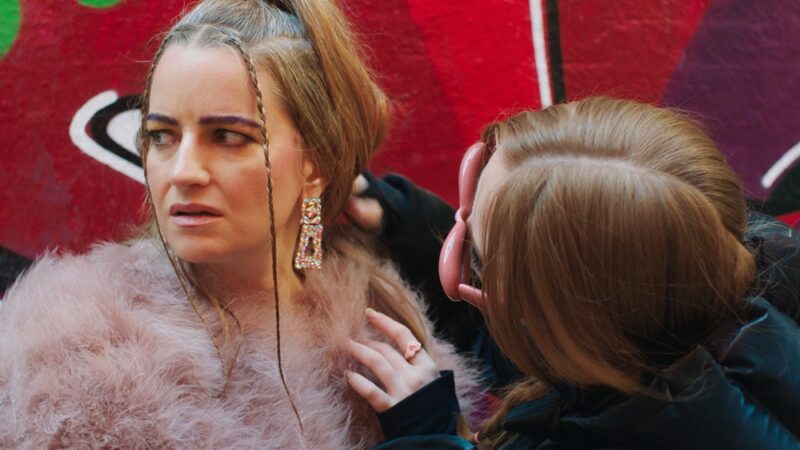
At the centre of it all is Jessica DiGiovanni as Jane, delivering a performance that carries much of the film’s weight. She navigates Jane’s spiral with an effective mix of desperation and quiet exhaustion, grounding the film even as its concept edges into satire. There’s something recognisably human in her portrayal – that aching need to feel seen, even if it comes from all the wrong places.
If DiGiovanni provides the emotional core, Jocelyn Weisman injects the film with its most memorable energy. As London, the hyper-curated, algorithmically perfect social media “guru,” she’s a standout – vapid, controlled, and just unsettling enough to feel like a walking embodiment of influencer culture. It’s a performance that walks a fine line between parody and reality, and it lands squarely in that unnerving middle ground.
The film’s ideas are timely and resonant. It skewers the transactional nature of modern relationships, the hollow pursuit of online perfection, and the way we often prioritise the approval of strangers over genuine human connection. The notion of “buying” companionship – only to watch those artificial relationships flourish independently, without you – is both amusing and quietly cutting.
Where Deepfake falters is in how far it pushes those ideas. The narrative settles into a repetitive rhythm, cycling through Jane’s attempts to fill the void by acquiring new versions of connection, only to find herself back where she started. While this loop may be intentional – a reflection of the endless scroll, the algorithmic trap – it also limits the film’s momentum. There’s a sense that the story is circling its point rather than evolving it.
Even the more intriguing threads – like the purchased friends forming their own lives beyond Jane – feel underexplored. They hint at something sharper, perhaps even more unsettling, but never quite develop into anything substantial. Whether that emptiness is thematic or simply a missed opportunity will likely depend on the viewer’s patience.
Still, there’s an argument to be made that the film’s very shallowness is part of its design. In a world where everything is surface-level, endlessly replaceable, and curated for consumption, Deepfake mirrors that experience – sometimes to its detriment, but often with knowing intent.
It may not fully capitalise on its clever premise, but Deepfake remains an engaging, mildly biting reflection of the digital age – one that understands the joke, even if it doesn’t always push it far enough.


TWO AND A HALF STARS (OUT OF FIVE)
Deepfake is screening as part of this year’s Tribeca Film Festival, running between June 3rd and 14th, 2026. For more information on the festival, head to the official site here.
