


More than a million Australians visited Japan last year, a record, and up 15 per cent on the year before. The overwhelming majority of them arrived without a word of Japanese beyond “arigato” and a hopeful smile. And almost all of them came home raving about the trip.
That’s worth sitting with, because “I don’t speak the language” remains the single most common reason people hesitate over Japan. The fear is understandable. It’s also about a decade out of date.
The language barrier isn’t what you think it is
Japan has quietly become Australia’s third most popular overseas destination, overtaking the United States. That didn’t happen because a million Aussies secretly studied kanji. It happened because Japan, in 2026, is a country you navigate with systems rather than sentences.
Here’s the honest picture. English signage in Japanese cities is extensive. Train stations, airports and major attractions are labelled in English almost everywhere you’ll go. Conversational English, on the other hand, is genuinely thin. The shopkeeper in Takayama and the taxi driver in Osaka probably won’t chat with you in English, and that’s fine, because you’ll almost never need them to.
Those are two different problems with two different fixes. Reading is solved by signage and your camera. Talking is solved by your phone. Which means the real preparation for Japan isn’t a phrasebook. It’s getting four systems working before you leave: transport, translation, payments and a human backup plan. All four live in your pocket.
System one: transport that reads itself
Japan’s rail network looks terrifying in photos. In practice, it’s one of the most foreigner-proof transport systems on earth.
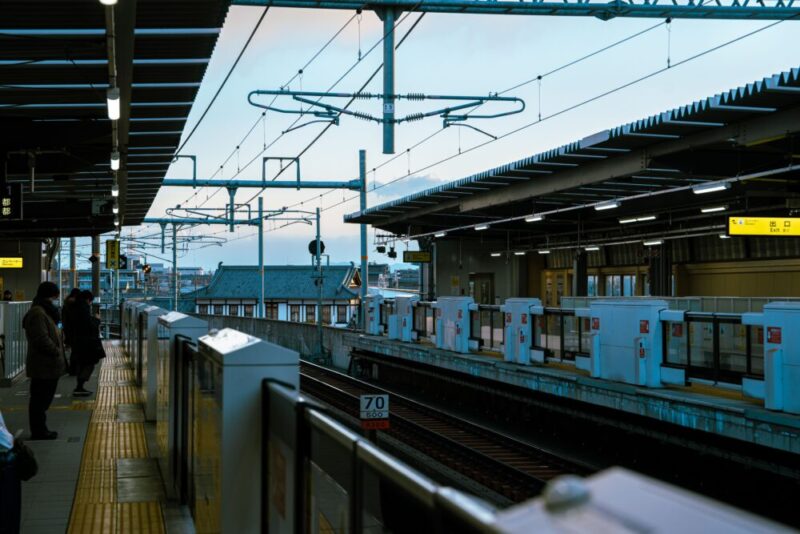
Station signs typically appear in three scripts, including romanised Japanese, and English signage is standard across the major networks. Every Shinkansen station runs multilingual displays and announcements. More useful still, the entire system is colour-coded and numbered. Tokyo’s Yamanote Line is the green one, and every station on it has a code. You don’t need to pronounce “Shimbashi”, you just need to know you’re getting off at JY29. The numbering convention works in every major city and carries you through smaller stations where English thins out.
Layer Google Maps over the top and the job is done. It handles routes, platforms, transfer times and fares in English, down to which exit to take.
The IC card shortcut
Skip paper tickets entirely. If you’re on iPhone, download the Welcome Suica Mobile app before you fly. It issues a digital Suica card instantly, with no deposit, valid for 180 days, and you can top it up in the app with an Australian Visa or Mastercard. Android travellers can grab a physical Welcome Suica at Narita or Haneda when they land. Either way, you tap through every gate in the country and never once decipher a fare chart.
System two: a translator in your pocket
Translation apps have reached the point where the language barrier is less a wall and more a mild speed bump.
Google Translate’s camera mode is the everyday hero. Point your phone at a menu, a sign or a packet of mystery snacks and it overlays English in real time. Its conversation mode handles voice in both directions, and it’s free. For back-and-forth conversation that sounds natural rather than robotic, Papago consistently rates as the strongest performer for Japanese. For anything written that actually matters, like an email to a ryokan, DeepL is the accuracy pick.
One honest caveat. These apps can work offline if you download the language packs, but offline camera and voice translation is noticeably more limited and less accurate than the online versions. Every impressive thing your translator does, it does best with a live connection. Keep that in mind, because it leads directly to the one piece of preparation that matters more than any other.
The thing that makes it all work: data
Look back at everything above. The maps, the station codes, the digital Suica, the camera translation. All of it is an app, and all of it assumes your phone has data from the moment you clear customs.
Australian roaming packs are the expensive default, and airport Wi-Fi gets you exactly as far as the airport. The better move is sorting a local connection before you leave home. A dedicated Japan SIM card from Mobal is a straightforward option for Australians: they ship worldwide for free, or you can pick one up at the airport when you land, and there are no contracts to cancel afterwards. If your phone supports eSIM you can skip the physical card entirely, and if you want a Japanese phone number for restaurant bookings, voice plans exist too. Their support team operates in English, which is exactly the kind of detail that matters when you’re troubleshooting a connection in a language you can’t read, and the bulk of the company’s profits go to charity.
However you do it, do it before the flight. Landing in Tokyo with a working phone is the difference between using every system in this article and standing in the arrivals hall doing maths on roaming charges.
System three: paying without a word
The happy surprise is that your transport card is also your wallet. Suica and its IC siblings are accepted at convenience stores, vending machines and a large share of shops and cafes, which removes the classic tourist fumble of counting unfamiliar coins while a queue forms behind you.
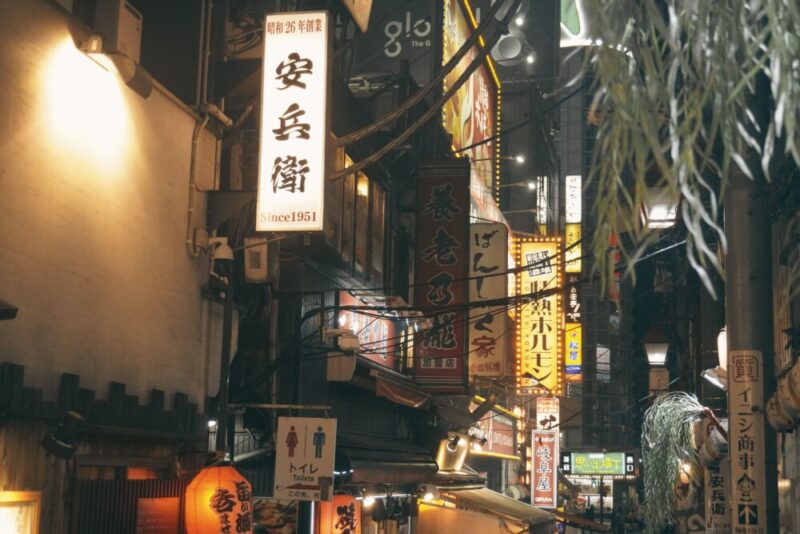
Cash hasn’t disappeared, though. Smaller restaurants, temple offerings, market stalls and plenty of rural businesses still run on yen notes, so carry some. And when it’s time to order food, Japan has been solving the language problem since long before smartphones: plastic food displays in windows, picture menus, and ticket-machine restaurants where you pay first and hand over a stub. Pointing, in Japan, is a legitimate ordering strategy.
System four: the human backup
Sometimes the phone dies, or the situation is too weird for an app. Japan has you covered there too.
The national tourism organisation runs a 24-hour Japan Visitor Hotline with English support, every day of the year. Certified tourist information centres, marked with a red question mark, are stationed across the country with English-speaking staff and English materials.
And carry five words with you: “sumimasen” (excuse me), “arigato gozaimasu” (thank you), “hai” (yes), “eigo” (English) and “wakarimasen” (I don’t understand). That tiny vocabulary, delivered with a bit of warmth, unlocks more goodwill than fluent grammar ever could. Japanese people are, as a rule, remarkably patient with lost foreigners who are visibly trying.
You’ll be fine. A million Aussies just proved it.
Nobody among last year’s record-breaking million Australians spoke their way across Japan. They tapped, pointed, translated and smiled their way across it. Get the four systems ready, land with data already working, and Japan stops being the intimidating language-barrier destination and becomes what it actually is: possibly the easiest non-English-speaking country on the planet to travel.
Then you can worry about the real challenge, which is that Japan’s tourism board is now openly daring Australians to go beyond Tokyo, Osaka and Kyoto into prefectures like Gifu and Iwate. Deeper into the countryside, the English signage fades and the four systems earn their keep. Pack them well.
