

One of the best things about travelling with a proper camera has nothing to do with photography. It has everything to do with how the mind works.
Specifically, it’s how attention works. Attention is a prerequisite for presence, which in turn is the essential ingredient for wellness. Attention is important. The very idea of it has gone through a profound change with technology over the past 15-16 years.
Paying attention in Japan
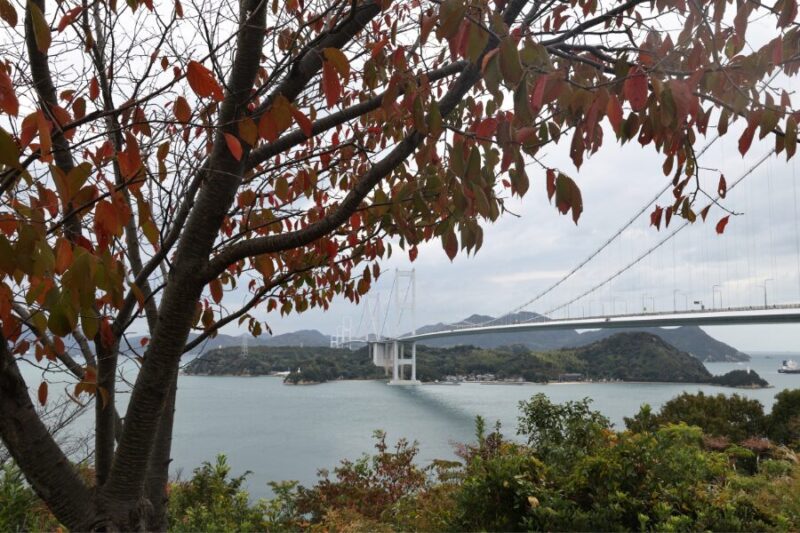
It was not my first time in Japan. I already knew how Tokyo moved and how quickly its quieter details could disappear beneath the scale of the city. I knew Japan’s autumn colours would be spectacular.
But I’ve only ever been with a smartphone in hand. And, look, that’s great. When I travel now, I’m doing so with an iPhone 17 Pro and a Google Pixel 9 Pro XL. They both serve different purposes, and I’ve been getting a lot of compliments on my content lately. But try as they might, a phone can never be a professional camera if you really want that sharpness, that detail and those true-to-life colours.
After all, if you’re doing this for social media, you want to stand out. Quality stands out. All you need is instinct.
And so I hit up Canon and got a loan EOS R5 Mark II to take along with me to my most recent trip to Japan.
Note the photos here have been compressed to fit with the website’s dimensions.
Something changes when you walk around with a camera ready. You notice late-afternoon light reflecting from the side of an office tower. You stop when a row of golden ginkgo leaves forms a natural frame around a temple roof. A person standing beneath an illuminated sign suddenly gives an otherwise ordinary street some texture.
Genuinely caring about the results is hard when snapping on your smartphone has become second nature. The value of a camera like the R5 Mark II is no longer just in the kit itself, nor is it the lenses. It’s in your mentality and how it changes as a function of your professional camera. A tool like this puts you in that photographer’s mentality. And a photographer’s mentality just makes you a better explorer.
The thought that something might look good on camera means it has already caught your attention. You are no longer just walking through a destination. You are deciding which parts of it deserve more of your time.
That focus is valuable. Travel can move quickly, especially when you are working through an itinerary and trying to fit several places into one day. Photography pushes against that. It asks you to stop, find an angle and consider what you are looking at before the moment passes.
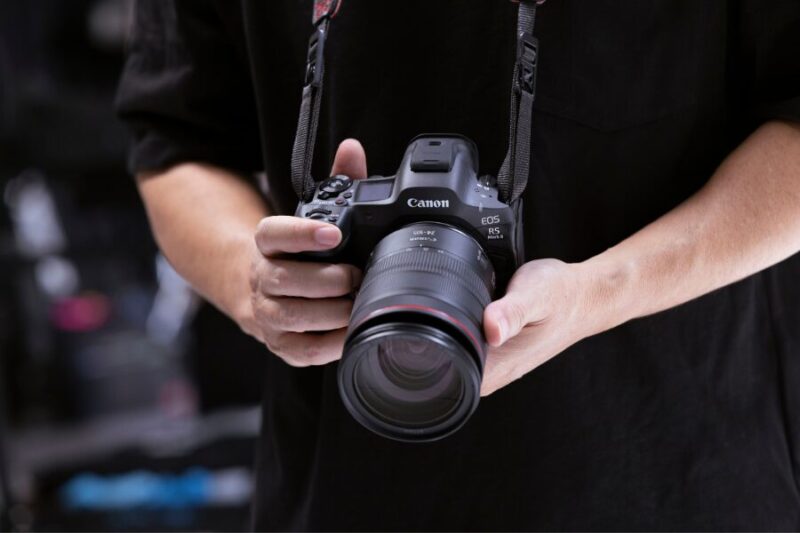
The Canon EOS R5 Mark II is very good at keeping that attention where it belongs. It is a technically formidable camera, although it rarely makes the process of taking a photograph feel technical. After using it around Ehime and Tokyo, that became its greatest strength.
Design
The R5 Mark II is not a small travel camera, particularly with a lens attached. It is, however, exceptionally comfortable to carry and operate.
Canon’s familiar grip remains one of the best in the business. It feels secure without forcing your hand into an awkward position, while the controls are arranged logically enough that I was adjusting settings without pulling the camera away from my eye. That became increasingly useful during long days spent moving between outdoor scenes and dim interiors.
The body feels solid and suitably premium, which gives you confidence when travelling through changing conditions. I was using it through busy train stations, crowded streets and lengthy walks around regional Japan. It never felt precious or unusually delicate.
Most of my time was spent with the RF24-105mm. For travel, this pairing makes an enormous amount of sense.
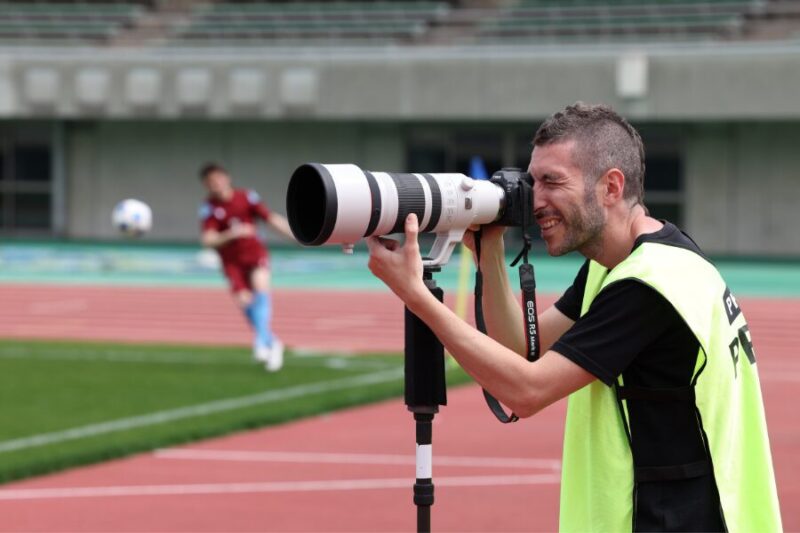
At 24mm, the lens is wide enough to capture temples, streetscapes and Tokyo’s tightly packed architecture. Moving further along the range lets you pull individual details out of a landscape or isolate someone within a crowded scene. At 105mm, I could photograph autumn leaves high above me or compress the layers of a Japanese garden without physically changing position.
The practical advantage is that you rarely need anything else. Canon’s RF lineup is known for its diversity, however, so there’s plenty of ways people can turn this into a true pro-grade powerhouse if need be.
But lens changes interrupt the act of exploring. You have to stop, find somewhere relatively clean and spend time deciding which focal length might suit whatever comes next. Travelling with the RF24-105mm meant I could react to most situations without opening my bag.
That also allowed me to travel lighter. Rather than carrying several heavy lenses around Japan, I could leave the hotel with one camera and one lens knowing I had most common styles covered. It is not the smallest combination on the market, but it remains far more discreet than travelling with a full collection of specialist glass.
Performance
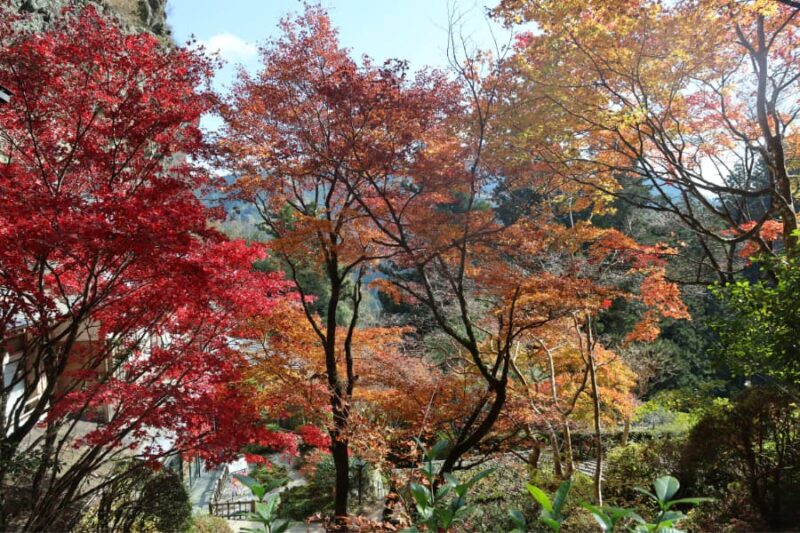
Ehime gave the R5 Mark II plenty of colour to work with. Autumn had painted parts of the prefecture in strong reds, bright yellows and deep gold. These were not timid little accents buried in the landscape. The colours were declarative, often covering entire trees and filling large sections of the frame.
The camera’s 45-megapixel full-frame sensor captured those scenes with outstanding detail. Individual leaves remained distinct in wider photographs, while the files had enough resolution to crop into smaller compositions afterwards without immediately falling apart.
Colour was equally impressive. Closely packed shades of red and orange retained their differences rather than collapsing into one oversaturated block. Gold leaves remained bright while preserving their surface texture, even when sunlight was hitting them directly.
Tokyo required a different set of skills. The city presents constant contrasts. Dark streets sit below bright commercial signs. Glass towers throw sunlight in unpredictable directions. Pedestrians move quickly through scenes that can feel balanced for only a second or two.
The R5 Mark II’s autofocus system handled that unpredictability particularly well. Face and eye detection found people quickly, while subject tracking allowed me to concentrate on framing rather than repeatedly checking whether the camera had chosen the right point.
That reliability matters when travelling. Most street scenes cannot be recreated, and few strangers are going to walk through the same patch of light twice because your autofocus missed them the first time.
The camera can shoot at up to 30 frames per second with its electronic shutter, although I rarely needed anything close to that speed. More useful was knowing the performance was there when a scene became busy. Short bursts made it easier to capture someone at the right point in their stride or photograph a fleeting expression without filling the memory card with hundreds of near-identical images.
Canon’s in-body image stabilisation was another significant advantage. I spent much of my time in Tokyo shooting handheld, including after sunset when the almost-Christmas atmosphere had started spreading through shopping districts, and streets were glowing with seasonal lights.
The stabilisation allowed me to keep working without a tripod, preserving the spontaneity that makes street photography enjoyable. It also kept the travel setup relatively simple. A tripod may produce a cleaner long exposure, but carrying one around Tokyo all day adds another layer of planning to every photograph.
Low-light images held up well, with strong detail and manageable noise at higher ISO settings. The R5 Mark II also dealt confidently with scenes containing intense highlights and deep shadow, giving me enough flexibility in the files to recover detail without making the finished photograph look overworked.
Video performance is similarly serious. The camera can record internally at up to 8K RAW, although most travellers will get more practical use from its excellent 4K footage. Stabilisation keeps handheld movement controlled, while the autofocus continues tracking without demanding constant input.
There is an intimidating amount of technology inside this camera, but Canon has done a good job of making the fundamentals accessible. A beginner can use automatic or semi-automatic settings and produce excellent photographs immediately. The deeper controls remain available as their confidence builds.
That accessibility should not be confused with simplicity. The R5 Mark II is a professional-level hybrid camera with more features than most travellers will ever need. It simply does not punish you for being unfamiliar with them.
Verdict
A smartphone is usually the lightest and easiest way to photograph a trip. For many people, it will also be enough.
But a tool that produces better results is going to be much better for the mind. The R5 Mark II’s autofocus removes much of the uncertainty that comes with amateur photography, and the ease makes you want to experiment. Paired with the RF24-105mm f/4L IS USM, it also becomes a remarkably complete travel setup. That lens covers most situations without requiring a bag full of alternatives, helping offset the size and weight of carrying such a powerful full-frame camera.
The R5 Mark II is expensive and more capable than the average traveller requires. Yet those same capabilities make photography feel easier. Beginners can point, shoot and get exciting results, while experienced photographers have extensive control whenever they want it.
The Canon EOS R5 Mark II retails for around $6,699 and can be purchased online.
Visiting Japan & Where To Stay
Japan is many things to many people, but it holds a special place for nature photographers. Seasons still matter here. Autumn is so opposed to spring, and summer is obviously nothing like winter. It’s the colours that change. The many different trees planted around Japan hold a divine reputation, driving the dynamic landscapes that evolve throughout the years, so photographers have an endless palette to play around with.
Coupled with the retro-futuristic aesthetic that defines a lot of Japan’s biggest cities, like Tokyo and Osaka, as well as the adherence to ritual and ceremony. There’s no limit to the richness Japan can offer photographers. Which means it’s also a much kinder place to amateur photographers.
You don’t have to have blindingly fast shutter speeds to capture the sun at the exact moment it hits those large architectural wonders of New York City and Chicago. You aren’t rolling quickly through a dense safari park hoping to lock in the various expressions painted across the faces of Lions, elephants, and giraffes. You’re resting in some of the most spiritually fulfilling places on earth, absorbing the perfect blend of city life and natural wonder.
And so visiting Ehime is always a good idea. It’s one of the smallest prefectures in Japan, located on the island of Shikoku, and is famous for its wide, wondrous natural landscape. There’s also plenty of photo opportunities along the 88-temple Henro Trail.
Tokyo’s photography spots are plentiful but you still want to pick your pocket carefully so you aren’t lugging heavy equipment around all day. I’ll give you three options – modern luxury, classic luxury and budget.
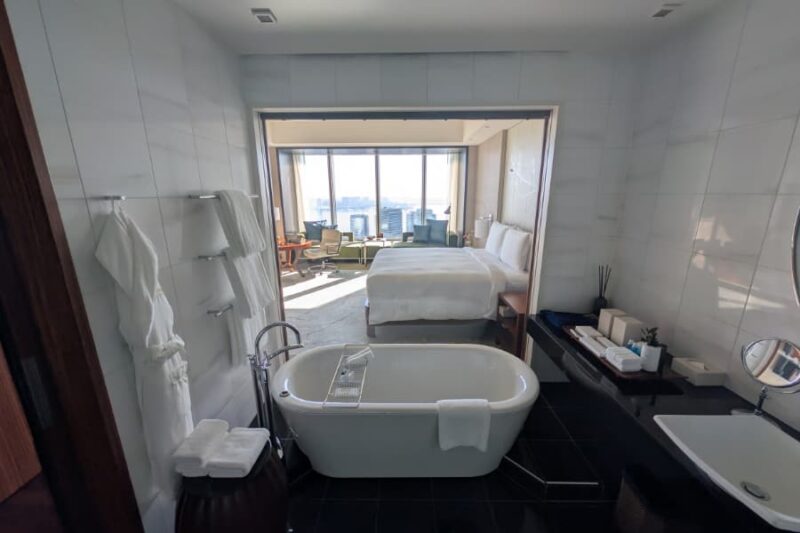
Of course, you’ll want to stop in Tokyo too. And you’ll need to pick your pockets carefully. I suggest staying near the Imperial Palace, as there are great photography spots around there. If you want a comfortable base, look to Four Seasons Tokyo at Otemachi. It’s one of two Four Seasons properties in the city, and it’s closest to large, sightly city parks, temples, and skyscrapers.
Another option would be to stay over at Conrad Tokyo. As one of Tokyo’s Grand Dames, the luxury hotel has an enviable position overlooking Tokyo Bay and the beautiful Hamarikyu Gardens, a deeply poetic place and one that beautifully balances Tokyo’s Edo period with 21st-century modernism.
If you’re doing this on a tight budget, I suggest APA Akasaka. It’s in one of the best neighbourhoods for younger explorers, has some very affordable rooms that don’t compromise on comfort (they’re just small) and is one of the best examples of Japan’s Business Hotels – which are highly functional, tech-forward, comfortable and considered.
Canon loaned the writer a camera for this article. The writer visited Japan as a guest of Visit Ehime. Photos of the camera supplied by Canon. Photos of Japan taken by Chris Singh.
