
Most teenagers have enough trouble navigating high school without having to contend with millions of strangers watching their every move. But for 16-year-old Australian rock sensation Maple’s Pet Dinosaur, growing up and breaking into the music industry have become almost inseparable experiences. What began as an outlet for the anger and isolation she felt while being bullied at school has evolved into one of the most remarkable breakout stories in Australian alternative music. Her debut single, “lego”, accompanied by a zero-budget music video filmed on a Ring doorbell camera, amassed more than 60 million Instagram views, transforming a deeply personal expression of frustration into an unlikely anthem for young people who felt similarly misunderstood. Less than a year later, she’s sharing festival lineups with the likes of Tool and Weezer, earning encouragement from artists including Fred Durst and Yungblud, and discovering that the most powerful thing about having millions of people hear your music is knowing that some of them genuinely understand it.
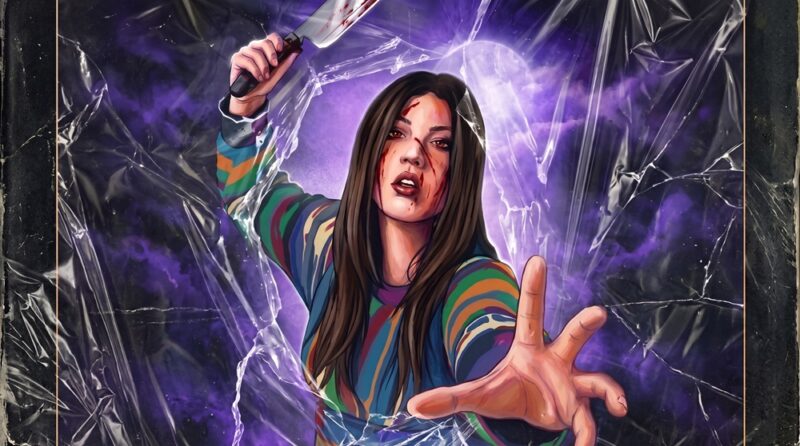
That tension between youthful vulnerability and ferocious self-expression sits at the heart of her debut EP, Child’s Play, arriving October 30th. Drawing inspiration from the unfiltered aggression of ’90s alternative metal and the deliciously twisted imagery of ’80s horror, the record embraces the contradiction of a teenage girl refusing to sound, behave or create according to anybody else’s expectations. Yet beneath the serrated riffs, mischievous horror references and unapologetic attitude lies something surprisingly tender: a young songwriter learning to articulate feelings she once struggled to put into words. Speaking with our Peter Gray, Maple reflects on the unexpected emotional impact of “lego”, the surreal experience of performing at Good Things while still attending school, why authenticity matters more than chasing virality, and how Child’s Play captures an artist whose greatest strength might be that she hasn’t yet learned to play by anybody else’s rules.
Obviously there’s a lot of cheekiness around calling your EP Child’s Play, but is the Child’s Play actually your favourite horror series or was it more a happy coincidence with the title?
Oh, 100% I love Child’s Play. The 80s horror movies are my favourites.
There’s that cheekiness in the title, because you’re 16 and making music that’s quite ferocious, yet giving it this almost innocent title. Did you find that was an intentional contrast in playing with people’s expectations of what someone at your age should sound like?
Yeah, well, the whole concept of the EP is centred around this character who’s been misunderstood. Ever since I started making music, people have always said, “Oh, but you’re young and you’re a girl. You can’t really do as much as these older guys can.” And this is kind of my way of saying, “Well, actually, I can. I can break out of that box and prove you wrong.” And I think that’s where the Chucky comparison comes in. It’s about not underestimating someone just because of how they look or how old they are.
Your song “lego” became this viral sensation after being filmed on a ring doorbell camera. Most people use those to catch people stealing parcels, you decide I’ll just launch a music career with one. Has that experience made you more determined to keep things DIY, even though you’ve gone on to have access to bigger resources?
I think it’s really important to me to show that everything I create is authentic. I’ll never use AI. I’m very much about coming up with ideas that are a little outside the box, and being different is really important to me because I feel like you see so much of the same stuff on the internet these days. I want to create something that’s relatable but also represents who I am. I’m 16, you know? I’m not some 30-year-old artist. I still want to show that fun, playful side of myself and not have to take everything so seriously all the time.
Your music has this very 90s, alternative DNA to it. I find it fascinating you’re drawing inspiration from an era that you weren’t alive for. Do you find it liberating about discovering that music without having the nostalgia attached to it? You can take it and reinvent it!
I’ve always loved older music. My parents would play it around the house, and I’d always think, “Wow, this is really cool.” When I wrote “lego”, I was being bullied at school and going through a pretty difficult time. And I think hearing artists write songs that were so brutally honest really resonated with me. That was what I loved about that era of music. People were angry, and they weren’t afraid to express exactly what they were feeling. There was something so raw and honest about it, and that connected with me more than any other music I’d listened to.
In less than a year, you’ve gone from making videos at home to performing at major festivals. You have all these musicians discovering your work. I’m curious whether there’s been a moment where you’ve had to remind yourself you’re still allowed to be a teenager and figure everything out, even though the industry maybe expects bigger things from you?
There are definitely times when I think, “Okay, I need to relax for a minute,” because I’m so passionate about music, and it’s what I want to be doing all the time. I’m homeschooled now because of it, so it’s such a huge part of my life, and I love it so much. I’m really lucky to have an amazing team around me who provide the support I need, so I’m not constantly having to do everything on my own, which is really nice.
I’ve also met people like Yungblud and Spencer from Ice Nine Kills, and Fred Durst has been incredibly supportive. It’s really uplifting to know that people who are so successful still genuinely care about supporting younger artists. That encouragement means a lot to me, and it’s definitely been really helpful.
To be 16 and have the biggest flex of saying Fred Durst is a support system? Why not! I love that so much. And you’ve had your virality, but I imagine millions of people seeing you is different than millions of people understanding you. With this EP, what are you hoping people discover about you more than a music clip ever could really communicate?
I loved releasing individual singles, but when I think about my favourite artists, like Faith No More with King for a Day… Fool for a Lifetime and Primus with Sailing the Seas of Cheese, those albums really stayed with me. They made me remember the bands, and I wanted to create something that had that same impact.
I wanted the EP to have a cohesive storyline running throughout, something people could really connect with. It’s essentially about being young, being angry and having the confidence to say what you want to say, regardless of what other people think. I wanted people to listen to the whole EP and really understand what Mabel’s Dinosaur is all about.
As you spoke about Child’s Play and Chucky, which horror movie villain do you actually think would have the best taste in music?
That’s a good one! I don’t know why, but I oddly feel like Pennywise would have a pretty good little jam session down in the gutter. You know, he’s down there watching all these kids go past, just jamming out to some good music. Or even in that place where he keeps all his victims. I feel like he’d be sitting there, jamming out with them. I mean, if you’re surrounded by dead people all the time, you’ve got to find something to do. It’s not like you can talk to them! (Laughs).
Pretty great philosophy. If you’re hanging around dead people, you got to have something to do. And as you’ve spoken about all this massive support, and you’ve shared festival lineups with artists like Tool and Weezer. Have you had one of those backstage moment where you’ve looked around and thought, “I should be doing my homework right now?”
I think it was definitely Good Things. When we first arrived and I saw these massive stages and all the professional production, I was just like, “Damn, wow! I can’t believe I’m actually here!” Good Things was only the third show I’d ever played, so it was pretty surreal. And as we went through the tour, driving from one show to the next, I remember sitting in the van writing in my diary about how grateful I was. I’ve always tried to soak in every minute of these experiences because I know how lucky I am to be doing this and meeting so many amazing people.
That was definitely one of those moments where I thought, “I genuinely can’t believe this is happening to me.” And the funny thing is, I was still at school at the time. My dad actually made me go back to school the day after we got home from the tour! I was like, “Well, that’s one way to bring me back to reality!” (Laughs).
One of the things I found really exciting about young artists is that sometimes they haven’t had the time to learn the supposed “rules” of the industry and it feels like you’re free to ignore them. Do you think there’s something about being 16 that’s a creative advantage for you?
I definitely think I have a different perspective, especially when I’m around older people at festivals. I remember at Good Things it was so hot that a lot of people’s equipment, computers and other gear were breaking down, and some people were getting really frustrated and angry. But I was just thinking, “I’m just happy to be here!”
I know things are going to go wrong sometimes, and even if I feel like we haven’t played our best show, I still try to soak in every moment because I’m there, doing something I love. I might never get the opportunity to play that festival again, so I want to appreciate every second of it. I think sometimes people forget that perspective when things get stressful or frustrating. I always try to remind myself that, yes, things can be difficult, but I’m also incredibly lucky to be doing what I’m doing.
Absolutely! And when you create something that reaches 60 million people, I imagine it changes your relationship with that particular song. Does “lego” still feel like something you made for yourself, or has it taken on a life of its own now?
I’ll always remember how upset and angry I was when I wrote it, but I think my relationship with the song has changed because of how many people it’s reached. I’ve had so many young girls DM me, comment on my videos and come up to me at shows to tell me how much the song has affected them and helped them through things they’re experiencing. And that’s been really inspiring.
When I was going through that myself, music definitely helped me, but there wasn’t really anyone my age writing about exactly what I was feeling, from the same perspective. That’s why I wanted to write the song in the first place. So hearing that it’s helped other people in exactly the way I’d hoped it would means so much to me.
In my head, it’ll always be that song I wrote when I was being bullied and feeling really angry. But now it’s also something that’s helped a lot of other people, and I’m incredibly grateful that it’s been able to reach so many of them.
You get to create the song that you wish you had. Your music is aggressive and visceral, but it’s emotional underneath. Do you find that making loud music allows you to express things that might be harder in just an ordinary conversation?
Definitely. I’ve always been someone who sometimes struggles to express exactly what I’m feeling. People will ask me, “What’s wrong?” And I’ll be like, “I don’t know how to explain it.” I’ve always written in a diary to help get those feelings out, but when I started listening to heavy music and heard how aggressive and brutally honest it could be, it gave me a way to express myself. I realised, “Well, I can do that too.”
I don’t need to write some perfectly rhyming song that I think everyone is going to relate to. If I relate to it, that’s enough. And the funny thing is, sometimes the songs I write about really specific feelings or experiences, which I think might be a little weird or personal, end up connecting with other people who say, “That’s exactly how I’m feeling too.”
With writing how you’re feeling and your career moving so quickly, Child’s Play is really the first opportunity to introduce yourself through a complete collection of songs. Did you approach Child’s Play as a snapshot of who you are now? Or is it kind of like the artist you want to become?
I think Child’s Play is definitely more evolved than “Chorus” and “lego.” I wrote “lego” when I was 13, “Chorus” when I was 14, and Child’s Play when I was 15. Now I’m 16, and I can already hear how much I’ve grown as a songwriter. I think Child’s Play is more expressive and reflects a different side of who I am. “lego” was about being bullied at school, whereas Child’s Play is about my life now and the experiences I’ve had being part of the music industry.
You can really hear that difference between the two songs. One came from being a young girl at school dealing with bullying, and the other comes from navigating this completely different world that I’m in now. And I think I’ll continue to evolve and write different music as I have new experiences. That’s what songwriting should be about. There’s no point in writing songs if you’re not writing about something that genuinely means something to you.
Child’s Play is available October 30th, 2026 through Warner Music Australia.
