

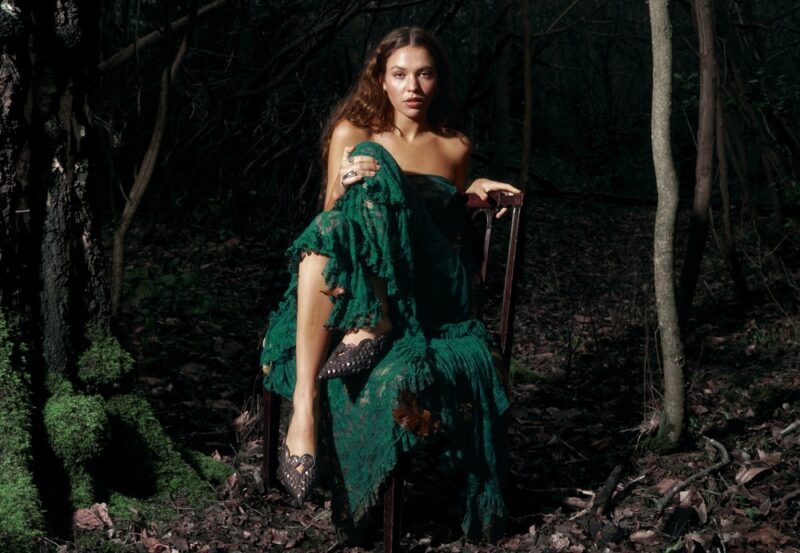
Charlotte MacInnes speaks about her debut EP HIGHWATER with the kind of wonder that feels inseparable from the music itself. Across five tracks, the Australia-born, London-based singer-songwriter builds a world where rivers become places of reflection, ghosts become lessons to carry or release, and contradictions are embraced rather than resolved. Rooted in alternative pop but drawing on something older, earthier and more elemental, HIGHWATER is an intimate exploration of identity, self-discovery and the courage required to be fully seen.
When Peter Gray spoke with MacInnes, the conversation moved far beyond songwriting. They spoke about the tension between magic and honesty, the childhood memories hidden within, the complicated relationship between love and hate that served as inspiration, and why she eventually stopped trying to be liked and started focusing on being understood. Thoughtful, funny and remarkably open, MacInnes revealed an artist who isn’t interested in presenting a polished version of herself, but one who remains awestruck by the world around her and determined to preserve that sense of wonder in everything she creates.
Congratulations on HIGHWATER. I wanted to ask you first about the EP as a whole, because listening to it I kept coming back to the image of someone standing between worlds. There are moments that feel earthy and ancient, and then cosmic and untethered. Do you feel this EP was written from a place of trying to reconcile different versions of yourself? Or was it more about discovering who that personal actually is?
Incredible opening question. Wow! That was electric. I love that.
The answer is both. It’s both, very much. You said two amazing things. It was a lot of discovering myself. A lot. It was also pulling a version of myself that I knew, or maybe even once knew, at the time that I was writing it, and the version I was becoming. And then trying to pull them together as quickly as possible, because it felt like a lot of my life had led up to the moment where I was going to be releasing music with my voice for the first time. And I really wanted to get that right.
God, that question was so good.
I know that you’ve spoken about building a magical yet honest world with the music. That’s an interesting combination, because magic involves illusion, but honesty involves exposure. Where do you think the EP sits between those two worlds?
I think we use magic and metaphor in story every day. In so many different ways. If I say metaphor, I would love for the audience to know exactly what that means in their way. I love to write with the idea that I know exactly what this means for me, but this may mean something completely different to the person listening to it. I want them to be certain when they hear it. I think part of the magic and the honesty comes with so much of it being rooted in natural elements. I don’t ever want the music to feel untouchable. I want it to feel really tactile and human, because we are so much more than this couch and that wall, and that lamp, you know?
Our minds and spirits are ever-expanding and very complicated. At least for me. My brain goes to so many places all the time. And as much as I can really love and appreciate that sort-of diary entry-style writing, I wanted to create a world that felt a lot bigger in its way of imagery and language.
Talking about writing, in ‘Celestial’ you’re singing, “What if I can be bigger than my ghosts?,” and that’s such an ambitious question. It suggests that ghosts never fully disappear. Have you reached a point where you’re trying to overcome them, or learning how to live alongside them?
Oh, great question. I think you can choose the ones that come with you on your ride, and the ones that you get rid of. Some of them are going to be really helpful, some of them are going to be a beautiful lesson learned, and some of them are going to be a lesson that you’ve learned and you’re happy to just let it go to the ether. You don’t serve me anymore. Ultimately, that lyric is about, “What if I cannot overthink the bullshit?” And not let that define me in any way.
I love ‘Down to the River,’ because it has this really beautiful folk quality running through it. It’s almost got a Celtic spirit, but filtered through a modern pop landscape. Were you consciously reaching backwards towards older musical traditions? Or did that atmosphere naturally emerge from the songwriting?
Oh, amazing. With ‘Down to the River’ it was very natural. (It) was the first song, or maybe the second, that we made for the EP, not knowing what they’d be for. We were just making music, and ‘Down to the River’ was so organic, the way it was made. It was me and beautiful friends of mine, sitting on the ground, I think two or three of them had guitars. I was on the piano, and we all had microphones on the ground singing. It was so unique. Not a way I’ve ever written another song before.
And we were really just jamming and spitballing, which is the art of jamming. It was beautiful. I cried when I wrote that song. I feel like that’s quite a bit self-obsessed, bit arrogant (laughs), but I sung this lyric, and I was like, “What the heck? I guess I needed to say that.” It’s the second verse of (the song). It was a very tender, introspective, sensitive Charlotte that day.
It made me think, because rivers are associated with cleansing, or rebirth, or crossing from one state into another. When you think about that song now, are you the version of yourself standing on one bank? Or are you waiting to get to the other side?
Mm, beautiful question. It was very much about me understanding that I needed to take a step back to look at everything the way it really is. There’s this beautiful book called ‘Siddhartha’, which I actually read recently. The very end of the book is all about this man who achieved this perfect wisdom for studying a river, and the idea that it can teach you everything you need to know. It’s obviously a metaphor, but I was like, “Woah, that’s weird. That’s kind of what ‘Down to the River’ ended up being about.”
Every time I sing it, I actually have one (river) in my mind. I’ve never said this before. There’s a river in a place called Kununurra, which is in the northwest of Western Australia, and I stayed there with my parents. It’s just the most magical river. It flowed really fast. But when you’re down there, it’s like nothing else exists. It really feels like it’s just you and that piece of magic earth. It’s one of those weird sparks of memory from childhood. You have, like, 1o of them, and that’s one for me. But it is very much about sitting at the edge of a body of water and going, “Oh, nothing really matters, and everything’s gonna be okay.”
We love some pop music that has substance to it! I wanted to go on to ‘Only Pretend,’ because the lyric “Get out of my head, you fucking child,” is one of those “stop me in my tracks” kind of songs. It’s confrontational, but it also feels strangely compassionate. Were you writing to a younger version of yourself? Or to a voice that still follows you around in adulthood?
Wow. I was not writing it about a younger version of myself. I was writing it about a specific person. However, that is a beautiful interpretation. It’s funny, someone interpreted another one of my songs the other day, and I was like, “That’s better than what I wrote,” (laughs). I think the way I sing it…it’s a plea. It’s not a “Fuck you!”
It’s very much a plea, because I’m saying get out of my head. My head. That’s my responsibility. It’s the only swear word on the EP too. I get nervous about swearing for some stupid fucking reason (laughs), because I swear so much in real life.
Have you really got an EP if you don’t have the Parental Advisory sticker?
(Laughs) That little E next to my name? So good!
One of the things that really fascinates me about ‘Only Pretend’ is that the production feels simultaneously minimal and maximal at the same time. It’s intimate, yet overwhelming. Did you find yourself drawn to contradictions while making the EP overall?
100%! ‘Drawn to Contradictions’ could be the name of the EP (laughs). I wrote ‘Only Pretend’ with a wonderful friend of mine, and it wasn’t called ‘Only Pretend’ then. It was very, very tender and very sensitive. Very child-like, actually. I brought it into the studio, and another songwriter that I work with was like, “This needs a huge chorus.” So the juxtaposition in the song wasn’t meant to be. It was never meant to be this semi-angry pop anthem. It was meant to be a tender song, and then we made it a big one!
On the topic of big choruses. The chorus in ‘Beast’ is so primal. It’s almost not being sung, but being unleashed. What was the beast for you? Was it anger, desire, fear, ambition, or was it something that refused to fit neatly into one category?
It definitely refused to fit neatly, that’s for sure. But a lot of it was confusion, because it’s a lot to do with the relationship between love and hate, and how they are this far (gestures with a miniscule distance) away from each other. It became about, “Why on earth can you love me so much? Am I this absolute angel to you? Am I this wonderful beacon?” And then all of a sudden I’m a monster. I’m a beast to you. This doesn’t make any sense.
That idea runs through, and it can run through anything. You can love an industry and hate it. You can love an idea and hate it. Whatever it is, it’s just our relationship with those things. It’s such an unexplored part of the human experience that I am into really writing songs about at the moment.
I feel like woman in music are often encouraged to make themselves “palatable”, but ‘Beast’ feels like the opposite of that, which is amazing. Was there a moment during the making of this EP where you stopped worrying about being liked and became more interested in being understood?
Yes. Very much. That happened pretty early for me. I think being liked is overrated. I am so fortunate to have the love of the people that love me, and everything else is noise after a certain amount of time. I spent a lot of my time when I was younger, like a lot of young girls, trying to be the most perfect version of Charlotte. But that bitch doesn’t exist (laughs). She doesn’t. The most perfect version of Charlotte is somebody’s absolute worst nightmare. They’re going to hate her no matter what she does. That was a really hard lesson to learn. (But) as soon as I learned that, being a perfect peach is pointless if people are going to hate on peaches. Just be you. Then you don’t have to worry about all that stuff. It’s so much less stressful.
And just before letting you go, if HIGHWATER is ultimately about becoming bigger than your ghosts, what do you hope remains once the water recedes? What is the version of Charlotte that’s left standing when all the noise and all the fear and the performance falls away?
I love being awestruck. I think it’s a warrior emotion. I think it’s really courageous to be awestruck by things in this world that we live in. I don’t ever want to lose that about myself.
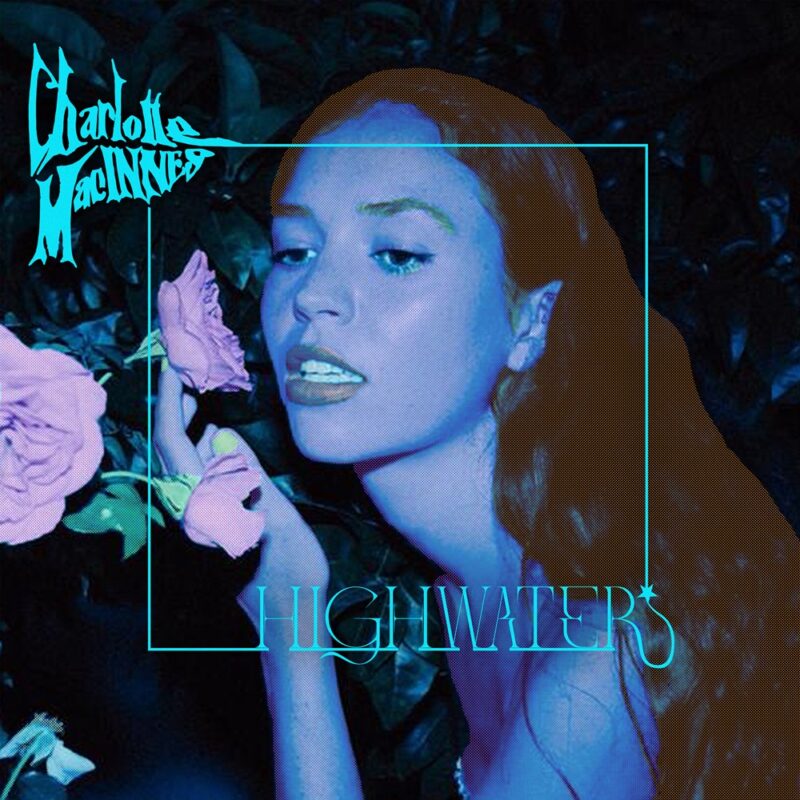
HIGHWATER is now available through Warner Music Australia.
Stay connected with Charlotte through her official website, Instagram, and TikTok.
