

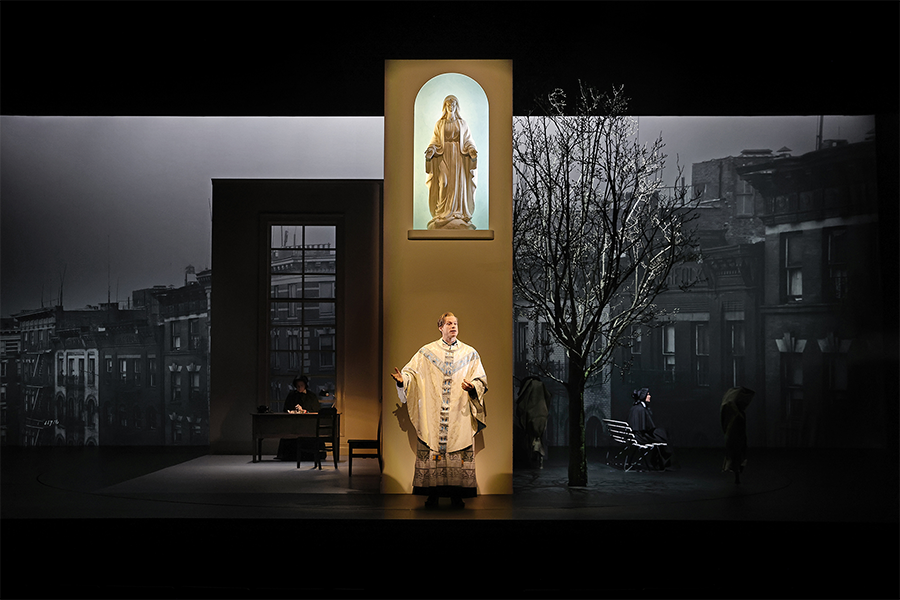
Have you ever been swept up in an argument, so positive in your convictions, so certain of your truth, and then suddenly, you’re not so sure? A seed of doubt is planted, but you’ve passed the point of no return. To back down now would be to admit you’re wrong, so you stand firm, your belief paralysing.
This is just one of the ideas explored in Sydney Theatre Company’s Doubt: A Parable. Written in 2004 by American playwright John Patrick Shanley, the play is set in the St Nicholas Catholic School in the Bronx in 1964. It was a time of uncertainty and civil unrest in the United States, with President John F. Kennedy having been assassinated the year before, and the Civil Rights Movement in full force.
The school’s principal, Sister Aloysius Beauvier (Pamela Rabe), believes the new Priest, Father Brendan Flynn (Sam Reid), is behaving inappropriately with one of the 8th-grade boys at the school. And not just any boy. He is the first black student to enrol at the school and as such, is perhaps under more scrutiny than the others. She discusses her concerns with the boy’s teacher, the young and impressionable Sister James (Shannen Alyce Quan), who is initially reluctant but soon begins to view events through a new lens.
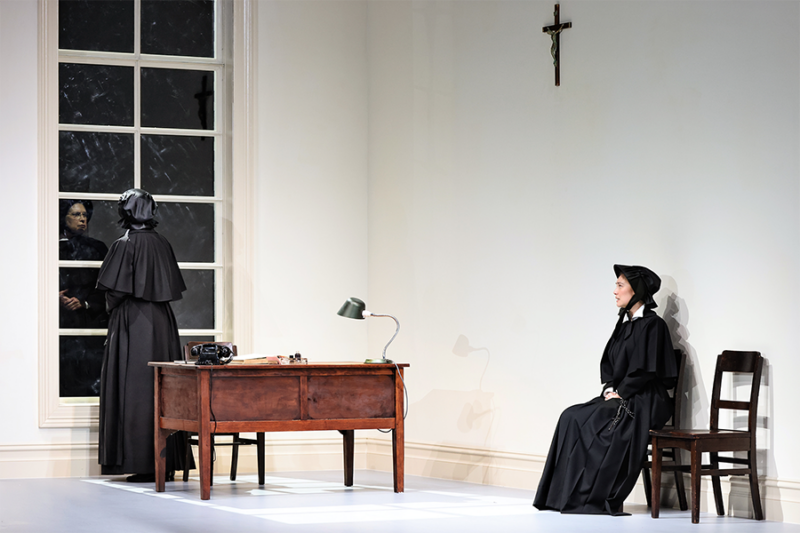
We quickly see what began as a suspicion, bloom into complete certainty and result in a confrontation between Sister Aloysius and Father Flynn. The more he denies the allegations, the more convinced she becomes of his guilt.
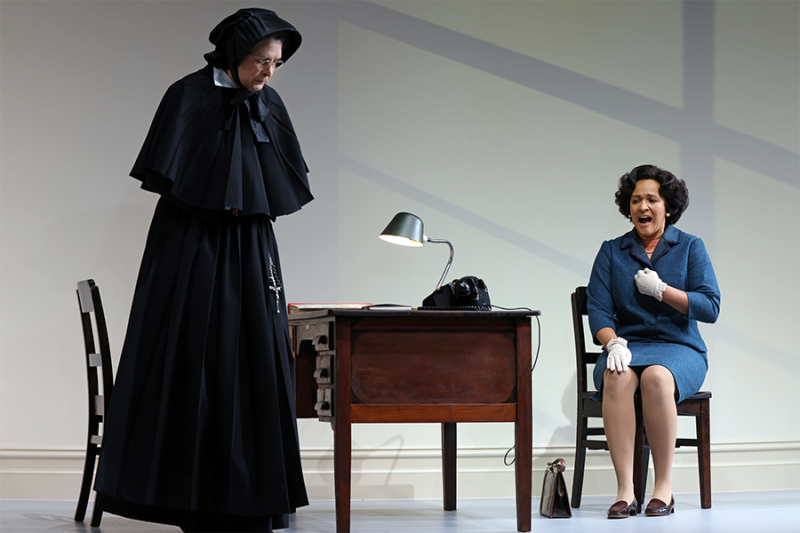
The brilliance of this work lies in what it doesn’t say. At no point are we given a definitive conclusion. In parts, you are convinced of Father Flynn’s culpability; in others, assured of his innocence. In one particularly harrowing scene, we see Sister Aloysius express her concerns to the boy’s mother, Mrs Muller (Zindzi Okenyo). Her conflict is evident. It was difficult to get him into the school, and he has only a few months left. The politics of race and prejudice are warring with her instincts as a mother.
Ultimately, Father Flynn is transferred to another school, promoted, leaving uncertainty and doubt in his wake. What this play does well is articulate the hierarchy of the Catholic Church. The Sisters are not permitted to enter the rectory, and any conversation with a priest must be conducted in the presence of another Sister. When discussing what action must be taken, Sister Aloysius outlines the order of command that she must follow, lamenting to Sister James, “No man I can go to, and men run everything.”
The idea of innocence underpins the entire narrative. Sister Aloysius chastises Sister James for her naivety and innocence as if it were a detriment to her ability as a teacher, “Innocence is a form of laziness”. Father Flynn protests his innocence throughout, with Sister Aloysius throwing it back at him like a weapon, “Innocence can only be wisdom in a world without evil.”
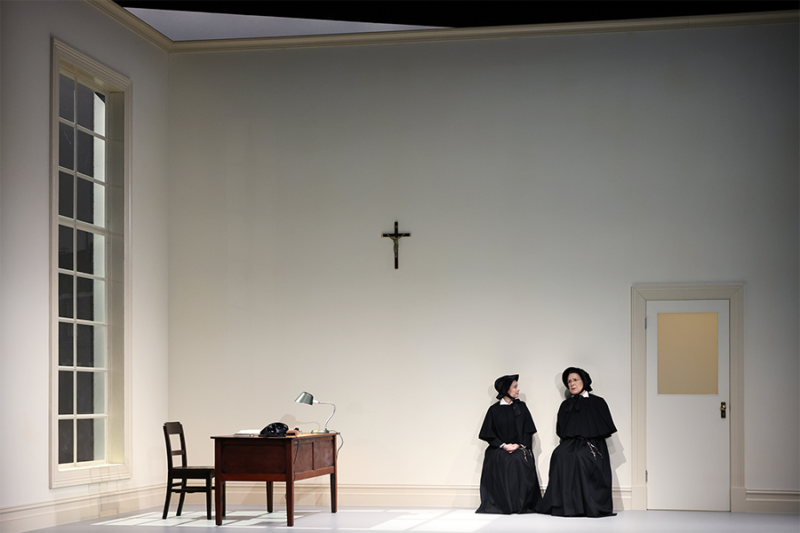
Directed by Marion Potts, Doubt boasts a remarkable ensemble cast. In particular, Pamela Rabe as Sister Aloysius was a revelation. Her line delivery and stage presence were that of a seasoned professional. It is a credit to Sam Reid as Father Flynn that he was able to match her energy, and in some instances, surpass it.
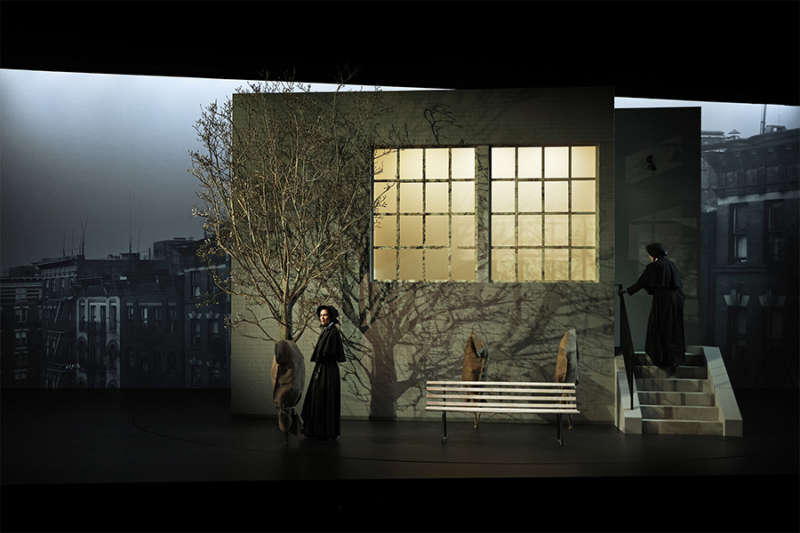
Hats off to Designer Bob Cousins and Lighting Designer Damien Cooper for one of the most incredible stage and lighting designs I’ve seen in a long time. Even the way the light cast shadows through the windows seemed deliberate. Visually stunning.
Despite being written in 2004, Shanley’s words are as relevant today as they have ever been. With convictions and certainties being thrown about online like a competitive sport, the court of pubic opinion, based on feelings rather than facts, seeming to be the only one that matters. A world of unrest and AI where seeing isn’t even believing anymore. Has truth become a fantasy and doubt a forgone conclusion?


FOUR STARS (OUT OF FIVE)
Doubt: A Parable will perform at the Roslyn Packer Theatre until 2 August 2026.
For more information and to purchase tickets head to the Sydney Theatre Company’s website.
Reviewer attended on 9 July 2026.
Photos: Prudence Upton
