

Canberra is at its best on a clear winter morning, when the cold sharpens the light and the crowds are thin. I had come to the National Gallery of Australia for the opening of its major winter exhibition, Arthur Boyd: Tapestries, a show Nick Mitzevich, Director of the National Gallery of Australia, described as the institution’s most recent “passion project”. For the first time anywhere in the world, all twenty of Boyd’s Life of St Francis tapestries have been gathered in a single place, more than fifty years after the last of them came off the loom.
The first room is given over to the groundwork. Along one wall runs a series of Boyd’s preparatory lithographs, the worked-out beginnings of the images to come. One, The vision of the church on fire (1965), is inscribed in the artist’s own hand with the words “Too dark”, a small trace of him fighting to keep the glow of his original pastels alive in black crayon on white paper.
The back wall belongs to something else entirely: a projection, full height and room-wide, of two weavers at a loom in Portugal.
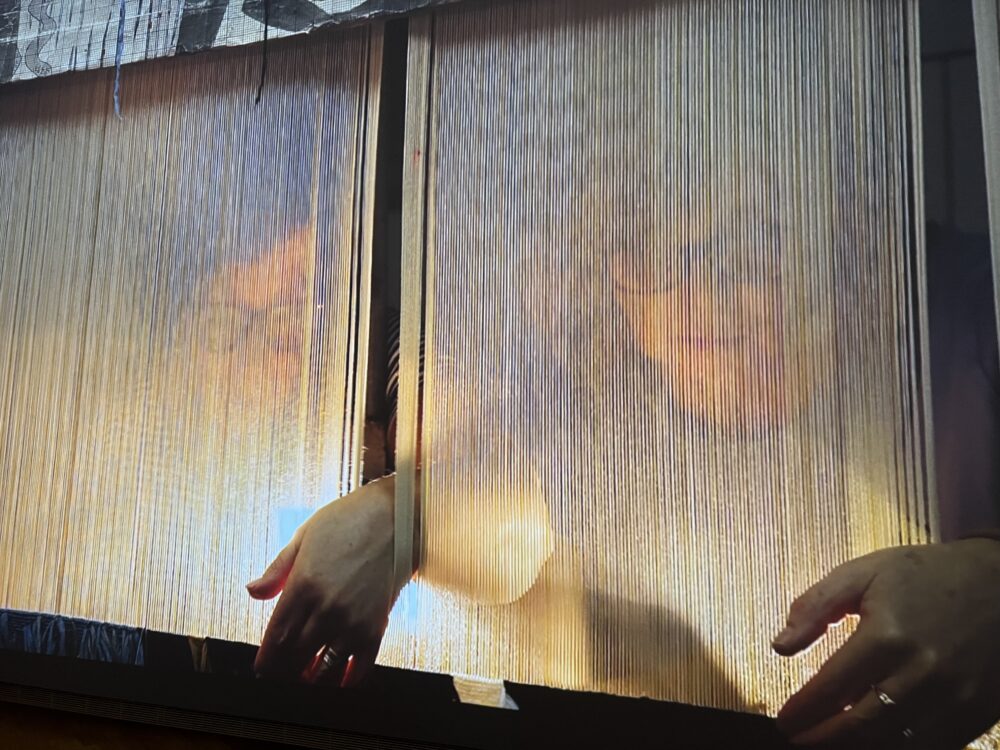
The two weavers work by hand, their wrists falling over the back of the frame and rising again, each pass laying down a single strand in the finished work. It is mesmerising, and the patience it demands is difficult to comprehend. You come away with an enormous respect for the skill and devotion these tapestries required, and still require, because the same workshop weaves this way today.
Only then, moving deeper into the exhibition, do you meet the tapestries themselves, and the shift in scale is the point. Against the black walls, they hang like lit windows, each one 2.5 by 3.4 metres, woven more than 20 times larger than the small pastel drawings from which they began. To stand before one is to feel like a guest in its presence. Grounding visitors in the process first allows the tapestries to land with real force.
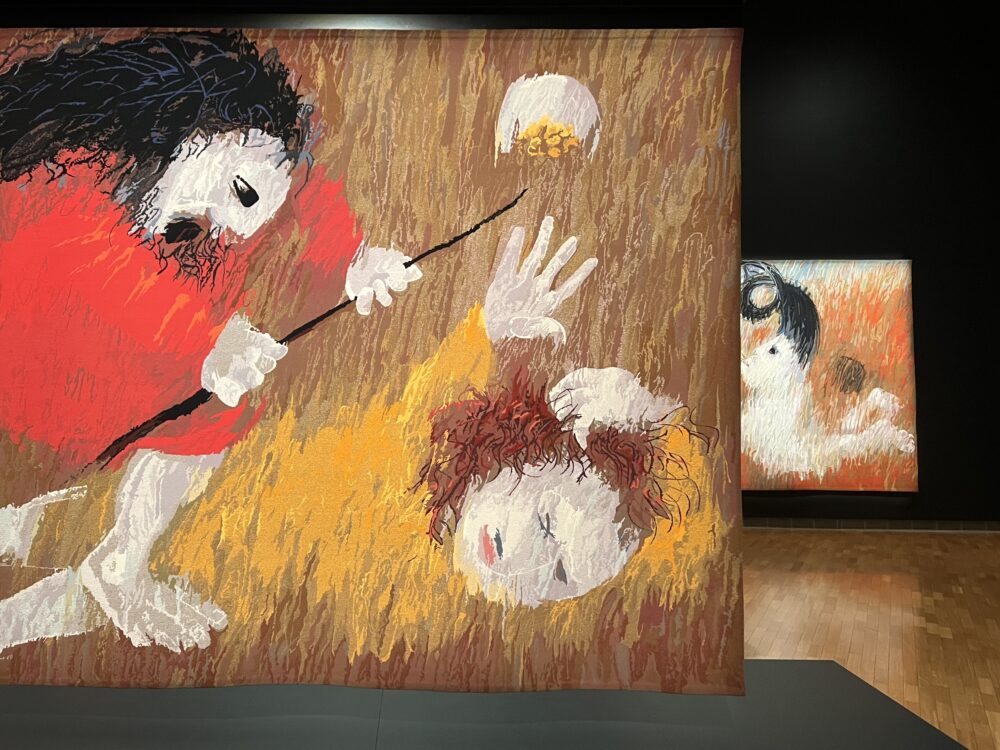
That sense deepens at the one tapestry hung free of the wall, out in the middle of a room, so that visitors can walk around behind it. From the front, St Francis being beaten by his father (1973), shows a dark, bearded figure in red raising a thin branch over a child fallen into the ochre, hands flung up against the blow. It is among the most personal images in the series, since Boyd is understood to have seen something of his own father, the artist Merric Boyd, in the saint.
Walk to the back, and the scene gives way to craft. What reads from the front as a single field of colour becomes, from behind, a dense thicket of knotted, trimmed threads, thousands of them tied by hand. The reverse is as fascinating as the face.
The making is the exhibition’s great revelation. Dr Vera Fino, who directs the Manufactura de Tapeçarias de Portalegre, and whose father Guy ran it when Boyd commissioned the series, explained that the weavers never had Boyd’s originals. They worked from transparencies no larger than a sheet of A4, matching each colour against natural light, careful to catch the right moment of day before the light turned and pulled the colours with it.
Under glass are the weaving drawings: Boyd’s designs scaled up onto squared paper where every square represents a single stitch, hand-annotated with colour codes like a monumental paint-by-numbers. A documentary midway through the show follows Elspeth Pitt, Senior Curator of Australian Art at the National Gallery of Australia, to Portugal and to Assisi, introducing a weaver who worked on one of Boyd’s own tapestries. It is an unhurried, quietly absorbing film, and Pitt makes a warm and knowledgeable guide.
The relationship between artist and workshop runs throughout the exhibition. Fino described the small patch of cloth stitched to the back of each finished tapestry, the point at which the artist recognises the work as his own. It is a quietly moving ritual, and a fitting one, because these tapestries are as much a testament to the workshop’s artistry as to Boyd’s imagination. The two are inseparable here, and the show is the richer for letting you see both.
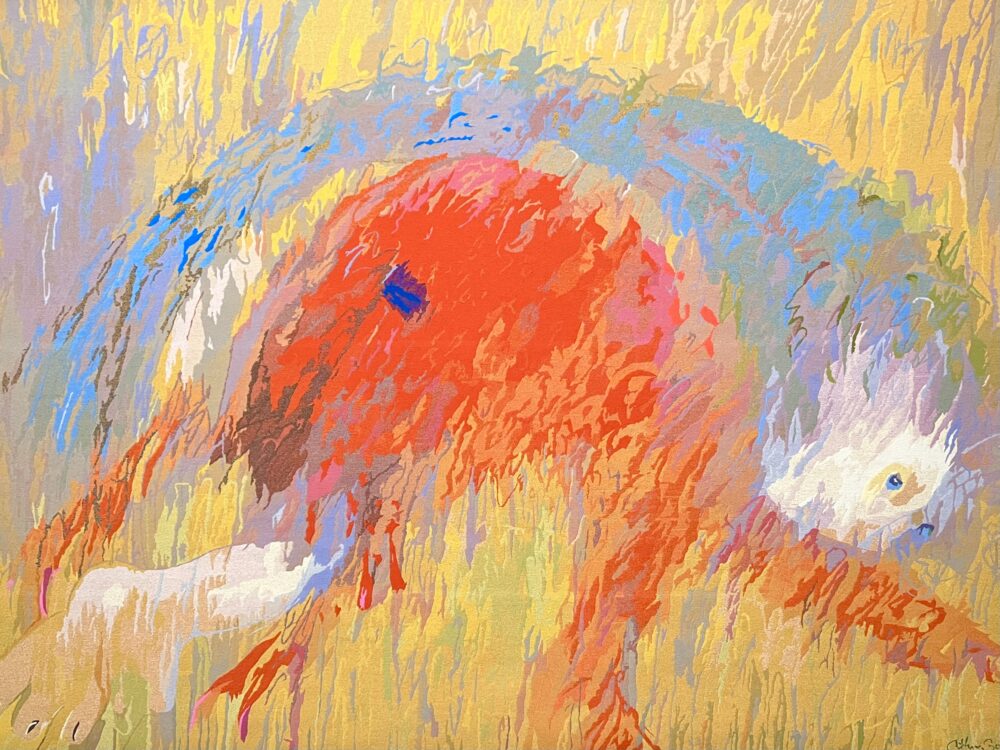
As for Boyd himself, Pitt noted that he “wasn’t particularly religious”, but Francis remained a touchstone throughout Boyd’s life. She described the saint as “a pacifist, a poet, an artist, a kind of proto-environmentalist”, qualities Boyd admired and shared. His imagery is wild and largely without precedent, cycling between the earthly and the ethereal. And what lifts the work above its own scale is colour. Boyd’s reds and electric blues, set against warm oranges, yellows and sienna, seem almost backlit in the dark rooms.
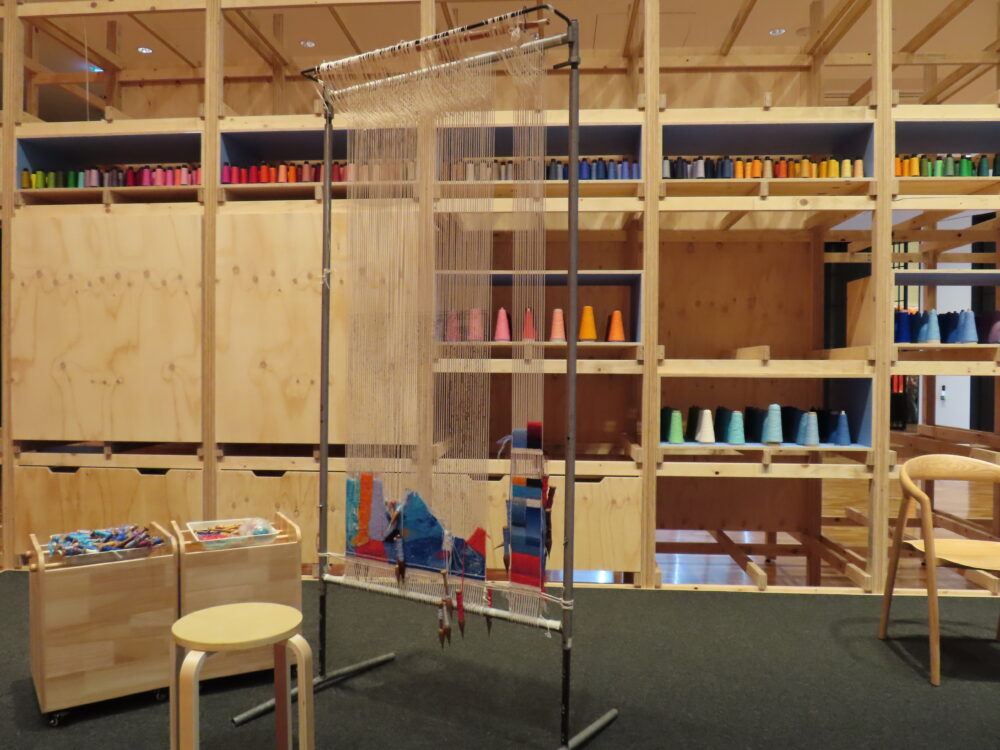
The gallery has surrounded the show with reasons to linger. This is not an exhibition that rushes its audience. It invites patience, asking visitors to move between the finished tapestries and the labour behind them. The Weavers’ Studio offers a chance to try the technique firsthand, a humbling experience after seeing what mastery can produce. A playlist curated by Genevieve Lacey extends Boyd’s world beyond the walls, while Canberra in winter is itself reason enough to slow down.
Boyd dreamed of seeing all twenty of these tapestries together and, by the gallery’s own reckoning, almost certainly never did. Fifty-one years on, in an exhibition the National Gallery has made free in his honour, visitors can finally experience the gathering Boyd himself was denied.
Arthur Boyd: Tapestries is at the National Gallery of Australia, Kamberri/Canberra, until 18 October 2026.
Entry is free. For the full program of talks, demonstrations and events, visit nga.gov.au.
The reviewer attended a preview of Arthur Boyd: Tapestries at the National Gallery of Australia on 18 June 2026.
