

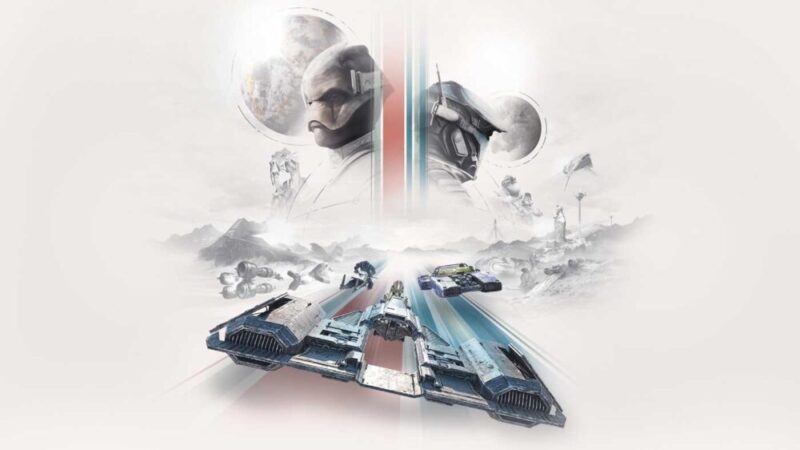
I’m a massive Star Wars fan, but I’m also a massive fan of arcade-style racing games like Wipeout and Burnout. So if you haven’t heard of Star Wars: Galactic Racer yet, that’s the best pitch I can really give you. Merging those franchises is not only a genius idea, but it has provided some of the most fun I’ve had with a game in 2026.
While Star Wars: Galactic Racer offers a few unique ways to play, I was a fan of the more rogue-like approach to its main campaign mode upfront, but found myself coming back to the game’s various scenarios and multiplayer action.
You’re Built For This League
Set after the fall of the Galactic Empire, Galactic Racer puts you in the shoes of Shade, a lone racer and cargo pilot, who is recruited by the Galactic League creator, Darius Pax, to enter the league and topple its current champion, Kestar Bool. To spice things up just that little bit more, Shade also has a personal vendetta against Kestar, which I would rather not spoil.
While that is the general premise, and there are a few conversations that push the story forward throughout, Galactic Racer does everything it can to keep things moving and get you behind the wheel, or handlebars, of a vehicle.
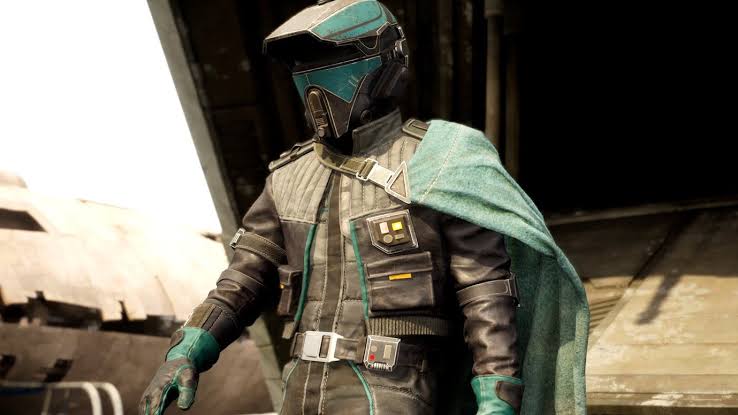
Galactic Racer’s main campaign obviously focuses on this aforementioned story, but it’s the infusion of rogue-like elements that make this campaign so enjoyable. Galactic Racer sets its campaign across six primary planets and gives you various ways to progress through multiple paths.
Races include Standard Races, along with Eliminator races, which force you to stay out of last position to stay in the race, and Field and Podracing Tests, which put you behind the wheel of new vehicles and Podracers with certain objectives to complete. There are even mystery encounters, which can sometimes play out in simple, conversation-based decisions.
These encounters can be something as simple as being extorted by an opponent and being asked to cough up 2,000 credits; declining essentially sabotages your vehicles for the next race, so be careful how you approach these situations.
At the start of each run, you’re granted a League Token by Darius, which allows you to enter. I personally find it hilarious that the game hypes these League Tokens up as something that’s really hard to obtain, only for Darius to come up with some random excuse as to how he acquired another one for you each time you fail. But I digress. Failing a race in certain ways simply kicks you out of the League, and you’re required to start all over again.
For the most part, picking the path forward can be just as important, and given your runs are procedurally generated, it can sometimes come down to luck. For example, my last path forward consisted mainly of Standard Races and Field Tests, in which I was able to avoid Eliminator races entirely, which I personally think are the most brutal.
While Standard Races don’t allow you to fail by simply losing, instead only booting you once you’ve wrecked more than three times, you will earn extra credits for finishing in first, second or third position, which can certainly incentivise you to help upgrade your vehicle that much faster. Trust me, you’ll need every penny.
That being said, the risk/reward factor is strong here, encouraging you to raise the stakes and take the tougher races earlier to increase your chances of winning later on, with a faster or more durable vehicle. For example, I picked a much safer path packed with Standard Races and Field Tests, meaning it was much tougher for me to fail, at the cost of a vehicle that wasn’t quite up to scratch when it came to the final race.
The campaign’s three-act structure plays out very much like this the entire way through, and I found it to be a blast. It’s definitely not that deep, but the campaign alone tries every bit to be engaging with each passing race.
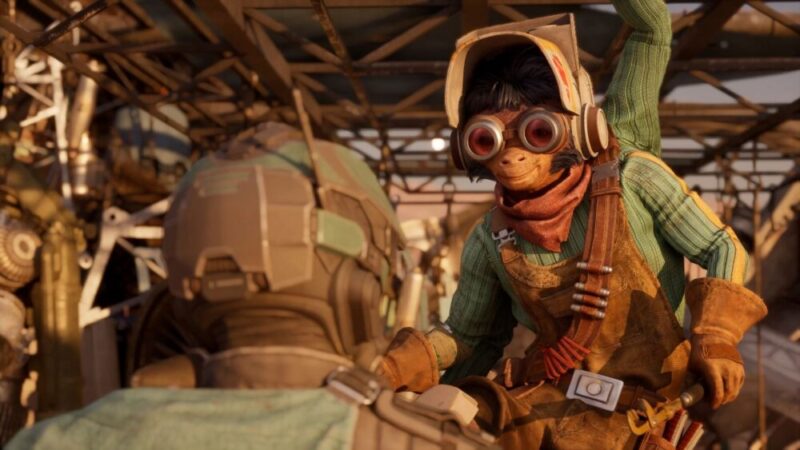
Finally, I’m a huge fan of the attention to detail. Shade, along with supporting characters like Darius, all look and sound fantastic, and there are even small segments between races which let you walk around these planets in small little hub-like areas, to upgrade and even repair your vehicle’s parts with the credits that you earn.
Go Fast or Go Home
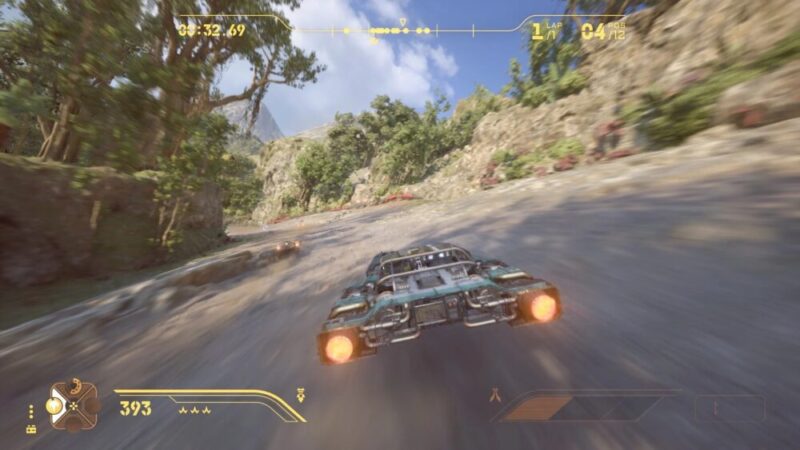
Star Wars: Galactic Racer wants you to go fast. I mean, really, really fast. If you’ve ever played a Wipeout game, then you’ll understand the consistent sense of speed that those races bring. Top it all off with the grit and intensity of the Burnout games, and you have yourself one wild ride.
You’ll be able to choose from a range of vehicles including traditional land speeders, speeder bikes, skims and even podracers, all of which have their own pros and cons. For example, a land speeder is an all-rounder, but the speed bike is always faster, at the cost of being more vulnerable to attacks.
Handling is responsive, and you’ll need to balance your Afterburner, which acts as your standard boost, along with your Ramjet, which acts like a secondary boost on steroids and is mainly used to run other vehicles off the track. Each boost has its own cooldown, and you really feel the pressure when you’re waiting for either one to become available, as your opponent speeds past you. The need to drift is also apparent, with tighter corners and narrow corridors, prioritising a sense of handling and awareness almost as much as the consistent level of speed.
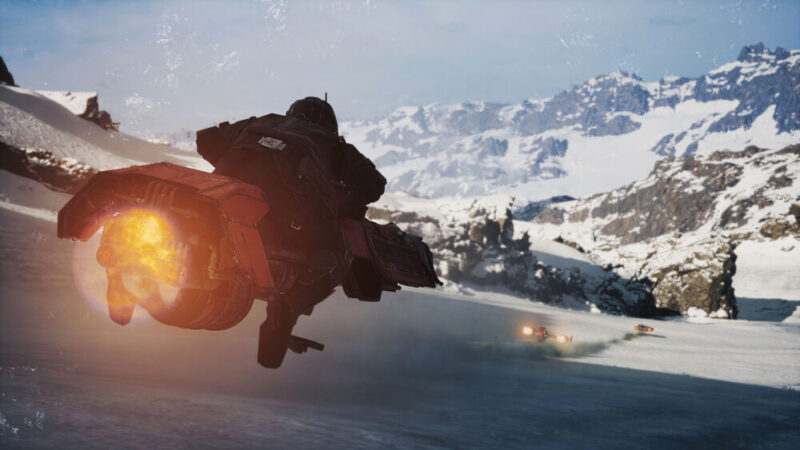
Along the way, you’ll also be able to unlock a range of abilities to use in each race, which can vary from more defensive abilities like the Shield, or more offensive abilities like Ion Bolts and Blasts to disrupt and crash nearby opponents. You’ll also have the ability to unlock and assign various Racer Styles, each with their own unique abilities, before each run. While most of these start you with a certain ability in each race, they can be handy to help you get the jump early on.
For what it’s worth, Star Wars: Galactic Racer’s customisation isn’t as deep as a more traditional racing game, or even an arcade racer like Forza Horizon 6, for example, but there are still plenty of cosmetic styles and upgrades to choose from. Credits will allow you to buy perks and abilities within each run, while Turning Points will be used to unlock and upgrade your current vehicles permanently, helping you progress further in the next run.
Finally, Kit Points will allow you to unlock more cosmetic upgrades, which apply independently to each of the three vehicles on offer, at least in the game’s main campaign.
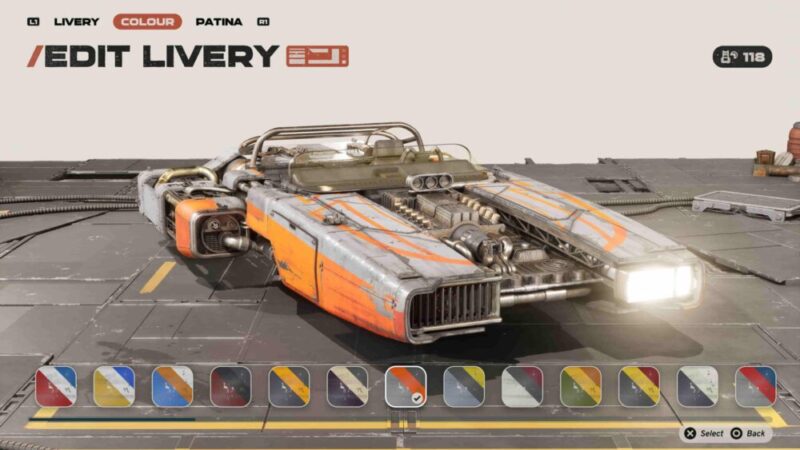
No matter how you choose to upgrade and progress, there’s no doubt how much fun it is to actually play Galactic Racer. I’ve found myself popping on for a race or two just for the sake of it each night, even after my time with the campaign was done. It’s just so satisfying, and I can’t commend it much more than that.
Off the Beaten Track
While you might find Galactic Racer’s focus on racing and racing alone is somewhat linear and repetitive, there are a few more things to do outside of the game’s main campaign. For one, you’ll be able to take part in a secondary Scenarios mode, in which races unlock as you progress through the campaign. These races essentially act as remixes of current campaign races, albeit with their own objectives, modifiers, and challenges.
That being said, they’re worth completing simply because they offer Turning Points, which help you get a leg up on the campaign, should you complete them in tandem.
Aside from this, there’s also a dedicated Arcade mode, and this is where you’ll find your standard Podracing in addition to Quick Races and Time Trials. I initially found it strange that this wasn’t included in the game’s main campaign, but it does make sense within Star Wars lore that Podracing is now a defunct or dated sport, and the Galactic League essentially exists separately from Podracing as a whole. Either way, these vehicles also feel great to pilot, and there’s even a couple of exclusive (and familiar) tracks which fans should not miss.
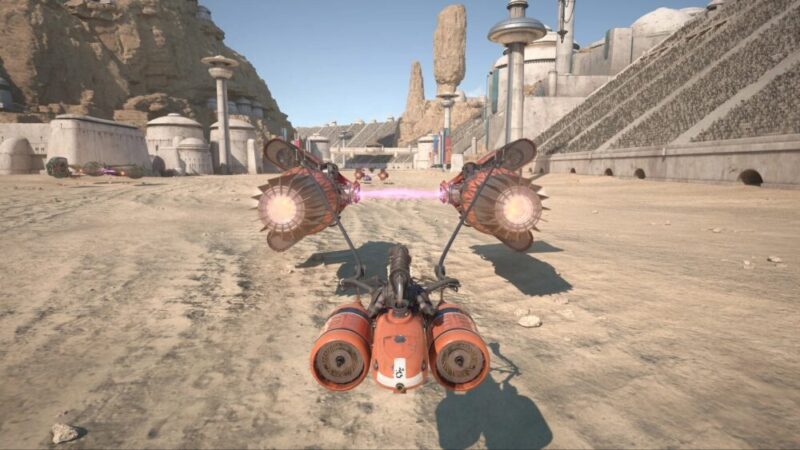
Finally, there’s the multiplayer, and this is divided into four distinct modes. The Multiplayer Tour mode feels like the star of the show, and hosts up to 12 players across a 6-race event, where you’ll earn credits after each race, on your way to one climactic showdown. It’s almost like a mini campaign run, but your skills will certainly be tested more than ever here. The game also features a dedicated Podracing Tour that mirrors the Multiplayer Tour, with Podracers instead of the game’s three main vehicle types.
A Quick Race mode pops up to 12 players in a rotating assortment of tracks, and the Quick Podrace mode does much of the same. It’s certainly fun to compete across any of these modes, but Galactic Racer is sorely missing local split-screen multiplayer. It’s a massive missed opportunity that I feel a game like this would have only benefited from.
Look the Part
Across each of the six planets, and each of the 40+ tracks, Star Wars: Galactic Racer looks incredible. It’s way more detailed than it needs to be, which really shows as you walk around each planet’s small, hub-like sections. Even character models look incredible, and each vehicle shows its wear through a tapestry of scratches, dints and scuffs that help with world-building more than you would expect.
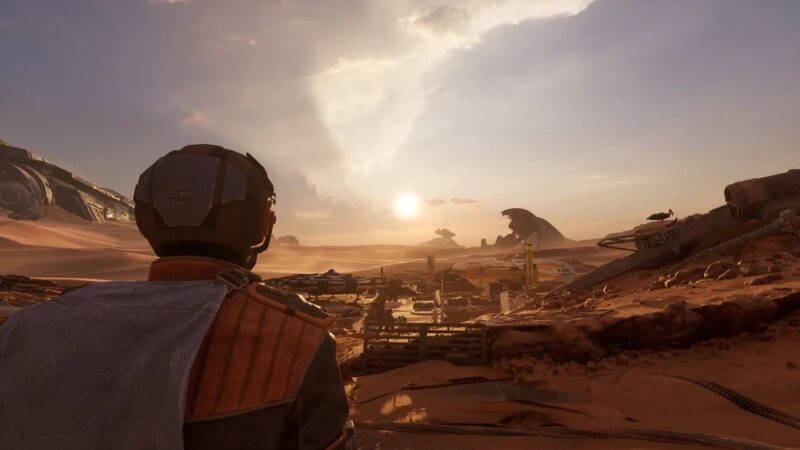
I don’t think that would feel as important if Galactic Racer didn’t run as well as it did. It seems to be locked at 60 FPS on almost every platform, with the PS5 Pro, which I reviewed this on, bumping the resolution up to 1728p for a sharper image and more detail, all without losing any frames. It is simply buttery smooth throughout.
Final Thoughts
I’ll admit, I’ve had a few surprises thrown my way in 2026, but Star Wars: Galactic Racer might just be the biggest surprise of them all. It’s downright fun to play, no matter the mode, and it looks incredible at every turn.
While I would love local split-screen multiplayer, this is without a doubt one of the best games of 2026.


FOUR AND A HALF STARS (OUT OF FIVE)
Highlights: Incredibly fun and fast-paced; Campaign is fun and challenging; Podracing adds plenty of variety, along with additional modes; Incredible visuals and performance
Lowlights: No local multiplayer
Developer: Fuse Games
Publisher: Secret Mode, Lucasfilm Games
Platforms: PlayStation 5, Xbox Series X/S, Windows PC
Available: Now
Review conducted on PlayStation 5 Pro with a code provided by the publisher.
Featured header image also provided by the publisher.
