
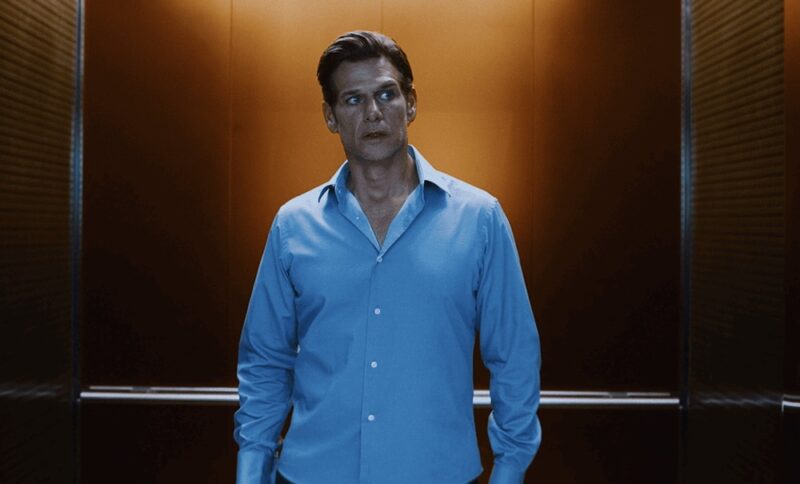
Set almost entirely within the confines of a luxury penthouse, PH-1 unfolds over one harrowing night as rising politician Payton Burnham watches his carefully constructed public image disintegrate in real time. Held hostage by an unseen force, he’s trapped not just physically, but within a media ecosystem that thrives on speculation, spin, and viral outrage. But as the film makes clear, this isn’t simply a political thriller – it’s a story about the machinery of modern media itself: who controls the narrative, how quickly truth can be distorted, and the uneasy role we all play as consumers of it.
Speaking about the film, filmmaker and star Mark Kassen draws a direct line between PH-1 and the paranoia-driven thrillers of the 1970s – films that captured a deep distrust in institutions – while reframing that anxiety for a digital age where media and technology are inseparable. What emerges is something more insidious: not a threat closing in from the outside, but a system collapsing from within, powered as much by audience engagement as by those pulling the strings.
I wanted to ask you straight off – a lot of ’70s political thrillers are about paranoia creeping in from the outside, whereas this feels more like a collapse from within. Do you see this story as something targeted, or something being revealed?
I’ll take that comparison as a compliment – those are my favourite films. Thrillers tend to reflect the zeitgeist, and the ’70s captured this distrust in media and government. We’re back there again, just with different delivery systems. Media now is as much technology as it is people or companies – often they’re the same. So for me, the film is less about what’s revealed and more about what’s being explored: who controls the narrative, and who’s responsible for it – including the viewer.
And building on the political angle – you’ve interviewed hundreds of political figures. What surprised you most about how self-aware they are of their personas?
Honestly, how genuine most of them were at the start. Almost everyone had a story – some injustice they wanted to fix. Even people I didn’t agree with politically had real integrity in the beginning. But over time, trying to hold onto power and push through what they care about, compromises creep in. It’s rarely one big villain – it’s death by a thousand small compromises until you lose sight of yourself.
Was there ever a moment in real life that directly fed into the film?
Watching politicians over time. I interviewed many right when they were first elected, and then again when they were up for re-election. You could see the shift – how they became more media-trained, more hyperbolic. And to be fair, how else do they get attention? It’s expensive to run for office. But that trade-off – that Faustian bargain between being heard and staying authentic – that really informed the film.
You’re directing and acting in a story about a man performing himself under pressure – did that change how you think about authenticity?
Not really. As a director, I set up an environment that gave the actors – myself included – what we needed. For example, those big media scenes were shot in real time using tech that let actors perform together remotely. That created a sense of focus and entrapment. So as an actor, I was benefiting from that structure – it gave me what I needed to stay present.
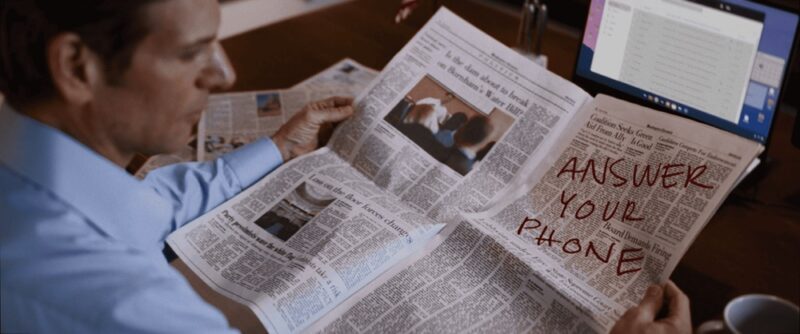
With that live, reactive structure, did it feel closer to theatre than film?
In process, yes. We rehearsed for two weeks in the actual location, blocking and shaping everything like a play. That allowed us to shoot long sequences – sometimes 11 to 22 pages at a time. But you still have to honour that it’s a film. It’s about blending the immediacy of theatre with the precision of cinema.
Did the technology ever surprise you as an actor?
In a good way. I knew what I wanted to achieve, but I underestimated how much it would affect me emotionally. It’s very different from acting with stand-ins or tennis balls – here, you’re actually responding to people in real time. That immediacy was really special.
The film feels claustrophobic – like the form mirrors the theme. Was it important that the process itself felt invasive?
Absolutely. Media was essentially the number one character – both in the story and in how we made the film. The process itself became a metaphor for the character of media.
Do you think media reflects public appetite, or shapes it more than we realise?
It’s both. We used to choose between outlets – now the delivery system is designed to keep us engaged. It’s not just about giving you information, it’s about keeping you on the platform. But there’s responsibility on us too. We fall into patterns, we stay in loops – and that’s part of the system. We can’t completely absolve ourselves.
Looking at your career across different mediums – did this feel like everything colliding into one project?
Yeah, it did. I’ve always been interested in how we present ourselves – the gap between who we are and who we project. That idea runs through everything, whether it’s theatre, film, or now this kind of media-driven storytelling.
And finally, what do you hope audiences walk away questioning?
First and foremost, I hope they’re entertained – that’s the priority. But beyond that, I hope they leave uncertain about where responsibility lies, and start questioning their own role in the system they’re participating in.
PH-1 will be available on Digital in the United States on May 8th, 2026.
