
Winner of the Camera d’Or at the Cannes Film Festival 2025 and the Directors’ Fortnight Audience Award, The President’s Cake arrives with a wave of international acclaim – and it’s not hard to see why. Set in 1991 Iraq, during the final years of Saddam Hussein’s rule, the film follows nine-year-old Lamia, tasked with baking a cake for the President’s birthday in a country where even flour, sugar, and eggs are luxuries. What begins as a simple assignment quickly unfolds into a perilous, deeply human journey across a landscape shaped by sanctions, scarcity, and quiet resilience.
Told through the eyes of a child, the film balances harsh political reality with moments of wonder, humour, and tenderness. With standout performances led by newcomer Baneen Ahmed Nayyef, it’s a tragicomic gem, a tenderly crafted, often devastating portrait of childhood. But what lingers most is its emotional duality: a story grounded in lived experience that also resonates as something more mythic, almost fable-like.
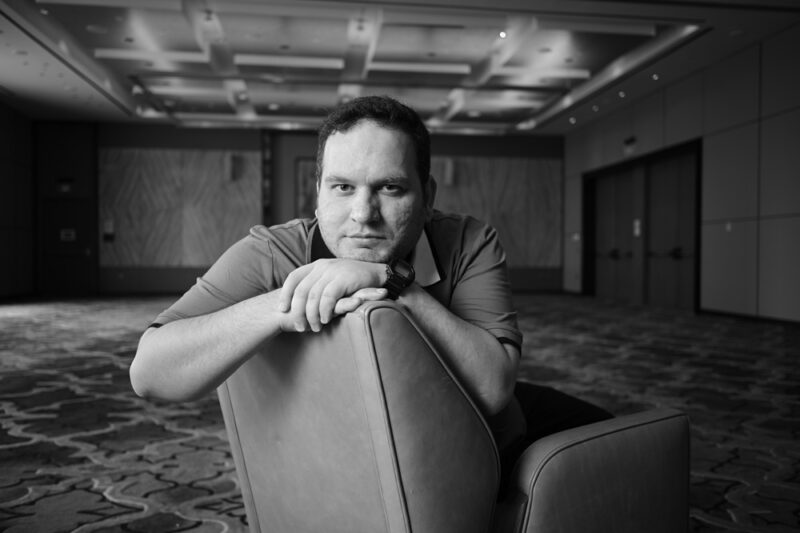
When our Peter Gray spoke with the film’s director, Hasan Hadi, their conversation circled that very tension – between memory and metaphor, realism and imagination. They spoke about drawing from personal history without consciously shaping it into allegory, working with non-professional child actors to access emotional truth, and resisting overt political commentary in favour of something more human and enduring. What emerges is a portrait not just of a film, but of a filmmaker navigating the blurred lines between past and present, innocence and experience, and the small, specific details that ultimately carry universal weight.
Taking something as specific as baking a cake and turning it into a story about survival… at what point did you realise this wasn’t just a memory, but a metaphor?
I don’t know if there was a specific moment I can point to. Maybe in the later drafts, you start to see it more clearly. But I didn’t write it as a metaphor – I wrote it to show life as it was. As the script developed, people began to respond to it in that way, saying, “Oh, this represents this,” or “It’s a metaphor for that.” That doesn’t mean they’re wrong – it just means I hadn’t thought about it like that. For me, it was always about taking you on a journey with these two kids and showing what life was like at that time. But yes, maybe in the later drafts or pre-production, that idea started to emerge through other people’s interpretations.
Childhood memories can be unreliable, or softened over time. Did you ever find yourself questioning your own recollections while writing?
Of course. There are things you question, but there are also things that are burned into your soul – the feeling of certain moments, how life felt. Memory is imperfect, but that’s what makes it memory. For me, it wasn’t so much about questioning as it was about trying to stay historically accurate, while still telling the story through a child’s eyes.
What I loved is that it never feels naïve. How did you balance protecting Lamia’s innocence while still showing the brutality around her?
It’s also about losing innocence – bit by bit, during the journey. As a filmmaker, I tend to focus on small, practical details rather than the bigger picture in the moment. The bigger picture is always there in the background, but when you’re building a scene, it’s about asking: what’s happening here? What would this person do?
For example, she’s unfamiliar with the city at first. By the end, when she runs away from the cinema man, it’s because she’s developed a sense of danger. You build those small moments, and then the audience brings their own interpretation.
You worked with mostly untrained actors, and children. Did that change how you directed emotion?
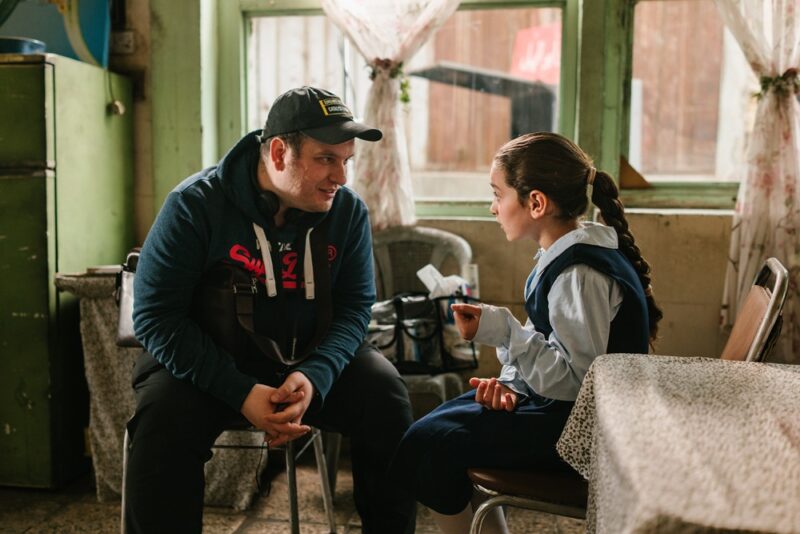
Definitely. Working with kids is very different. Before shooting, I did workshops where we just talked, shared stories, built trust. I needed to understand them – what moves them, what doesn’t. Every child is different. We’d dance, sing, do exercises that helped them connect with emotions and memories. That created a kind of shortcut between us, something I could rely on during the more emotional scenes.
The film has this almost fable-like, odyssey structure. Was that intentional, or did it emerge naturally?
I think it came from my love of films that are grounded in reality but take small leaps into something more. Like in Fanny and Alexander – there are moments that don’t make logical sense, but they move you emotionally.
I like those touches where something feels real but also slightly magical. Even small things, like how a character appears or disappears, or the ambiguity of someone like the mailman – those elements add another layer. From there, you start thinking about how to visually express that through locations and atmosphere.
The film is political without ever feeling didactic. Was that a conscious decision?
Yes. I promised myself I wouldn’t write a political film. The context is political, of course, but I didn’t want to make commentary. I think when films try too hard to be political, it can age badly. For me, it’s about focusing on the humanity of the characters. That’s what connects people across cultures and time. Even if a story is set in a political environment, the core should still be human.
There’s also a sense of normalcy within oppression – people adapting to it. Was that something you wanted audiences to sit with?
That wasn’t intentional – it was just how life was. People adapt, because they have to survive. You see it everywhere. Even in difficult situations, life continues – shops open, people go on. I wanted to show how people adjust to harsh conditions, how society changes over time.
The relationship with the grandmother is so tender, but also filled with unspoken tension. What did that dynamic mean to you?
It’s very personal. That feeling of someone protecting you, and then suddenly they’re gone – it changes everything. That relationship comes directly from my own experiences growing up.
The locations feel incredibly alive – almost like characters themselves. How collaborative were they in shaping the story?
Very important. I always try to create a relationship between what’s happening in the scene and the location. For example, you might see a beautiful river, but people are fighting for clean water. That contrast reflects the reality of the country at the time. Each location adds subtext – whether it’s a checkpoint, a restaurant, or a rooftop. They help tell the story beyond dialogue.
Was there ever a moment on set where your own past blurred with the fiction?
Maybe, but filmmaking is such a tunnel-vision process. You’re focused on so many technical things. The personal elements are always there, but often in the background – they guide your decisions without you even realising it.
If nine-year-old you could watch this film, what would he recognise? And what would surprise him?
I think he’d be happy watching it. I don’t know what he’d question, but I think he’d feel like the film speaks to him as a child. And maybe he’d realise – one day – you’ll make something like this.
The President’s Cake is screening in Australian theatres from April 2nd, 2026.
