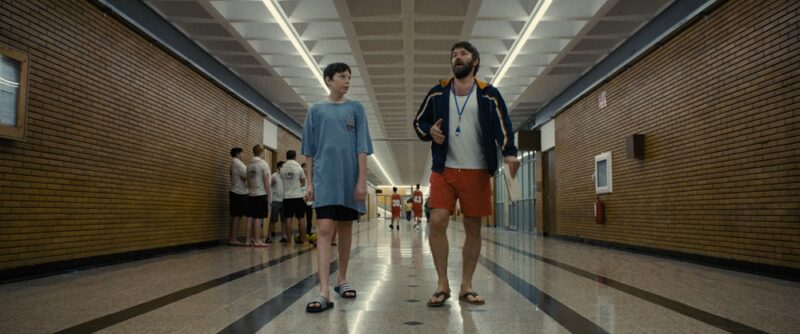

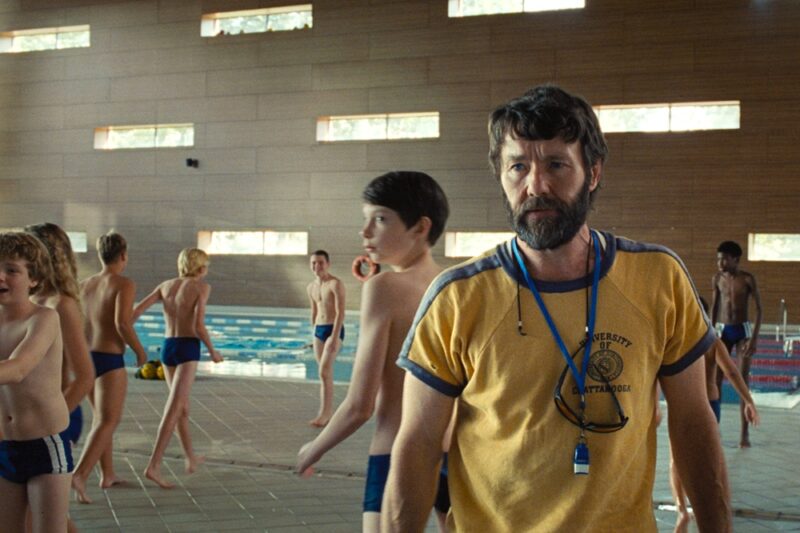
Few environments capture the fragile hierarchies of adolescence quite like summer camp. Friendships form quickly, loyalties shift overnight, and the unspoken rules of belonging can be as ruthless as they are invisible. The Plague taps directly into that volatile world, following a 12-year-old boy who becomes entangled in a cruel camp tradition targeting an outcast suffering from a mysterious illness. What begins as a game soon blurs into something far more unsettling, forcing the boys to confront the uneasy line between cruelty, fear, and the possibility that the joke might be hiding something real.
It’s a premise that blends psychological drama with creeping horror, exploring the formative age where children begin to understand the weight of their actions – sometimes too late. Our Peter Gray spoke with Joel Edgerton about what drew him to the project, the film’s unsettling portrait of boyhood, and why stories that live in morally uncomfortable spaces continue to fascinate him.
I know that when you first heard about the project – when you first read the script – your instinct was to direct it. What was it about the material that sparked that impulse?
A friend of mine who’s an agent – though not my agent – sent me the script because he thought I’d be taken with it. My first film as a director, The Gift, deals with bullying, but from the perspective of two grown men revisiting the way they treated each other 20 years after school. I’ve always been fascinated by that formative age – kids and adolescence – and the way they treat one another.
There’s a moment in growing up when you begin to realise that you can really hurt another person without even meaning to. Kids can be careless in the games they play or the things they say, almost like someone waving a hammer around without realising that if it hits someone’s head, it could crack their skull open. There’s this dawning awareness that intention and impact aren’t the same thing.
Those ideas really interest me. They’re rich material for drama – and even for danger and horror. So when I read the script, I thought, “I know how I’d make this movie.” Then I learned that Charlie (Polinger), who wrote it, was also a filmmaker and wanted to direct it himself. So I watched his short films and basically said, “Alright, I’ll help however I can.” If he wanted me to play the adult character, great. I’d also introduce him to people who might help get the film made, because I know how difficult it is for a first-time filmmaker.
I had this instinct, just from his shorts and the script, that he was going to do something special. And I’ll say this: he went beyond even my expectations. I thought he’d do a good job, but when I saw the film at Cannes, the sophistication of the craft and the unsettling feeling he created – it was extraordinary.
That unsettling feeling really stood out to me too. Watching it, you’re constantly expecting the worst. There’s this lingering sense of dread throughout, and I loved the ambiguity of it. I know Charlie has cited films like The Shining and Full Metal Jacket as inspirations. Those films deal a lot with group psychology and systems of power. Did those references shape how you saw the world of the camp?
When I read the script, I actually thought I was reading the closest thing to Lord of the Flies that I’d encountered in a long time. And I described it to friends as a bit like Full Metal Jacket – that same pressure-cooker environment where everyone is bunked together and tensions start to build.
I once saw a documentary about a shrinking African watering hole where all these animals had to gather to drink – hippos, crocodiles, little antelope, all trying to share the same space. To me, that felt like a perfect metaphor for school or summer camp. We’re all different animals with different natures. Some people are apex predators, some are bullies, and some are just trying to survive.
Cinematically, though, I definitely thought of things like Full Metal Jacket. There’s also a kind of restrained body horror element that reminded me of films like The Fly or Black Swan – stories about deep psychological trauma manifesting physically. And then there are movies like Stand by Me in there too. But beyond the cinematography or the music, I think one of the film’s greatest triumphs is the casting.
Setting the film in the early 2000s was fascinating too. It’s strange to think of that era as nostalgic or retro now – it’s only about twenty years ago – but the dialogue felt incredibly authentic. The way the kids spoke reminded me exactly of how people talked when I was in school. And so much of the film’s emotional weight rests on those young actors. What was it like working opposite them? How did you help create an environment where they could go to such vulnerable places on screen?