

The end of the world has rarely felt this intimate.
In Worldbreaker, the earth is split apart by an event known as The Stitch, unleashing feral, mutating creatures called Breakers and reshaping the balance of survival itself. With men most susceptible to infection, women lead the fight for humanity’s future. Amid the chaos, a battle-scarred father retreats to a remote island with his daughter, Willa, training her relentlessly for the day the monsters inevitably arrive. When that day comes – and when myth collides with reality in the form of the mother she knows only through legend – the film reveals itself as something far more personal than its apocalyptic premise suggests.
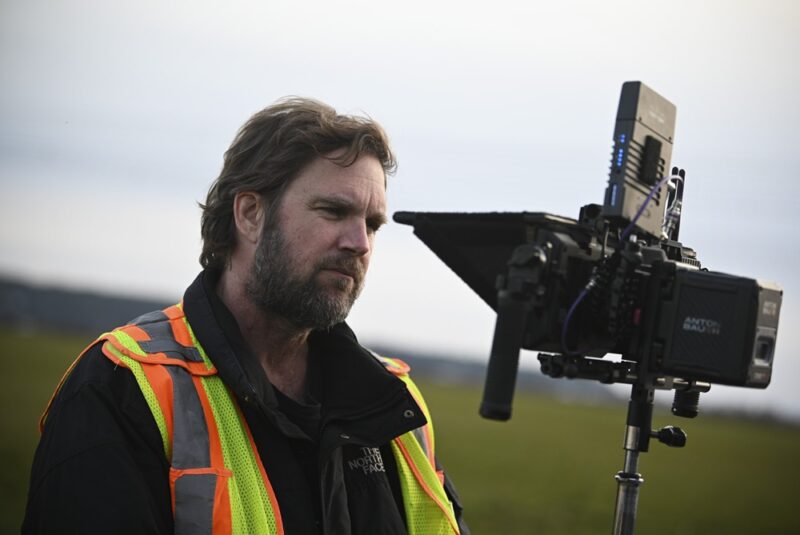
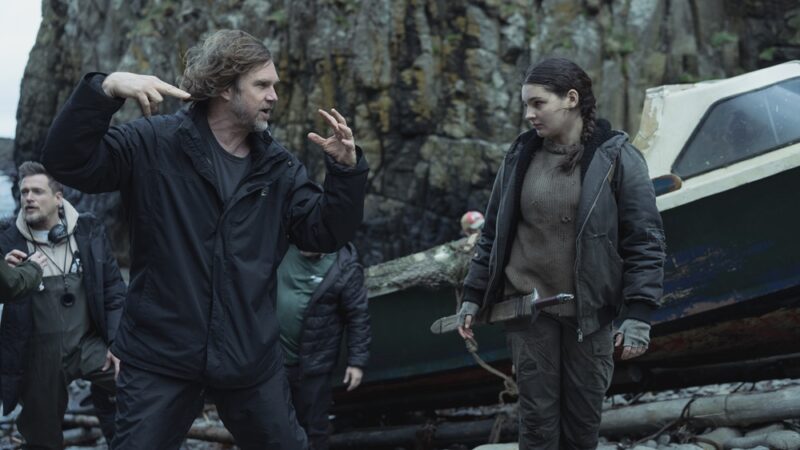
Directed by Brad Anderson and starring Milla Jovovich and Luke Evans, Worldbreaker blends muscular sci-fi action with a tender coming-of-age arc about storytelling, sacrifice, and the complicated ways parents prepare their children for a fractured world.
When our Peter Gray spoke with Anderson, their conversation moved beyond creature design and siege mechanics into something more reflective: the slow-burn dread that shapes the film’s tone, the influence of grief-soaked cinema like Don’t Look Now, and why – at this stage in his career – he finds himself repeatedly drawn to stories about parents, loss, and the uneasy hope that the next generation might be stronger than we were.
With this film, you present a world that’s literally torn open and socially inverted – where women become the frontline defenders. When did this shift for you from a genre premise into something emotionally real?
Honestly, by about page eight. The script had all the genre trappings I love – creatures, apocalypse, the end-of-the-world stuff. We’re all fascinated by how it might go down. But at its core was this relationship between a father and his daughter. As a parent myself, that really struck me – the idea of preparing your children for the struggles, even the horrors, that might lie ahead. How do you prepare them to become heroes if they need to be? That emotional core was there right away. It’s a slow burn, too. Not everything is thrown at you immediately. You gradually learn about the world and the relationship. That incremental build felt meaningful.
You once wrote academically about Don’t Look Now, which deals so powerfully with grief and fractured perception. Watching Worldbreaker, I sensed echoes of that – danger seeping into quiet moments, trauma shaping what characters see and believe. Was Nicolas Roeg’s film consciously or subconsciously influencing you here?
I’d say subconsciously. Don’t Look Now was formative for me early on – not just thematically, but in terms of craft. The use of color, camera work, atmosphere – it really excited me as a young filmmaker. I don’t think I was consciously riffing on it here, though I definitely did that more directly in Fractured. But certain films just stay with you. They percolate into your work. It’s interesting, many of my recent films, including this one, revolve around parents and loss. I’m not sure why exactly, but as you get older, your interests shift. My early films were romantic comedies. Now I’m drawn to darker, emotionally grounded territory.
Because so much of this film unfolds through Willa’s perspective, how did that shape the horror? Do you approach horror differently when it’s filtered through a 15-year-old’s imagination?
I always thought of this as a story about the power of storytelling. The father tells Willa parables, almost like Grimms’ fairy tales or Greek myths, about a heroic warrior battling monsters. They’re meant to inspire her, to prepare her. So when we visualize those stories, they’re colored by a child’s imagination – whimsical, heightened. That contrast between a young girl’s naïveté and the true horror of the world makes it more startling. In the attack sequence, we kept it very much from her perspective – confused, partial, disorienting. You don’t see everything. That felt more honest. Ultimately, it’s Willa’s story.
The film balances intimate domestic moments with explosive survival horror. How do you decide when to let it breathe and when to unleash chaos?
Some of that’s baked into the script. But on set, we found ourselves heightening moments within the quieter scenes – building suspense rather than constant action. Even when they’re seemingly safe on the island, there’s that underlying dread that something’s coming. It’s more about the slow burn – the sense that eventually the monsters will arrive. I don’t consciously map it out as “we need an action beat here.” It’s more intuitive. As a viewer myself, I just sense when it’s time to raise the stakes. The film is almost bookended by larger sequences, but the middle is about preparation – the father readying his daughter for what’s ahead.
You mentioned starting your career with romantic comedies like Next Stop Wonderland. How has your understanding of storytelling evolved since then?
I think I’ve become more disciplined, though I still value improvisation and freedom on set. Early on, I was making very personal films because that’s what you do as an indie filmmaker – you write what you know. At the time, I knew about wanting to meet a girl in Boston – that became my romantic comedies. But as I continued, I became excited by unfamiliar worlds and darker themes. I’m less interested now in what people say and more in what they do. Behavior fascinates me more than dialogue. Television satisfies my love of writing and words; film, for me, is increasingly about visual and behavioral storytelling. I’ve also made a conscious effort not to be pinned down. I don’t want to be a one-trick pony.
If you had to choose a single frame from Worldbreaker that encapsulates the film, what would it be?
The final frame. Willa raising her sword to confront the approaching monsters. It almost could have been a freeze-frame – like a ’70s film. It captures her transformation. She begins holding a stuffed animal and ends holding a weapon. That progression from innocence to fierce self-possession – that’s the movie. It’s hopeful, but also uncertain. It’s right on the cusp. And it’s her story.
After making this film, is there an idea about humanity or survival that lingers with you?
That we can’t do it alone. To survive whatever may be ahead – as individuals, as a species – we need community. In Willa’s case, it’s her parents who give her strength. We live in a time where technology is supposed to connect us, yet we often feel isolated. This film, in some small way, is about the necessity of relying on others – family, community, whatever that looks like – to get through darker times.
I see a lot of films in this line of work, and it’s rare to be genuinely surprised by genre. I went in expecting one thing and found something far more emotional. There’s comfort in knowing genre can still surprise us.
That’s always the goal, something familiar but strange enough to catch you off guard. You can’t reinvent the wheel, but you can paint it a different color.
And you’ve done that before – with Blood, with The Call. You have a real grasp of taking genre just a step further.
Thank you. I appreciate that.
And perhaps next time we’ll be talking about Twilight of the Dead?
Hopefully. It’s a Romero-sourced story – almost an epilogue to his zombie universe. And interestingly, it’s also about a parent and child surviving together. That theme seems to have found me.
Worldbreaker is available On Demand from February 20th, 2026.
