

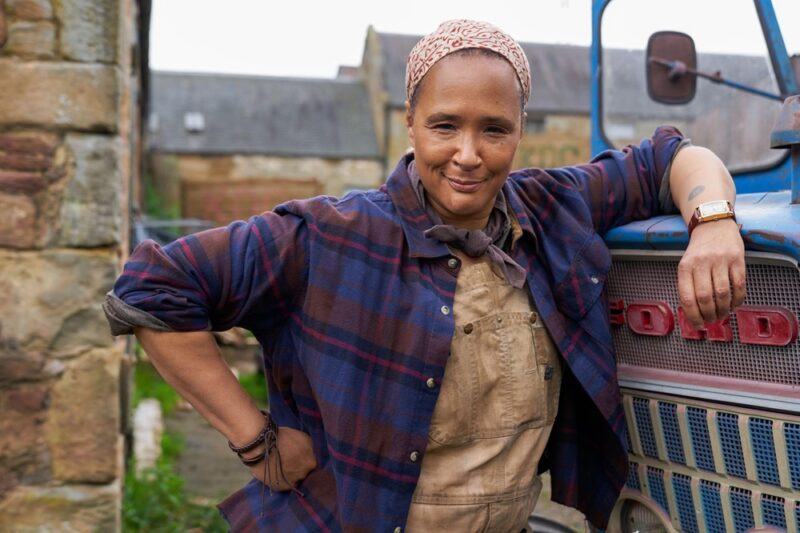
There’s something quietly radical about a family film that trusts gentleness over noise. Set in the self-proclaimed Pumpkin Capital of the World, Grow unfolds like a story many of us remember from childhood, one that invites laughter, warmth, and the comforting belief that people, at their core, are good. Stoic farmer Dinah Little (Golda Rosheuvel, Bridgerton’s Queen Charlotte) has closed herself off from the world, weighed down by loss and responsibility, when she reluctantly takes in her spirited niece, Charlie (Priya-Rose Brookwell), a child whose uncanny ability to connect with plants mirrors her own longing to be truly seen.
As the town gears up for its annual pumpkin-growing contest, complete with eccentric locals, fierce rivalries, and the welcome chaos of Arlo (Nick Frost) and best friend Oliver (Dominic McLaughlin), Grow becomes less about winning and more about what happens when two people at different stages of life allow themselves to start again. Watching Charlie’s pumpkin take root, Dinah slowly does too, discovering that nurturing something beyond yourself can quietly heal what you thought was beyond repair.
In conversation with our Peter Gray, Rosheuvel reflects on growth – emotional, generational, and creative – the joy of leading a cast built on trust and generosity, and why stories like Grow feel especially vital right now: films that make space for laughter, tenderness, and the reminder that family can be found, cultivated, and grown in the most unexpected places.
Congratulations on the film. I went in knowing nothing about it, which is always a pleasure. Family films that genuinely work for every age feel rarer these days, so watching this as a 40-year-old single man and thinking, this is the kind of movie I loved as a kid – and still love now, was really special. Beyond the pumpkins, the film feels deeply rooted in growth – emotional, relational, even generational. What kind of growth stood out most to you?
For me, it was Dinah’s emotional journey. She’s someone who’s shut herself away, burdened by this dilapidated farm and her inheritance, and then this child comes into her life and completely shifts how she sees herself and the world. When I read the script, the connection between the two of them, and how they both need each other to move forward, really struck me. That relationship was the heart of it, and it’s something you don’t often see: a young girl and a woman growing together. I loved that.
The film suggests that nurturing something else can quietly heal parts of ourselves. Was there anything about making Grow that ended up nurturing you?
Wow, that’s a great question. Being the lead was a huge moment for me. It was my first time leading an ensemble, and that responsibility really mattered. I’ve always believed in creating a strong sense of community on set, an environment that’s generous, inclusive, and trusting, where everyone feels valued and free to do their best work. That experience shaped how I see myself as an artist. It was a real moment of growth in terms of my work ethic and the kind of spaces I want to help create.
There’s something powerful about watching women at different stages of life grow alongside one another. How has your understanding of “starting again” changed as you’ve gotten older?
I genuinely believe every day is a new beginning. I live my life like that, waking up and thinking, “Okay, let’s see what today brings.” No matter how the day turns out, good, bad, or somewhere in between, I’m grateful for it. It’s important to embrace everything: mistakes, hardships, joy, celebration. Making this film felt like that every day. We really did build a family on set, and navigating those dynamics was part of the joy.
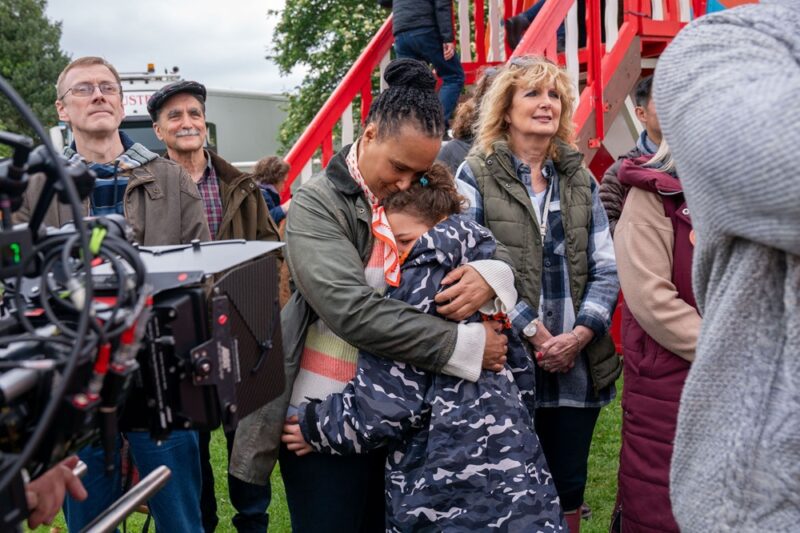
Watching the film, you can feel that care between everyone. It feels safe as an audience member. Comedy can look effortless, but it’s deceptively hard. What was the biggest challenge in finding the film’s tone?
Honestly, the tone was always there in the writing. The heart was baked into it from the start. That’s one of the reasons we all said yes. Working with people like Nick Frost, Joe Wilkinson, and Jane Horrocks, their comedy comes from such a deeply human place. Even off-camera, that warmth was always present. Whatever comedy we added sat on top of that beating heart, which made it feel effortless.
Charlie’s ability to communicate with plants is such a charming idea. If you had that gift in real life, what’s the first plant you’d talk to?
My mulberry tree. It’s in my back garden, and it’s about to get pruned. I’ve got a tree surgeon coming on Friday. I’d like to reassure it that everything’s going to be okay. Just a little haircut. It’s touching the house at the moment, so… boundaries (laughs).
We do treat house plants like pets, after all. But genuinely, with everything happening in the world right now, this feels like the kind of film we need. It reminds us that people are good, life can be gentle, and it’s okay to feel hopeful.
Thank you. That really means a lot. That was exactly what we wanted, a film for everyone, especially for adults who remember growing up with movies like this. If that came through, then we did our job.
Grow is screening in Australian theatres from January 15th, 2026.
