
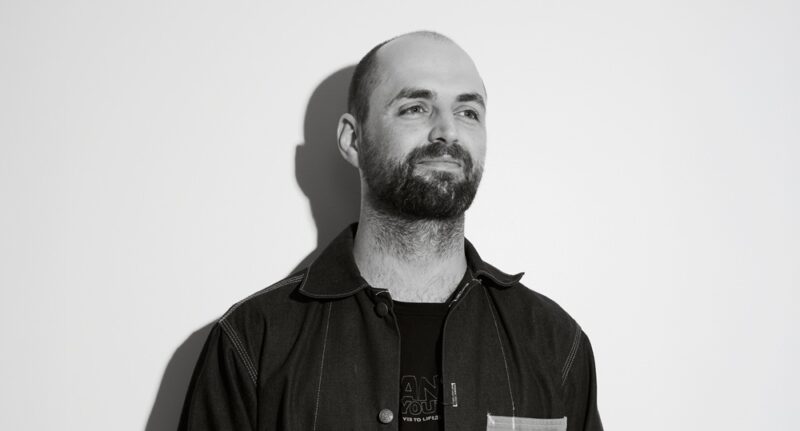
AACTA, Sanctuary Pictures, Umbrella Entertainment and the Wake in Fright Trust today announced The Harvest, written and directed by emerging filmmaker Darcy Conlan, as the 2025 recipient of the Wake in Fright Development Initiative. Conlan will receive $30,000 in funding and dedicated development support to take the project toward production; the Wake in Fright Development Initiative honours the legacy of Wake in Fright by supporting bold new Australian voices in genre storytelling.
A gripping blend of rural horror, cosmic unease and worker tension, The Harvest follows British backpacker Taylor Walsh as she takes a job on a remote Australian fruit farm, in hopes of extending her visa. Despite drought conditions, the farm continues to inexplicably thrive and Taylor soon discovers the presence of a sinister cosmic force. What begins as a fresh start spirals into a nightmarish revelation involving ritual sacrifice, generational trauma and something ancient embedded deep within the land.
Conlan’s win marks an exciting step for the emerging filmmaker, whose work has already gained attention with the local industry. His 2023 short film Flappy opened the St Kilda Film Festival, won Best Horror Short at Berlin Short Film Festival and Best Short Film at Nocturnal Film Festival. His music videos and commercial work have collected multiple ACS Awards. Conlan’s film, The Drylands, placed in the top 20 for the AACTA Pitch Isolation development initiative and in 2024, he was selected for VicScreen’s Key Production Placement.
As part of the prize, The Harvest will receive $30,000 in funding from the Wake in Fright Trust and AACTA, with Sanctuary Pictures providing hands-on development support including script editing, consultant research, pitch materials and marketplace packaging. Umbrella Entertainment will oversee future distribution across Australia and New Zealand, continuing its commitment to elevate homegrown genre cinema to local and international audiences.
To coincide with his win, Peter Gray spoke with Conlan about the initiative, what we can expect from The Harvest, and what Wake In Fright means to him personally.
From what I’ve read, The Harvest blends rural realism with cosmic dread. Where did that very first seed of the story come from for you? Was it an image? A feeling? Something that you couldn’t shake? What drove this story forward for you?
Yeah, it was, firstly, research into the Australian agricultural industry. I had been reading reports on backpackers who were, I guess, for the Australian fruit-packing industry, they relied on these backpackers for the labour force. When I heard about that and the kind of inherent power dynamic and potential exploitation involved in that, I thought that was a pretty compelling hook for a film. There’s a power imbalance there, and a real reason for these backpackers to stay on a farm and maybe ignore some red flags or mistreatment and everything, because at the end of the day, there’s a working visa that justifies enduring some trying times.
I thought that was a compelling place to (start). And then I really want to use genre. I love horror as well, a genre element to explore some other ideas and question how would a farm that is surrounded by drought thrive in these conditions? That’s what led me down the road of the cosmic world and cosmic horror.
Well Australian landscapes have that mythic, almost intimidating power. Is there a part of the land, or even the silence of the land, that you wanted to weaponise the most?
I think the remoteness. I really wanted that to feel for these backpackers, all living on the farm in the story, for them to feel that sense of remote isolation and that potential dread and inability to escape easily. I thought that was pretty compelling. But for the story as well, it’s an apple farm, and I wanted that to represent almost this Garden of Eden amongst a drought-stricken landscape. For the backpackers, even though it’s unusual, they don’t want to question that, because it means there’s fruit to pick. They don’t want to be suspicious of how unusual it is. If there’s fruit to pick, there’s a job there, and they can get the visa. I thought that kind of subversion of what we assume about an Outback land and then showing something different could be really interesting.
So many great horror films carry a moral or emotional infection at their core. Is there an emotional monster that sits underneath the story for you?
Yeah, for a lot of the characters, it’s them haunted by their past which is driving them. For the lead character, Taylor, she’s in denial. She’s running from her past back home in the UK, and that is a real motivating force for her. She doesn’t want to confront it and, with that, she’s willing to endure a lot. For the farmers, on the other hand, the antagonists of the film, they’re haunted by a past that on the farm. I think people are all trying to find some kind of inner peace in this new life, and that’s a motivator for many of them.
The judges described The Harvest as atmospheric and confidently realised. Was there a moment in writing where you knew that it was the version that works the most?
I think it was particularly at the midpoint. I don’t want to spoil too much, but that’s when the cosmic secret is revealed. The way it plays out, I was just tapping into imagery that I hadn’t seen before. It’s kind of those moments where you’re writing and you’re trying to keep up with your mind, to a degree. You’re trying to keep up with these images and find a way to express these compelling visuals that you think an audience will really engage with. Once I had that, I felt confident that there was a story (there). I want to write something that I would want to watch, you know? I want to make a film for a broad audience. A film for a cinema. The litmus test fort me is “Would I pay money to go and see it?” And if the answer is yes, I keep writing and making sure I’m delivering the goods for the genre. I really want to deliver on what horror fans come to expect from horror in Australian films.
Speaking of horror in a cinema, it’s such a great communal experience. Is there an experience watching such that sticks out for you?
There’s a few, yeah. Last year I saw Lake Mungo (in cinemas), they did a special screening, and that was an incredible experience. Like, you could just feel us all under the spell of that film. I don’t want to spoil it, but the big jump scare moment moment, everyone kind of laughed after the audible jump scare reaction. That moment really worked. This wasn’t in cinemas, but I saw The Loved Ones as well. It’s one of my favourite horror films, and I remember watching that at home with a few of my friends. It’s a pretty punishing film. Some of the body horror in it. We found it so compelling.
I remember watching The Loved Ones for the first time, and it is fucked up in the best way. I spoke to Sean (Byrne) earlier in the year when Dangerous Animals came out, telling him how he needs to keep making horror movies…
I want him to be so prolific, because I love everything he does. The time between his films is time well spent, because the work is amazing.
And you’ve had festival wins, and you’ve done music videos and placements. Is there one moment of doubt from your career that now feels almost like a strange foreshadowing in any way?
I’d say it was a feeling after the last short film. I liked the experience of screening that as the Opening Night at the St Kilda Film Festival, and being at the Palais Theatre with thousands of people watching your movie…I was pretty nervous. But it was well received. Similar to the response of the Lake Mungo screening. People laughed at the right moments and were shocked at the right moments. That was very validating. I think after that experience, I felt like I wanted to try my hand at a feature film. It’s obviously a different kind of commitment and wading into new territory from doing a short film, where you can self-finance. You can produce that with friends. Whereas a feature film is a whole different animal, and you need the support of Screen Australia, or private equity. I really wanted to throw my hat in the ring and see how we go. That’s when I really started focusing on The Harvest and developing some other (ideas) as well.
Talking about watching your short film with an audience and the correct reaction. As a storyteller, what do you think is harder – scaring an audience or making them care?
I think, for me, the films which have been the most frightening have been the ones that I care about the characters. I think they’re both hard, but it’s more important to do the work to make (audiences) care about the characters, to make them love the characters. Then when you, unfortunately, might have to torture the characters in your story, it’s going to deliver in spades for the scare side of things. I really want (The Harvest) to be balanced in that way. To be a bit of a full meal for the audience. You’re getting characters you love and you can relate to, and then you go through the tough journey. You can get to a point where audiences become numb to just a constant barrage of scares. That’s why Lake Mungo is such a great example, it took so much time. It was patient. Then that last act really hits home.
Do you feel that there’s going to be a “Darcy Conlan signature” at all? Something that appears across your work, even if you didn’t intend it to?
I think, for me, what often comes first in developing ideas is the imagery. Whether it’s the imagery I’ve tried to write into developing The Harvest, or imagery I’ve worked out to direct…I think it’s the shots and designs of those. I don’t know if it’s a Darcy Conlan style exactly, but it’s the first thing that I think of. And just making sure it has that kind of subjective experience for the audience, so they feel like they’re right in there with the characters.
And one of the greatest things about horror movies that really hit with an audience is that they’ll walk out and feel uneasy or changed. Is there a specific aftertaste that you want lingering with the audience after this?
I think a lot of horror films tend to have a bittersweet feeling. The characters in The Harvest go through a lot, and if there’s a thematic idea or message that I want the audience to consider, it’s just about what’s the right thing. It’s about not leaving past troubles or arguments to fester too long to the point that you can’t resolve them. I think that’s the key takeaway I want the audience to have.
Before wrapping up, I know that you saw Wake In Fright with (director) Ted Kotcheff in attendance. Did that moment emotionally stick to you as a filmmaker?
That film is so fearless and uncompromising. It’s obviously tackling some pretty challenging and confronting material. It really set the bar. I know a lot of filmmakers feel similar. It’s a brutal assessment of Australia, and it has some relevance still today in some ways. In a different way, I want to have an assessment of Australia in The Harvest. Wake In Fright definitely had an influence there, which feels like such an honour to be winning this prize thanks to that amazing film.
The Wake in Fright Development Initiative was established to nurture emerging Australian writers in the horror and thriller genres, and to foster the next wave of distinct, internationally resonant Australian genre cinema. Its inaugural 2024 recipients were Andrew Dillon and Jon Bell for the upcoming reimagining of Razorback, produced by Sanctuary Pictures.
By backing filmmakers like Conlan, AACTA, Sanctuary Pictures, Umbrella Entertainment and the Wake in Fright Trust continue to build a long-term pipeline of bold, ambitious Australian storytellers.
For more information, visit aacta.org.
