

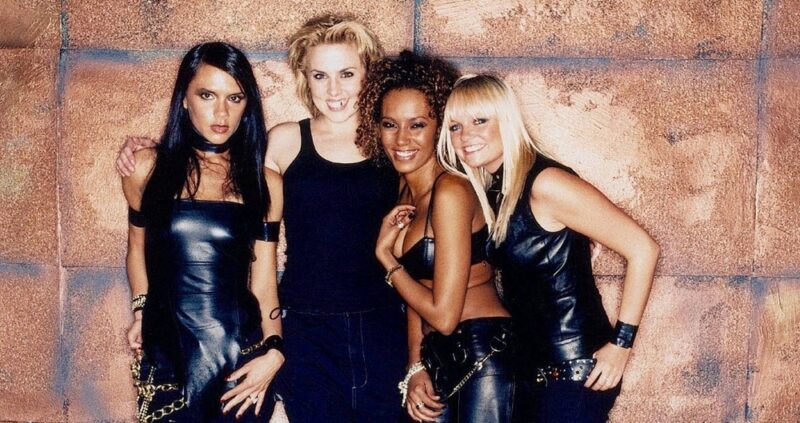
Twenty-five years after its release, the Spice Girls’ third album Forever has returned to turntables with a celebratory anniversary vinyl edition – an event that has inspired a wave of reassessment from fans and critics alike. It’s fitting that this reissue has sparked renewed conversation as Forever has long lived in the shadow of its predecessors, misunderstood and underappreciated. Dismissed upon release in November 2000, the album was criticized for lacking the enthusiastic fizz of Spice and Spiceworld, and for daring to lean into sleek R&B at a time when teen-pop maximalism was the dominant force. Yet revisiting Forever a quarter-century later reveals a record that was not a misstep, but a bold evolution – one that deserves to be recognized as the sophisticated, forward-thinking pop/R&B project it truly is.
When Forever arrived, the Girls (Melanie C, Melanie B, Emma Bunton and Victoria Beckham) – once the defining force of late-90s pop culture – had lost Geri Halliwell, were navigating adulthood in the public eye, and were competing with a new generation of American teen-pop acts who now ruled the charts they once dominated. The LP was dismissed as an underwhelming comeback unable to recapture the lightning-in-a-bottle excitement of their predecessing records. For years, it was the runt of their catalogue – a footnote rather than a finale.
A Bold New Direction, Ahead of Its Time
Part of the backlash to Forever stemmed from just how different it sounded. The Spice Girls teamed up with top-tier R&B producers like Darkchild aka Rodney Jerkins, whose glossy, intricate sound had become synonymous with Destiny’s Child (“Say My Name”), Brandy (“The Boy Is Mine”), an at-the-time emerging Jennifer Lopez (“If You Had My Love”), and other late-90s luminaries. Instead of doubling down on bubblegum pop, the group stepped confidently into a smoother, more mature sonic space; gone were the rambunctious melodies, tongue-in-cheek lyrics, and brightly colored personalities that defined their first two releases.
This stylistic shift was not only intentional but daring. The Spice Girls could have easily replicated the sound that made them superstars – but instead they pursued a more mature, contemporary style that aligned with global trends. Tracks like “Holler” (the LP’s lead single) and “Tell Me Why” showcase intricate vocal layering and lush production, while songs such as “If You Wanna Have Some Fun” demonstrate how seamlessly pop hooks could coexist with R&B rhythms. In hindsight, this fusion feels not only natural but progressive, anticipating the pop-R&B hybrid that would dominate the 2000s. At the time, however, listeners seemingly weren’t ready for a grown-up Spice Girls – especially one down a member and transitioning into a new chapter.
A Cohesive Quartet With Stronger Harmonies
With Halliwell no longer in the lineup, the group’s dynamic shifted, and Forever showcases some of the tightest vocal work of their career – the members’ voices taking on greater responsibility and depth. Emma Bunton’s warmth, Melanie C’s vocal agility, Mel B’s rasp, and Victoria Beckham’s cool, understated tone form harmonies that are richer and more cohesive than many listeners remember. Freed from the cartoonish personas that defined their earliest work, the four deliver performances that are controlled, polished, and emotionally expressive.
Songs like “Let Love Lead The Way” and “Oxygen” highlight how well the remaining four members could mesh, revealing a maturity and cohesion that was sometimes overshadowed by the larger-than-life personas of their earlier eras. Forever showcases the Spice Girls not just as cultural symbols but as vocalists and performers capable of delivering an elevated musical experience.
Emotional Complexity and Lyrical Growth
While the Spice Girls’ early work was built on empowerment slogans (“Girl Power!”) and youthful defiance, Forever explores more adult emotional territory. Themes of desire, heartbreak, commitment, sexual freedom, and vulnerability run through the album, reflecting the women’s lived experiences as they entered new phases of their lives. This lyrical depth didn’t resonate with listeners expecting the fizzy, almost non-sensical exuberance of “Wannabe”, but it resonates now, especially with fans who grew alongside them.
“Goodbye,” the bittersweet finale of the album and the group’s first major single as a quartet, now plays like a poignant reflection on the transitions they were experiencing both privately and publicly. Rather than being shallow or overproduced, Forever carries a grounded emotional weight that resonates far more clearly today.
Timing Troubles: Melanie B’s Hot and the Release That Complicated Everything
Another factor that muddied the album’s original reception was its complicated release context. Just weeks before Forever hit stores, Melanie B released her solo debut Hot, creating an atmosphere of confusion – and, for some, skepticism – about the group’s unity. Critics and fans questioned the optics: was it wise for a member of the world’s biggest girl group to launch a solo project so close to a major group comeback? Many interpreted the timing as a sign of fragmentation, reinforcing narratives that the Spice Girls were no longer moving as a cohesive unit.
This perception unfairly bled into the reception of Forever. What should have been judged on its musical merits instead became entangled with speculation about the group’s internal dynamics. In retrospect, this overshadowing feels unnecessary and unfortunate, as both projects stand on their own terms.
Victims of a Shifting Pop Landscape, Not of Their Own Artistry
It is crucial to remember that the Spice Girls were releasing Forever into a pop world that had transformed drastically since their 1996 debut. Y2K pop was defined by the polished machinery of American teen idols and the rise of nu-metal, R&B futurism, and club-ready dance-pop. The cultural appetite for the Spice Girls’ brand of exuberance had waned, and many listeners weren’t quite ready for their reinvention. Ultimately, critics wanted a nostalgic victory lap; the group delivered an evolution instead.
Listening today – free of the expectations, tabloids, and comparisons that clouded its release – Forever stands on its own merits. It feels sleek, confident, and surprisingly contemporary, fitting comfortably alongside the R&B-leaning pop that would later dominate charts. It is the sound of a group refusing to stagnate and insisting that they could grow.
The Legacy Forever Truly Deserves
As the Forever 25th-anniversary vinyl spins on turntables around the world, it’s clearer than ever that the album never deserved its maligned reputation. Instead, it stands as a testament to the group’s willingness to evolve, experiment, and mature. For a band that was often dismissed by critics despite their cultural impact, Forever is the record that proves the Spice Girls were more than a pop fad – they were musicians capable of depth, reinvention, and artistic growth.
In an era when reinvention is applauded and pop-R&B hybrids are the norm, Forever not only holds up – it thrives. It demands re-evaluation, respect, and celebration. If Spice and Spiceworld defined a cultural era, Forever deserves its place as the group’s most sonically mature, adventurous, and underrated work.
Forever is now available to stream on all major music platforms. The Forever 25th Anniversary Vinyl is available to purchase through all major retailers thanks to UMR / Polydor and Virgin Records.
