

The Black Phone rightfully terrified audiences when it was released across theatres in 2022. And now, just in time for the Halloween season, director Scott Derrickson is bringing the nightmarish void of his supernatural world back to the masses with Black Phone 2, where true evil transcends death…and the phone is ringing once more.
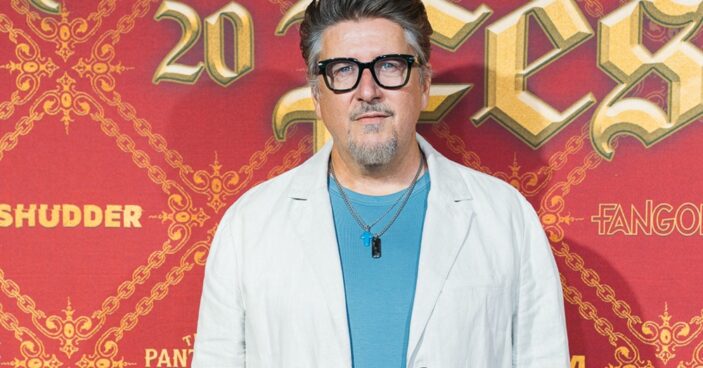
As the film arrives across the globe this week, The AU Review’s Peter Gray spoke to both Derrickson and lead actress Madeleine McGraw. Here, Derrickson breaks down the particular aesthetic of the film, what specific emotion he was processing with its making, and why this sequel demanded a more visceral, violent projection.
I spoke to you a few years ago about The Black Phone, and in our last chat you spoke about building tension scene to scene, and having a non-denial approach to horror. I’m wondering with Black Phone 2, obviously the stakes and violence are all elevated, so, looking back, how did your understanding of what’s allowed in this world shift between the first film and this sequel, especially now that The Grabber is operating in that supernatural force?
That’s a good question. I think one of the main things that made me want to do a sequel was the idea of waiting a couple years until these kids were older, so that we could make a high school horror film. That, by itself, not only opens up the possibility, but it kind of demands a more visceral, even violent kind of horror film. You have to raise the bar in terms of visceral power in a high school horror film. There’s an explanation for that, given the key demographic and how people feel about that part of the horror genre.
You really leaned into that 1980s horror feeling with the aesthetic of this film. Especially with the grainy Super 8 footage. Was that something you had already planned prior to filming, in terms of how the film was going to look for certain sequences?
We were just trying to write a good original story, and as we got deeper and deeper into the script, it started to dawn on me how much we were in the terrain of early 80s horror. The Shining, Nightmare on Elm Street, and even all the camp slasher movies of the early 80s, sort of everything that followed Halloween and Friday the 13th. There were dozens of them. So then the goal became, “How can we be in conversation with this whole era of horror and pay homage to it?” It was appreciating that aspect, but also wildly differentiating from it. So, yes, there’s some real Elm Street influences, but The Grabber is very eloquent. He’s a very talkative killer. The cinematic qualities of the Super 8 usage in particular were something I was really trying to both be reminiscent of the film of the era, but at the same time, we’re trying to make a movie that doesn’t look like anything else. Of course, there’s some shots that were very unabashed homages, like there’s this 1983 film called Curtains, that not a lot of people have seen, but the image of The Grabber skating, that comes straight from that movie.
Oh wow. And I know that the first Black Phone inspired the segment Dreamkill in V/H/S/85. Did you see that as part of the same mythos or a testing ground for ideas that made their way into Black Phone 2?
It’s a good question. It didn’t. I really felt like Dreamkill was an opportunity to be very raw and reckless and dangerous in how far we were willing to push the violence in that movie. There’s a little crossover easter egg, but it wasn’t a visual precursor, except in that I have a fascination with analogue cinema and film itself. And Super 8 in particular. Getting more experience in shooting that, and understanding what’s so great about it, definitely increased my appetite to shoot more so.
We look at The Grabber as this embodiment of childhood fear. With Gwen’s mother, did that represent anything specific to you? Redemption? Intuition? The ghosts we inherit?
I don’t really think in terms of symbols and metaphors, or even themes for that matter. I think that I try to come more from a place of characters, and the idea of this incredible tragedy that can define lives in such a traumatic way. There’s this idea that from trauma comes this point of hope and healing, and what was interesting to me, because of that, was that I think it was unexpected. I think that’s where the appeal for that comes from. That, and the fact that both of these movies are horror films that are really told from the point of view of love. That’s what’s so unique about them.
And in watching the film back, is there a scene or a beat that still catches your breath? Makes you see it anew, because it’s more potent than anticipated?
Oh, yeah, I mean you always are hoping for that. Hoping for that surprising magic in the way the film stock responds and the way a scene is cut together. Most of all, you’re looking for that in performances. Mostly you’re looking for, all the time, the magic of what actors can do to make a scene come alive and be more than you were expecting. I had that experience a lot on this movie.
And I know you’ve said before that Sinister and The Black Phone were ways of processing fear. Was there an emotion that you think you were processing personally in Black Phone 2?
Oh, that’s a great question. To a degree there’s an exploration of spirituality in this movie that’s pretty overt. Even though it’s namely a Christian camp, and there’s Demián Bichir’s character and talking about Gwen’s mother, I wasn’t interested in the Christian aspect of that as much as I was the criticism of a certain brand of American conservative Christianity. But I think the feeling of spirituality that’s present at this camp, both good and bad, both light and dark, that was my experience in going to these winter camps in the Rocky Mountains when I was a teenager. I thought that feeling of teenage spirituality was a powerful thing. Teenagers are oftentimes, and this was the case for me, very powerfully spiritual people, and trying to capture some of the emotion and the spiritual feeling of that, both good and bad, was very interesting to me. I was trying to bring something that was familiar in memory. Not in a nostalgic way, but in a valued way. I think some of the things that we feel as teenagers are some of the most powerful things we feel in our lifetime. And trying to capture those feelings and recreate them for an audience…if you do it well, that has great value.
Black Phone 2 is screening in Australian theatres from October 16th, 2025, before opening in the United States on October 17th.
