
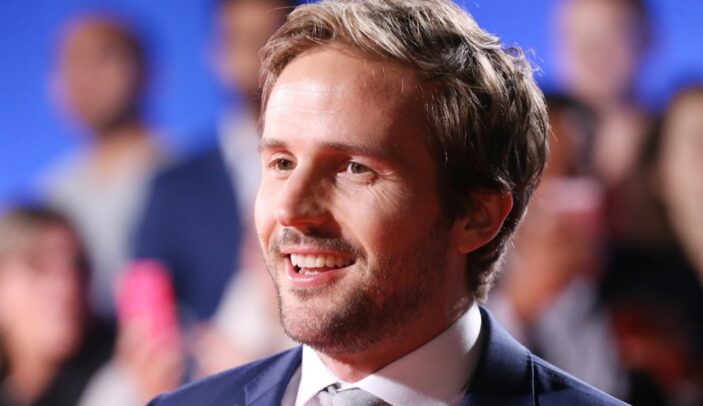
Michael Stahl-David first burst onto the scene with his breakout turn in the seminal sci-fi horror hit Cloverfield. Since then, he’s built an impressively varied screen career, appearing in HBO’s Golden Globe winning Show Me a Hero, Netflix’s acclaimed juggernaut Narcos, the medical drama Good Sam, and Almost Family, an adaptation of the Australian series Sisters. Now, he’s headlining Looking Through Water (you can read our review here), a reflective drama about a New York executive who reconnects with his estranged father during a fishing tournament in San Pedro, Belize – an unexpected journey that spans and transforms three generations. In our conversation, Stahl-David discusses stepping into this emotionally layered story, the distinct relationships he formed with his co-stars, and what he’s taking away from the experience.
Congratulations on the film. Looking Through Water was one of those films that revealed itself to me, and it’s such a lovely, quiet movie. And it now has the emotional weight of being Michael Douglas’s final role. It’s a movie that hinges on the quiet ache of estrangement. What was your first emotional entry point into understanding this son and the gap between him and his father?
I think at first I was trying to understand what is their dynamic? Specifically, why is it that this dad was judgmental and he feels like he has to prove himself. Because he’s gruff with me in the beginning (of the film), and David (Morse), the way he did it, he didn’t shy away from it. But it doesn’t feel mean, somehow. There’s probably a deep desire within me for closeness that is unmet in some ways. My relationship with my family, I’m very close with, and I feel very lucky because of that. But there are other ways, underneath, where there’s unmet needs, there’s a longing, and I think that’s always going to exist between any two people. But that was just in me, and that all just happened in playing with David.
I was going to ask about you and David, and the history between your characters that existed long before the film starts. Was there much backstory that you had to put together? Or was it all there on the page for you?
We had a few rehearsals. We talked about some stuff. David wasn’t big on creating an elaborate backstory, and it was more that (my character) has his dad in a box labeled asshole. When he throws my cellphone (away), it’s like, “Well, here he is. Yep, still an asshole.” But I like the quiet of the movie. One of my favourite parts of the film is when (he) catches the fish, and I’m just watching him and (the character of) Cole (Cameron Douglas) in this ritual of freeing the fish, taking the picture, doing all this stuff, and then just enjoying the afterglow of grabbing a beer. “Cheers.” And I’m left out. It feels so foreign to me. So foreign to what I value, which is power and prestige and money. It opens up a curiosity. It opens a desire to understand.
But that scene where he tells the story of fighting the Marlin, it’s interesting, because a lot of the time it’s just what happens when you’re playing with someone, and obviously playing with David, he’s got a great text there. He’s playing jazz with it. He’s flowing. He’s just being honest and so grounded, and letting it wash over me was all I had to do. It was a real pleasure. There’s something about playing with a father as the archetype that, in some way, felt like I was experiencing a different version of being a son to a father. And that was powerful. I had also just become a father (too). My son had just been born two months when I went to film. I’m rambling, but it was a good question.
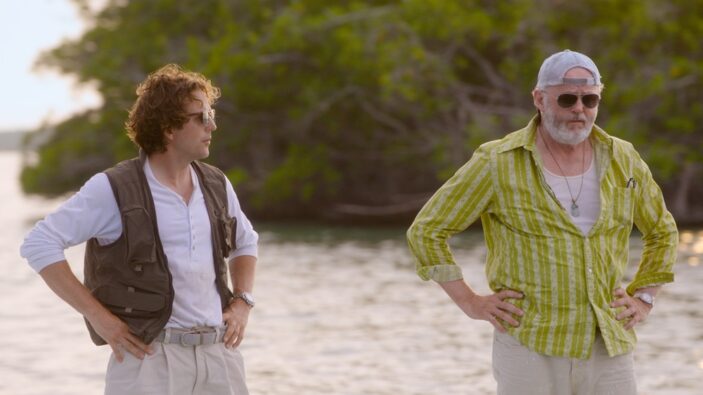
Going off the mention of working with David. He has such a grounded, unspoken, emotional presence on screen. Was there something that surprised you the most about with him, either as a scene partner or was a collaborator in navigating the father-son rift?
I honestly didn’t know what to expect. I remember hearing from my agent that they were having a hard time closing his deal because he had a lot of special requests. I was thinking that he was going to be a diva, or something, you know? And it couldn’t have been farther from the truth. He actually has a lot of allergies, so he has certain needs to just be healthy. I found the most gentle (person). He’s a really interesting guy. Not super talkative, but he’s also not closed. He just kind of hangs quiet. But he’s open to talk and is curious and present. He could’ve been annoyed to be on this indie (film) in these harsh conditions, but I never heard a complaint from him. Instead, there was this groundedness and a presence. It’s so nice to watch an actor who’s just effortless. You’re not watching an actor make choices. It was a real pleasure.
And the film now holds that extra significance with it being Michael Douglas’s final performance. Did you have the chance to meet him at all? Was there a different energy on set? Or because you don’t share any scenes together it didn’t have that effect?
Super separate. I mean, they even shot (his scenes) in Massachusetts before the strike, and then we got a waiver as an independent film to be able to shoot during the strike months later, so I didn’t meet him until about three minutes before we went on stage for a Q&A. But I did spend a lot of time with Cameron (Douglas). I also listened to his memoir, and I watched a bunch of Michael Douglas movies. I didn’t want to do an impersonation, but it was really helpful that I start the film in a tuxedo with my hair slicked back. When we think of Michael Douglas, we think of Wall Street, and that look. So that helped.
But it was very meaningful to Cameron. He’s somebody who’s been through a lot, and he was a really fun person to be on this adventure with. We’d wrap at the end of the week and jump in the boat, go scuba diving for a few hours…he’s an adventurer. And he’s tough. He’s a great performer. It was really fun playing with him. I felt the connection to Michael was more through Cameron.
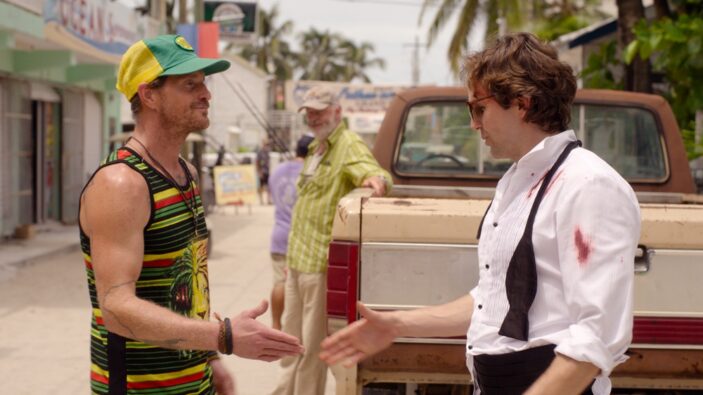
Was there a scene that you shot that took on a different meaning once you saw the film assembled at all?
That’s interesting. A little bit of that scene that I mentioned where I’m watching David and Cam’s characters. It was one of those things where I didn’t really know what I was doing, or if I was doing anything, which is probably a good sign if you don’t know what you’re doing. But that scene where they catch the fish and share the beet, I don’t know if much was scripted there, because now I can see in that the longing to be closer and to be a part of it. It’s like a closed fist that’s opening a little bit, and I’m curious as to what’s going on with this guy.
That scene, and then the one where I’m listening to him tell that story. I kind of forgot how that had landed on me on the day. I didn’t really have a lot of plans going into it of what I was going to do, and watching it now you can see the wheel is really turning about his life. What he’s chosen and where he’s found himself, with his life falling apart, you can see those wheels turning.
The film has so many personal reflections. Did the reality of the story affect your responsibility in portraying William?
It couldn’t have been more important or more serious to embody it as fully as possible. I hadn’t been given the opportunity to have a role like this on a while, and that was super meaningful to me. The fact that it has these deep themes. It’s really resonated with people, and that hasn’t always been true of a lot of the things I’ve been in. It’s been neat having these cool conversations with people after screenings, and hearing about how their mothers have spoken about siblings they never knew, or people being estranged from their parents and they’re scared to talk to them, but they know they’re there. People are opening up and sharing these personal experiences, so that tells me (this film) is hitting. That feels meaningful. Peter, you can sometimes feel like this isn’t a meaningful profession when it’s going badly. So if you can have something that reaches people, touches people, shifts people to rise in their hearts…it’s a real blessing. And your questions, they’ve been very thoughtful, and they’re clearly motivated by having had an experience in watching the film, so that’s been really cool.
Looking Through Water is now available on VOD in the United States.
