
Catherine Zeta-Jones being hunted across Europe by seven of the world’s deadliest assassins is already a fairly irresistible proposition. Give her a wicked sense of humour, a violent criminal history and permission to beat the living hell out of anyone standing in her way, and Kill Jackie has all the ingredients of a gleefully unhinged action thriller.
Based on Nick Harkaway’s acclaimed novel The Price You Pay, written under the pseudonym Aidan Truhen, the eight-part series casts Zeta-Jones as Jackie Price, a former international drug smuggler who has spent two decades hiding behind a glamorous new existence in the art world. When the Seven Demons are contracted to kill her, however, Jackie discovers that the dangerous woman she thought she had buried is still very much alive – and perhaps a little too excited to be back.
But for creator and executive producer Peter Lawson, the assassins, gangster mythology and darkly comic violence were only part of the attraction. As the adaptation evolved, so too did its interest in the woman underneath Jackie’s carefully constructed facade. Lawson and showrunner Tom Butterworth realised that the series needed an emotional foundation capable of sustaining eight hours of television, eventually building questions of family, identity and belonging into the carnage.
That evolution was also shaped by Zeta-Jones herself. Originally written as a male character in Harkaway’s novel, Jackie became an opportunity for the Oscar winner to play against type, use her natural Welsh accent and embrace the character’s humour, recklessness and pathos. Her own connection to Swansea would ultimately become integral to one of the series’ most revealing chapters, bringing Jackie home both geographically and emotionally.
Speaking with Peter Gray ahead of the show’s premiere, Lawson discussed transforming Jack into Jackie, why Zeta-Jones was the key to making such a morally complicated character irresistible, balancing brutal violence with absurd comedy, the influence – and danger – of comparisons to Killing Eve and the Coen Brothers, and why underneath all the bodies, bloodshed and bad behaviour, Kill Jackie might ultimately be a story about one very dysfunctional search for family.
Congratulations on the show. I mean, anything that gives us Catherine Zeta-Jones beating the shit out of people, I’m all for. But I know you’ve described the show as a story about family dysfunction, joy and love, when on the surface it’s about a woman being hunted by seven assassins. When did you realise that the emotional story was actually more important than the hitmen and the action?
I think we discovered that a bit more when I brought Tom Butterworth, the showrunner, on. We had this idea, which was actually Catherine’s initially, to do an episode where she went home to Swansea. That became episode five, this kind of bottle episode where you uncover secrets from her past and reveal some surprising family history.
We wanted to have fun with the assassin tropes and the gangster elements, but we felt that if we didn’t have something more emotional to hold onto with her character, it would feel a bit thin. The book was fantastic in terms of its tone and the character the author had created, but we felt it needed that little bit extra to warrant eight hours of television.
I feel like there’s a strange irony at the heart of Jackie. She thinks she wants anonymity and safety, but the moment her life becomes dangerous, she seems to come alive. Did you ever think about what she’s actually addicted to? Is it the danger, the power, or the person she was before she escaped?
I think when we find her in the present day, she’s a bit bored. She’s got everything, she’s made a lot of money and she’s very successful, but she’s missing some of that fire she had in the past. As we flash back and see what she used to do, you start to understand that. I think she’s a little nuts for wanting to go back to that, but it feeds her fire and gives her that energy. She gets a kick out of it.
Talking about her past, was there ever a version of the show where her criminal history remained mostly backstory, rather than becoming something we actually see play out?
The book was all present-day gangster. She was this drug dealer in London, and as we were developing it, we thought it would be more interesting to find her in the present day living a very different life, slightly in hiding. So we took a lot of those gangster elements from the book and put them into her past, which we could gradually go back to.
We’ve seen other stories play everything out in the present, so we thought it would be more interesting to drip-feed that information to the audience. Then, when these assassins are called to go after her, you gradually realise she’s not just dealing art in Spain. There’s something much more to her history and her character.
I feel like the show is asking where that line is between monster and survivor. Was there a point in development when you realised you had to be careful not to make Jackie too easy for the audience to fall in love with?
I think Catherine allows you to do that naturally, but we wanted to make Jackie a complex individual. She can be effortlessly cool, funny and badass, but giving her that history and adding this familial element – whether it’s her actual family or the ragtag group of misfits she puts together as a surrogate family – adds more layers to her and to this gangster world we’ve seen before. We were very conscious of making sure we weren’t pushing her too far in one direction or the other.
Was there something Catherine specifically brought to the show? The original character was a man, and I know you deliberately preserved many of his qualities when turning Jack into Jackie. What surprised you about that change, and what didn’t, once Catherine became the centre of the story?
When Catherine and I first spoke, I sent her the book and the original pilot script, and she was surprised that we’d approached her with it. She said, “I don’t get a lot of this kind of stuff. I love this. It allows me to be a bit more free.”
A big part of our conversation was me saying, “I think this should be your Welsh accent. Let’s not fuck around.” She immediately said yes, and I think that freed her as an actor to do things she perhaps hadn’t done for a while, or even before.
We wanted to preserve the tone of the book, which was really fun, dark and witty, but Catherine brought more of that emotional component to the character. She wanted those moments of discovering family she hadn’t seen, or didn’t even know was there.
There’s something beautifully provocative about making a woman in her 50s the person who gets to be reckless, glamorous and violent. Did you ever feel like you were pushing against assumptions about what a female protagonist is allowed to be?
Yeah, one of the reasons I wanted to switch the character to a woman is that I’ve done action movies in the past with a lot of guys, and I feel like we’ve seen a lot of that. There’s plenty of it in the marketplace. But having someone like Catherine playing against type – she’s a fucking Oscar-winning actress with this amazing, wicked sense of humour that I don’t think comes out as much as it should – was really exciting. She knows how fucking good she is, and she can bring that wit, humour and pathos. She’s got it all.
I think the first thing I ever saw Catherine in was The Phantom, where she played the villain, so this took me back to that. But looking at the characters she’s playing against, there’s an interesting generational divide between the older Demons, who believed they were changing the world, and the modern Demons, who simply kill for money. Is that distinction saying something about the world Jackie came from versus the one she’s returned to?
Yeah, I think so. There’s a lot of gangster lore around the Mafia, where there are certain codes and things they all like to believe they play by – but they’re all fucking criminals at the end of the day. I think there was more of a gentleman or gentlewoman structure to the business Jackie came up in. Now, it’s more of a “kill for money and post it on TikTok” kind of vibe.
I know you’ve said the action has to serve the character and the story. Was there a particular action sequence where you felt, “This is exactly what Kill Jackie is,” because the spectacle is also revealing something about the person involved?
Yeah, look, I think when you do action, there should be a reason for it that serves the story. In television, it’s harder too, because we didn’t have the massive budget some of these other shows have. So when we were going to commit to an action sequence, we decided, “Let’s do it right.”
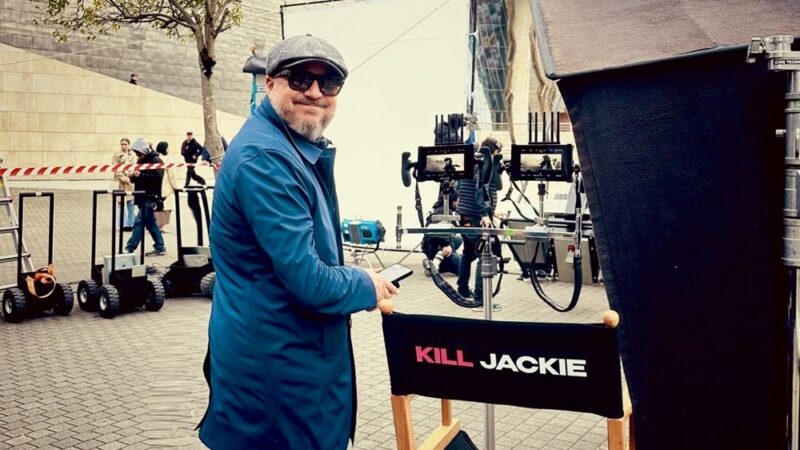
The sequence where she’s initially chased by the first Demon up the steps in Bilbao, leading into that big parkour chase, was a lot of fun. I’m not sure how much we leaned into character there, but we tried to make sure each of those set pieces was at least driving the story and wasn’t just eye candy – although some of the show does look good.
The show moves from genuinely horrific moments to things that are absurdly funny, sometimes within the same scene. What’s the secret to making an audience laugh without allowing the comedy to emotionally undercut the violence?
We had constant conversations about the tone of the show because we had to get it right. You can go too far either way and it just doesn’t work. We always aspired to that Coen Brothers realm, where they make those two things work together in such a genius way.
Whether it was in the scripts, while we were shooting or especially in the edit, we were always making sure the tone was right and that those comedic moments could land without feeling icky after you’ve just seen something terrible happen. It came down to timing and what made sense for the scene.
There were things we initially pushed further that we ultimately pulled back, and other moments where we thought, “A bit of a laugh would be good here,” and tried something else. It was constantly tinkering and going back and forth to find that balance.
You’ve mentioned the Coen Brothers, and I know Killing Eve was also a reference point. At what point does reference become a trap? How did you make sure Kill Jackie developed its own voice rather than becoming an amalgamation of things we’ve already seen?
Look, the references are for when you’re selling it, right? People want to know what it is. There are elements of those other shows in there, but I hope – and I feel – that we’ve made something fairly original, specifically in terms of tone. We push the envelope with some of the dark comedy, which isn’t always out there.
And then there’s Catherine and this character, which you haven’t seen before. She hasn’t led a show in a really long time, and she certainly hasn’t done anything like this. Hopefully, her character, this performance and the world we’ve created feel unique, while still having enough genre elements to attract an audience to what we’ve done.
Without going into spoilers, moving Jackie back to Swansea could have simply been a plot device, but it becomes this very emotional homecoming. What did Wales unlock in Jackie that London or Bilbao couldn’t?
Her initial decision to go to Wales was simply to find something hidden there that could get them out of financial trouble. She was supposed to be in and out, but then she discovers her father is there, followed by the big reveal with her daughter.
Throughout the show, we were constantly trying to put obstacles in front of Jackie, whether physical or emotional. We never wanted to make her life too easy, so she’s constantly thinking on her feet and figuring out the best way out of these problems.
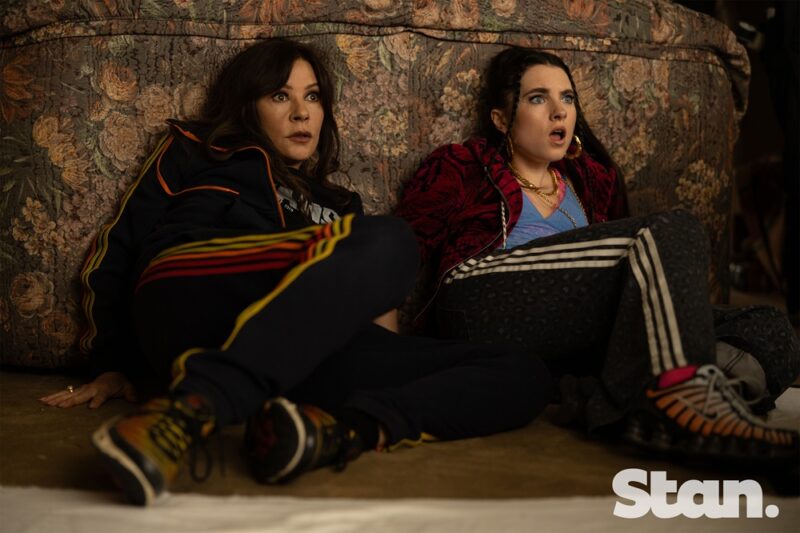
I also talked to Catherine about it. She hadn’t shot anything in Wales for a very long time, and she grew up in Swansea, so it was really important to her to come back. We shot there for a few days, which was great. It also creates this unexpected tonal shift at the midpoint of the show and gives Jackie more emotional fuel to keep going.
Continuing off that, because Wales is so meaningful to Catherine personally, did her connection to the country change the way you understood Jackie during production?
We got to Wales probably a third of the way through production. I think Catherine having the freedom to use her own accent and really lean into that gave her a different perspective on the performance. Knowing that we were going to end up there at some point was also an interesting driver for both her and the character. In the show, you never really expect Jackie to end up there, and when she does arrive, it’s not quite what you expect.
Jackie has essentially reinvented the criminal logic of her past within the art world. It’s a different product, clientele and vocabulary, but it’s still a world built around secrecy, wealth and loopholes. Was that parallel deliberate?
We ended up moving the show to Spain after another location didn’t work out, so we had to rejigger the story a little bit. We thought the art world would be interesting, specifically in Bilbao, and we did some research into these free ports where things can move tax-free. In real life, they can be a great way for criminals to launder money.
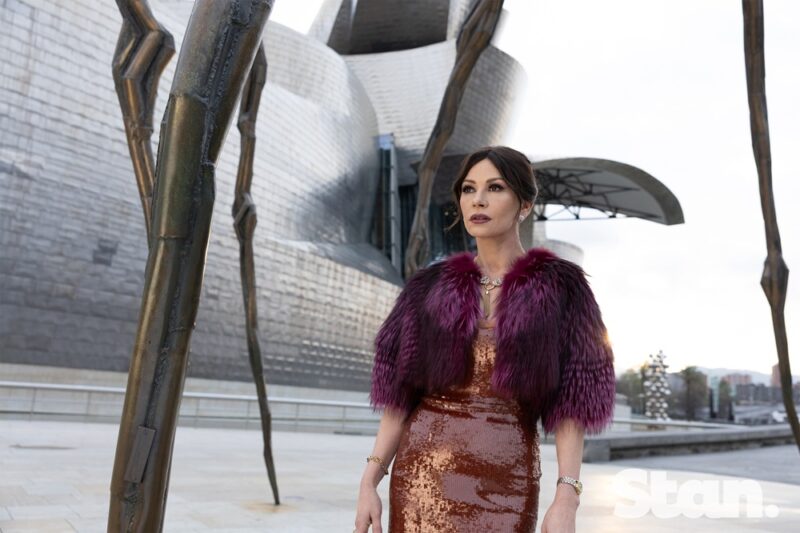
Putting Jackie in the art world as a front meant she could still conduct some of her nefarious business while looking a bit classier and more above board. With Catherine, and with the city itself and the Guggenheim, it made sense for both the location and the story. It also felt a little more unique for this kind of gangster character.
I really like the contradiction in that Jackie sells beauty while living this ethically ugly life. Was that tension important in constructing her character?
Yeah, we wanted her to have this facade. She’s made a lot of money and is living what seems to be this glamorous life, and then you get a snapshot into her past and realise, “Oh no, she was a fucking hardcore gangster.” That’s the life she’s been trying to escape, but, like you said, she gets a little bored, gets that itch and finds herself drawn back into it.
I know you’ve talked about protecting the essence of Nick Harkaway’s book while transforming it for television. Was there anything from the novel you fought particularly hard to preserve, even if it proved difficult to translate to the screen?
I think, on a basic level, it was the tone, the voice of the character and the kind of gonzo world Nick had created, especially with the Demons. Some of them were pushed a lot further in the book than where we ultimately ended up, so it was about finding that balance.
There were also a few crazy set pieces that stayed in the scripts for quite a while. As we got closer to shooting, Tom and I would look at each other and go, “I just don’t know. That could be really over the edge.”
But we preserved quite a lot. Nick created a great structure in the book, and the characters just leapt off the page. Jack, as written, is very much what we ended up with on screen with Catherine. There are pieces of dialogue and sequences we lifted directly because they worked so well. Ultimately, it was that voice and tone that really grabbed me initially.
When you’ve lived with a project for this long, I imagine there’s a danger of becoming too close to it. Who in the process was willing to tell you when something simply wasn’t working?
Tom and I ended up having a very close creative working relationship, and we were constantly testing and questioning each other, although most of the time we were pretty aligned.
Then we had our great editor, Byron Smith, who I brought in. He’d worked on David Fincher’s television projects and some big shows for Netflix and Apple, and he became an amazing sounding board. He really helped us create the shape, style and tone of the show, so the three of us worked together really well.
There were definitely a few sequences where we’d ask, “Are we really going to go there?” We never really argued, and most of the time we came to a conclusion we were all happy with. But it was a long, difficult and very ambitious production for the budget we had. Once we started getting into the edit, you do have that moment of, “Is this any good?” It took stepping back, working through the cuts and eventually thinking, “Actually, this might be all right.”
Just before we wrap up, Jackie spends the entire series accumulating bodies, losing money and destroying relationships, yet somehow ends up with something she hasn’t had for 20 years: a family. Is that the cruel joke at the centre of the whole story?
A bit, yeah. I think, at the end of the day, all of these people need someone. We even tried to make some of the assassins more human and give them their own flaws.
There was one thing from the book we didn’t end up getting to do: a whole psychiatry session with the two brothers where they’re fighting about, “Did Dad love me more than you?” It was fucking hilarious.
But all of these people are dealing with many of the same issues. So, yeah, I think that’s what Jackie is looking for at the end of the day. But do we know if that’s actually true to who she is? Maybe she thinks that’s what she wants, but it might not be.
Kill Jackie is streaming on Stan from October 2nd, 2026.
