

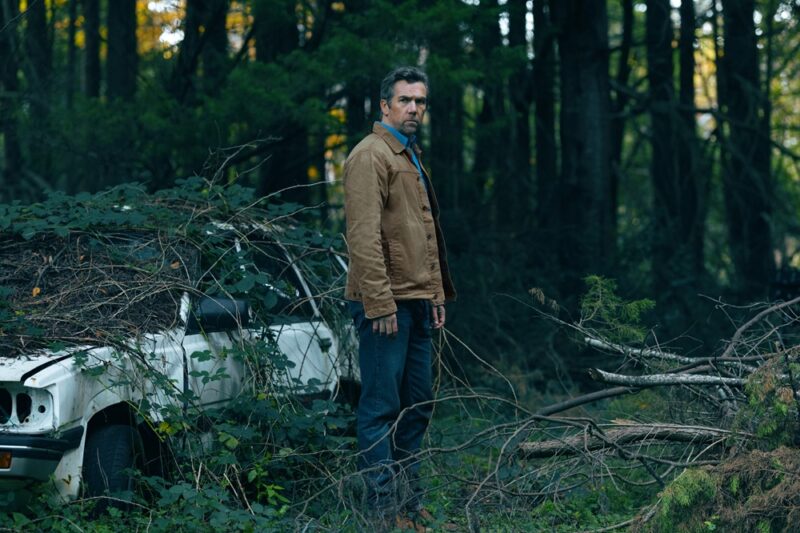
The most devastating thing about losing someone isn’t always the absence itself, but the possibility that holding on to them might prevent us from ever moving forward. It’s this uncomfortable intersection of love, guilt and obsession that drives Last Seen, the gripping six-part Australian thriller adapted by writer and executive producer Kris Mrksa from Ryan David Jahn’s award-winning novel “The Dispatcher.” Set against the atmospheric backdrop of regional Victoria, the series stars Patrick Brammall as Ian Ridley, a former police detective whose life was shattered when his young daughter, Maggie, disappeared without a trace eleven years earlier. Now working as a police dispatcher, Ian has spent more than a decade refusing to accept that she might be gone forever. But when a distress call from a teenage girl convinces him that Maggie is still alive, his desperate pursuit of the truth threatens to consume what remains of his fractured life. What begins as a compelling mystery gradually reveals itself as something considerably more unsettling: a portrait of a man whose greatest source of hope may also be the very thing destroying him.
For Brammall, whose career has so often balanced emotional vulnerability with an instinctive gift for comedy, Last Seen offers an opportunity to explore a character defined as much by what he cannot express as by what he says. With the series reaching its emotionally complex finale, our Peter Gray spoke with the actor about the moral ambiguity at the heart of Ian’s journey, the importance of stillness in conveying years of unresolved trauma, and why his character’s search for Maggie is ultimately as much about redemption as it is about reunion. Reflecting on the uneasy relationship between comedy and tragedy, and the series’ refusal to offer easy emotional resolutions, Brammall also considers the heartbreaking reality that even finding someone you’ve lost doesn’t necessarily mean recovering the life you once shared.
What I found fascinating about Ian is that hope is usually something we celebrate in storytelling, but here it’s almost his greatest weakness. I’m curious, when you were building this character, did you see his refusal to give up as an act of love, or was there a point where you felt that hope had become something more destructive for him?
I think so. I think it was a real mixed bag of things. There’s love there and there’s hope there. But I think it’s about redeeming himself as much as anything. He failed as a father, as he sees it. He failed as a police officer. He failed in a lot of ways, and then he used drinking as a crutch. I think it’s as much about finding himself. And I don’t mean that as a cliche, even though it sounds like one. But it’s about that as much as finding his daughter. It’s not a morally superior thing. But I think the show is really good at that. It doesn’t do black and white well. It’s morally ambiguous all the way through, right to the ending.
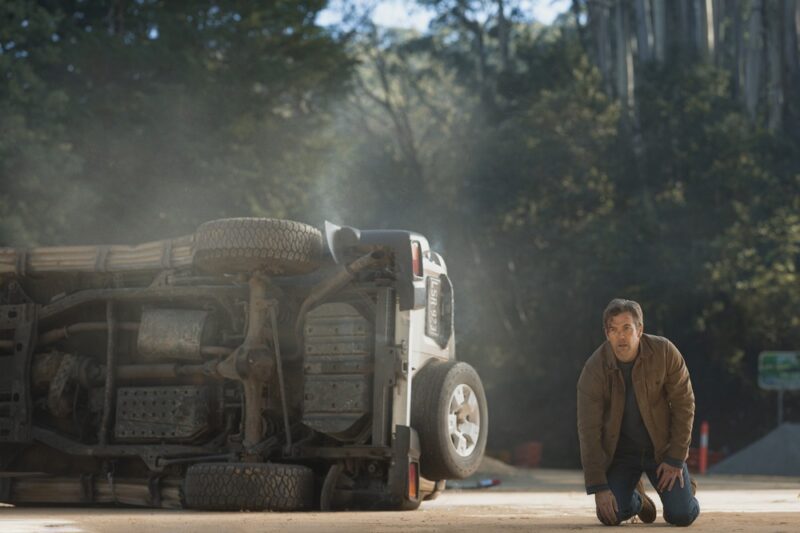
What I loved here is that there’s so much performance here beneath the dialogue. With a character like this, who is carrying this pain for so long, I imagine there’s a lot that can’t be expressed necessarily through dialogue. Were there moments where you found Ian was more revealing in what he didn’t say, or even how he physically occupied a space?
For sure. The writing is the entry point for me when building the character. I just read it and read it and read it. I got some great acting advice from Kirsty McGregor, who’s a dear friend, and she’s the casting director on (this). She told me to just be more still. This was when I auditioned for it. In life, I’m not unstill, but I do a lot of this (gestures with his hands) and, you know, my voice gets up here. This guy is carrying a lot of pain, so I had to think about being still and just letting it be there. Once I inhabited that, that stillness allowed the audience to connect to Ian and see the story through him.
You’ve created characters who are emotionally vulnerable, but incredibly funny, sometimes within the same scene. Ian inhabits a much darker world, but I’m curious whether you actually draw on some of those comedic instincts when playing someone who’s so profoundly broken?
I don’t really approach drama any differently than I approach comedy. It’s really about the material and where I connect to it. There was a little scope for glimpses of comedy with Ian when he’s talking to Donny (Daniel Henshall’s character) early days, but not much. I mean, fuck all really. But comedy and tragedy, they live right next to each other. I really believe that. I think it’s the most interesting stuff. So much comedy is about momentum and front footed, and Ian, I couldn’t be (like that) in this.
It’s obviously nice to have levity, but I loved this dark, depressing world that this show lived in. It wasn’t making light of anything. I loved that it had a very real way of culminating. It’s sad, but there’s the smallest glimmer of hope at the end.
I agree. It’s beautifully shot. And there’s a speech that Ian gets in the last episode, where he’s talking to Donnie and he says something like, “Even if I find her, that baby is still lost to me forever.” There’s no happy ending, and that’s what comes to pass. It’s a really complex and unexpected in that way. But it’s real.
All episodes of Last Seen are now available to stream on Apple TV.
