
Produced by Jungle Entertainment with major production investment from Screen Australia, He Had It Coming is an odd couple comedy-drama of two women accidentally entangled in a murder mystery when their spontaneous feminist art activism is co-opted by a killer.
Now streaming on Stan Australia, where it’s immediately raced into the Top 10 current most-streamed series, He Had It Coming is a comedic whodunnit following mismatched friends who get caught up in gender politics on campus and murder.
Lydia West plays Elise, an awkward English scholarship student (for the bagpipes, she has the shoulders for it) who forms an unlikely alliance with Barbara (Natasha Liu Bordizzo), a fashion influencer who posts about girl power all day but is always too busy to attend a protest. After a series of mishaps with men, both decide to take a stand. Barbara spearheads an activist art project in the dead of night and drunk as skunks, the girls deface a statue of the university’s male founder in the University’s Quadrangle.
When the girls wake to discover that the university’s star athlete has been murdered and displayed at the foot of their political statement, they must urgently erase all ties to the crime. With Detective Shepherd (Liv Hewson) following the breadcrumbs they have been trying to sweep up, Barbara and Elise need to find the real culprit amid rising gender tensions on campus and a growing body count.
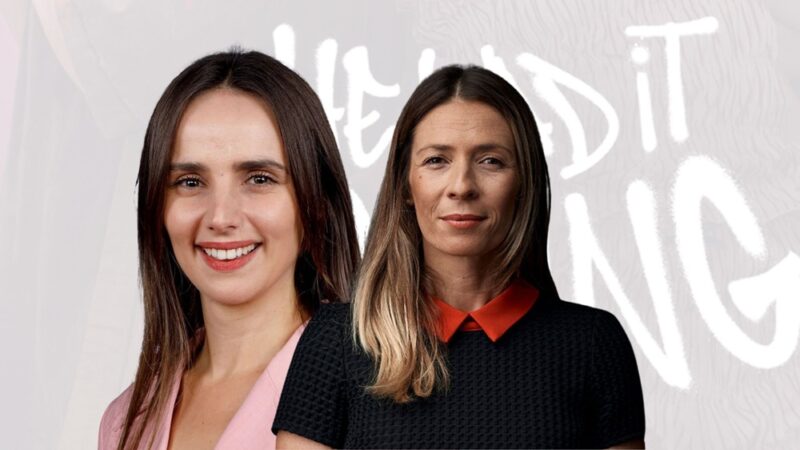
To coincide with the show’s release, Peter Gray spoke with creator Gretel Vella and Jungle Entertainment producer Chloe Rickard about the show’s original more horror-inclined personality, the importance of both laughing at its characters and taking them seriously, and what they both personally think in society has “had coming.”
I know that this started as a horror film, before morphing into a series. Can you take me back to the moment where you realised it worked better as a comedy?
Gretel Vella: It’s been in development for, I think, about seven years. It started as a horror film, yes. I think we wrote the same breakdown, and then got a few people to read it and they thought it was far too dark a way to explore already dark issues. But one of the things that came out of it is that we spoke to a lot of college-aged women about their experiences, and we noted that they dealt with it such humour and camaraderie. Even if they had experienced awful things. So we thought, potentially, comedy is a better way into this story. Also, myself and my show co-runner, Craig (Anderson), we felt like really bad feminists in that we didn’t know this stuff was going on. We thought, “Why not enter the world with two bad feminists and make it a safe journey for the audience who can relate to these women?”
And for you, Chloe, how did this project come to you? And did you want to keep it horror at all?
Chloe Rickard: Gretel had already made the transition to it being a comedy television series by the time she pitches it to us. She had written the pilot, so I got to read a cracking half-hour pilot. And Jungle (Entertainment) have a long history in comedy, in particular. Nowadays, we make a lot of drama, but they always have a comedic inflection in the work. Honestly, it felt like an absolute no-brainer. The fact that she was able to unpack serious, dark issues through a comedic lens…I personally love the fact that it’s a buddy comedy. I think exploring this world, this microcosm of a university and all that delivers in terms of politics and putting a magnifying glass over something, the stakes are just so amped at university. I think putting it a pair of girls that aren’t friends that have to become friends into a pressure cooker situation, where they’re also having to disprove that they’re caught up in a murder, it’s just so fun and ripe for calamity. But there’s also depth and pathos. The horror and comedy genres allow you to push into areas other genres don’t.
Gretel Vella: I don’t know who said it, but there’s a great phrase about if you’re able to make people laugh, they’ll open their arms and you can punch them in the stomach. I feel like that’s just how I like to write. This one was a particular challenge, but we had a great team of writers. We had amazing producers at Jungle and Stan. I think you go through so many tiers of people telling you what’s okay and not okay to joke about, so it is just about constant refinement.
I thought maybe you were going to say, If you make them laugh, they’ll put their hands up and you can castrate them! Going off this show. But there is that very fine line between being bold and provocative versus preachy and flippant. How do you both navigate the tonal landmines in writing and producing making sure that we’re laughing at something that we still need to take seriously?
Gretel Vella: I think something that kind of happened organically is that the series actually gets darker as it goes on. As we get further into the experience for our two leads, they are a little darker than you first think. The show takes a bit of a pivot, and you’re still laughing. It’s still a safe space. But I think we had to do that in order to go to the places that we needed to.
Chloe Rickard: Yeah, I would agree. I think the other thing by choosing two characters that don’t proclaim to be experts to go into the world, it gives you a lot of leeway to make mistakes. The audience feels like they can make mistakes as well. The other thing I love that Gretel has done is that I don’t think the show has a fixed viewpoint, in terms of its political position. I think we see characters move between being ways of extreme. The show isn’t preaching a particular viewpoint. We can sit in this world and watch people change and make mistakes, and it kind of works out for themselves as to where they sit on the spectrum of patriarchy and feminism.
I was going to ask about that, because there is a self awareness to the feminism here. It’s poking fun at influencer activism, radical spaces, the idea of performative allyship. Was there a conversation in the room about who are we actually laughing at?
Gretel Vella: I feel like the rule was almost you have to be able to laugh at everyone, and you have to have moments where you take everybody seriously, even people you don’t necessarily agree with. I feel like we agreed that we would completely lose if we didn’t everyone seriously in the right moments. This is a show for everyone and I think we would lose people if we didn’t have great male allied characters who (also) go on flawed journeys, but ultimately really support the women in their lives. That was important to us.
I imagine there’s a lot of fun in creating the murder mystery mechanics. How much was pure chaos and how much was controlled in making sure it all tracks, logically, from a writing and producing point?
Gretel Vella: This was my first time doing a murder mystery, and it was hard. It was a real challenge. But you have those layers, and we plotted one version in the room, and then it goes through so many iterations as people pick it apart. Sometimes you’re on set and someone tells you that something doesn’t make sense, and you can’t have this photo here because then this person x, y, z…So, you’re constantly changing things up on the fly in a way that I hadn’t done before. But that’s also the thrill of it.
Chloe Rickard: I totally agree. I think the clue trail in any kind of mystery is the hardest thing, because you ask if you have put enough down? Have you put too many? Is the audience expecting it? Have you put it too far below the surface that it’s not tracking? I think Gretel’s done a really great job at being able to land that. It’s a really hard balance.
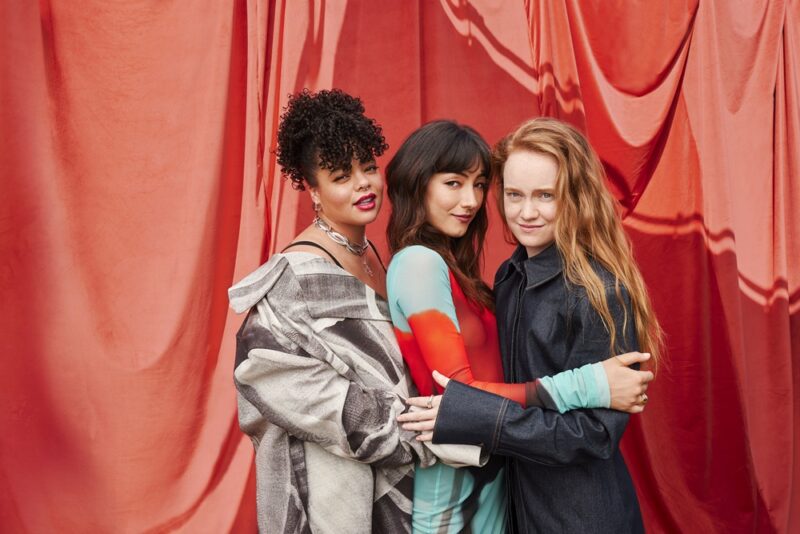
And you obviously have Lydia West and Natasha Liu Bordizzo. What did you see in that pairing that made you confident that they could anchor something that was this tonally ambitious. And did they bring something to the characters that completely changed your idea of who these characters initially were?
Chloe Rickard: I think kind of the opposite. I think Gretel had really clear characters, and when we heard the words in their mouths, they were better than ever. They didn’t completely change what was there, but I think they brought to life what was on the page, which I think, in other hands, could have gone another way. But I just loved that Lydia is a clown. She’s never played a clown before. She’s done comedies, but she’s never played a clown. And I can’t imagine here as the straight character after seeing her in this. I think she’s struck a new direction in her career. And Natasha had never done a comedy, and she does it so well. She’s so dry and stoic and so funny in a very different way to Lydia. I think the chalk and cheese of those two was what we were really hoping for.
Next to Lydia and Natasha, you have Liv Hewson. I feel like we haven’t seen them in this type of role. They’re so stoic in something like Yellowjackets, but this feels like we’re seeing them change as a performer.
Gretel Vella: They were actually attached for, like, three years. They were the first person that was attached to the show. I think they really identified with the frustrated campus liaison character who was just trying to get a win for one of the female students who had been wrong. Liv loved that, so they came to set and completely elevated the whole thing, because they were on so early. We had a little bit more time to discuss the story with their collaboration, which was amazing. Yes, it’s a straighter role, but they found comedy in those scenes, and in the dynamics with Duncan (Fellows), who plays Roach, who is a hopeless cop who doesn’t care. They were incredible to work with. So much research and rigor in the way they approached roles.
And as the writer, Gretel, you obviously feel precious about the script in some ways, but you almost have to give it away, right?
Gretel Vella: Oh, 100% you have to give it away. I think in this instance, (Lydia and Natasha) just elevated everything. They found jokes in places that I didn’t see them. Something really interesting about Natasha is that, in the script, (her character) is very harsh, and Natasha was asking why these characters would hang around each other? (My character) is awful! So she actually brought a little more warmth than I anticipated in moments that I didn’t see. And it’s all the better for it, because you’re rooting for them earlier.
Rachel House is directing here too. I spoke to her last year, and just immediately fall in love with her. How did her direction shape or surprise the vision as well? Her style seems to radiate warmth and chaos…
Chloe Rickard: I love the way you described her. Warmth and chaos, I agree.
Gretel Vella: She’s a master of directing actors in performance. The performances she got, not just out of the lead, but all of the supporting (too). She’s just phenomenal. She also came in with a really strong idea for how text messages and social media would play in the show, because there’s so much written into it, and we didn’t really have an idea of how that would play. But she collaborated with our DOP (Carolyn Constantine) to have a really complex graphic world where everything was really seamlessly integrated while the action is still taking place. Little things like that. She just elevated the entire show.
This might be a loaded question to finish on, but in the spirit of the show, is there one thing that you both think the industry or even society has had coming?
Chloe Rickard: If I had to answer that, I think it’s talking openly about the rate of violence against females in Australia. I think being able to have a mainstream conversation about that, we’re inching closer to it, but really having a mainstream conversation about it. It’s not a fringe issue. It’s smack bang right through the centre of everything.
Gretel Vella: In the spirit of the show, I would say maybe conversations and reform around sexual harassment and the hazing culture on campuses.
He Had It Coming is now available to stream on Stan Australia.
