


Glen Powell may be playing a man living a lie in the second season of Chad Powers, but the actor believes there’s something surprisingly truthful about hiding behind a different identity. As the full season of the hit sports comedy streams, Powell reflects on the masks we wear, the cruelty of public judgement, and why sometimes becoming someone else is the only way to discover who we really are.
For all its broad comedy, outrageous disguises and football-field theatrics, there’s something unexpectedly poignant at the heart of Chad Powers. Beneath the prosthetics, the carefully constructed persona and the increasingly elaborate deception is a story about a man so thoroughly defined by his worst mistake that the only way he can imagine moving forward is by becoming somebody else entirely.
In the show’s second season, Powell returns as Russ Holliday, the disgraced former quarterback who has reinvented himself as the unlikely football sensation Chad Powers. But as Chad’s success on the field continues to grow, his increasingly suspicious behaviour off it threatens to expose the truth. With Coach Hudson and Gerry closing in on his secret, and the Catfish’s College Football Playoff ambitions hanging in the balance, Russ finds himself relying on Ricky, the very person who may have the least reason to help him.
It’s a premise ripe for comedic disaster, but it also raises a more intriguing question: what happens when the person you’ve invented to escape your past starts to feel more authentic than the person you used to be?
During a recent press conference for the second season, our Peter Gray put that very question to Powell, wondering whether stepping outside the identities imposed upon us by others might actually be the key to discovering our truest selves.
“I could not agree more,” Powell responded enthusiastically, describing the show’s exploration of identity as something he and co-creator Michael Waldron had been particularly fascinated by from the beginning.
For Powell, identity isn’t necessarily something fixed or absolute. Rather, it’s constantly being reshaped by our circumstances, our surroundings and the people with whom we interact.
“We could put you in any different ecosystem or circumstance,” he explained. “If you’re surrounded by your friends and the people that know you and love you, you’re probably one version; and you go to a place in which you know nothing about the environment… you’d probably be a different version of yourself.”
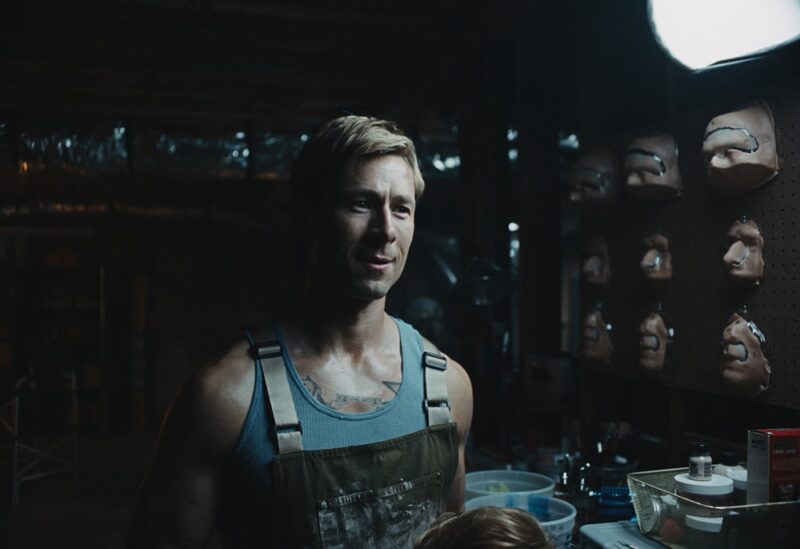
It’s an observation that speaks to the fascinating contradiction at the centre of Russ Holliday’s transformation. On the surface, Chad Powers is an elaborate fabrication, a fictional identity created to circumvent the consequences of Russ’s past. But the longer Russ inhabits Chad, the more the distinction between performance and authenticity begins to dissolve.
As Powell sees it, our personalities are rarely as consistent as we’d like to believe. Whether we’re navigating heartbreak, grief, professional success or personal disappointment, the circumstances of our lives continually influence the versions of ourselves we present to the world.
“We’re always evolving, you know, and we’re always changing,” he said.
That fluidity becomes particularly significant in an era where public perception can feel almost impossible to escape. For Russ, one highly publicised mistake has effectively become his entire identity, reducing a complicated individual to a single moment of failure.
Powell believes that the relentless judgement of modern culture, particularly online, is fundamental to understanding why Russ feels compelled to disappear behind another face.
“The opinion of the world has never been so loud, right? Wins and losses are deafening,” he observed. “And especially, you know, for someone like Russ Holliday, who had a big public mistake and has been defined by that mistake.”
The irony, of course, is that the people so eager to define Russ through his failures are often concealing their own identities behind the anonymity of the internet. In a world where everyone is wearing some form of mask, Russ’s disguise simply happens to be a little more literal.
But beyond the social commentary and the comedy of deception, Powell sees something profoundly human in Russ’s desperate need to be accepted.
As Chad, Russ is finally experiencing the affection, admiration and sense of belonging that have eluded him for so long. He’s found a team, a community and something resembling a family. The tragedy is that all of those relationships have been built around a person who technically doesn’t exist.
“Even if it’s a lie, it makes me feel good. It makes me feel seen,” Powell said of Russ’s emotional predicament, explaining that his character is ultimately craving the opportunity to belong to something larger than himself.
“He’s created this family in this world that is loving him, but they are not loving the real version of him. They are loving Chad Powers, a fictional character he made up.”
It’s a heartbreaking paradox. Russ has finally found the acceptance he’s spent so long searching for, but he’s unable to fully enjoy it because the people offering that love don’t know who he really is. Every meaningful connection comes with the possibility of betrayal, and every moment of happiness is shadowed by the inevitability of his deception being uncovered.
And yet, perhaps the most revealing aspect of Powell’s interpretation is his suggestion that Chad might not be the false identity at all.
“Chad is the most pure version of himself,” he explained, suggesting that the arrogant, damaged and defensive Russ Holliday we’ve come to know is actually the more artificial construction.
“Russ, that toxic version of Russ, is the mask that he wore in order to cope with a world that really hurt him.”
It’s a fascinating inversion of the show’s central conceit. Rather than viewing Chad as the disguise concealing the real Russ, Powell suggests that the fictional quarterback represents the person Russ might have become had he not allowed humiliation, resentment and public judgement to dictate his behaviour.
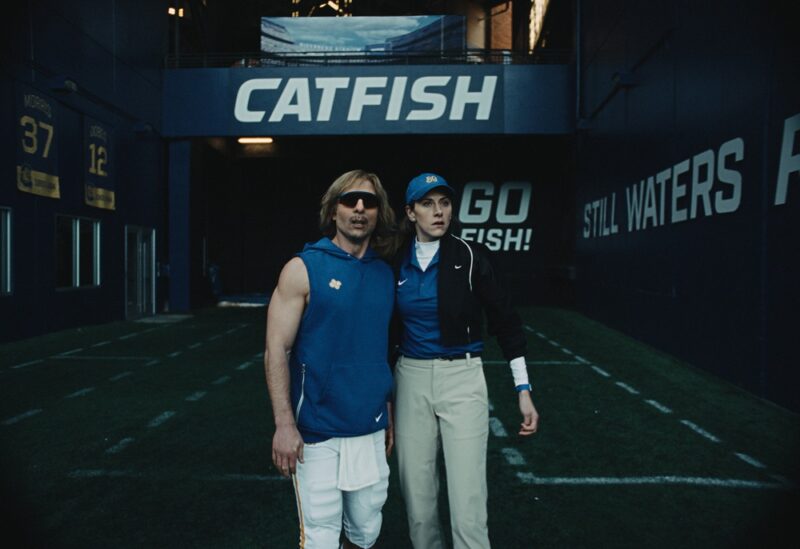
In that sense, Chad Powers becomes less about a man pretending to be someone else and more about someone inadvertently discovering the person he was capable of being all along.
Of course, the question of whether Russ can reconcile those two identities without destroying the relationships he’s built remains one of the show’s most compelling tensions. And with the second season threatening to bring his carefully constructed world crashing down, the emotional stakes extend far beyond whether the Catfish can secure a place in the playoffs.
For Powell, however, the larger conversation is one that extends well beyond the football field.
“I don’t think we all know who we are all the time,” he admitted. “There is no one empirical set of truth.”
It’s an unexpectedly philosophical perspective for a series whose central joke involves a disgraced athlete hiding behind an exaggerated disguise. But perhaps that’s precisely why the premise works. Beneath the absurdity is an experience that’s surprisingly universal: the desire to escape the version of ourselves that other people have decided we are.
“I do believe that if we all sit and think about our own lives and our own selves, we’re all wearing masks in any given time, in any given day,” Powell concluded. “And it’s a fun thing to think about and marinate on because it really is life, and it’s the life that we are all navigating on a daily basis.”
After such a thoughtful examination of identity, self-perception and the complicated business of being human, I couldn’t resist thanking him with a playful, “Thank you, Dr. Powell.”
His response? A hearty laugh.
And perhaps that’s the beauty of Chad Powers. For all its ridiculousness, it understands that sometimes the most revealing truths about ourselves emerge when we’re pretending to be somebody else.
All episodes of Chad Powers Season 2 are now available to stream on Hulu in the United States and Hulu on Disney+ in Australia.
