
There’s a certain exhaustion that comes with modern film discourse.
Open any social media app after a major release and you’ll inevitably see somebody proclaiming a film the “best movie ever made” or the “worst thing ever created” within approximately six minutes of leaving the cinema. Every reaction has become immediate hyperbole. Every opinion has to exist at the furthest possible extreme because apparently nuance no longer cuts through an algorithm.
And honestly? I think it speaks to a much larger issue regarding the increasingly blurred line between criticism and content creation.
People are absolutely entitled to like or dislike whatever they want. Art is subjective. It always will be. But when every second release is declared either a masterpiece or an abomination, it starts to reveal how limited our collective cinematic vocabulary has become. We’ve lost the ability to sit with a film. To wrestle with it. To appreciate craft without needing to crown something “the greatest” in order to validate our enjoyment of it.
My advice is simple: go watch more movies.
Watch films made before you were born. Seek out cinema from decades and countries outside your comfort zone. In many cases, yes, that means watching films released before the year 2000. Not because older films are inherently superior, but because understanding cinema’s history deepens your appreciation of what the medium can actually do. Entire generations of filmmakers built the language modern movies now speak in. So much of contemporary cinema is in conversation with what came before it.
But this isn’t entirely a criticism of influencer culture or younger audiences. In fact, I think the reason people react with such intensity is because movies awaken something deeply personal inside almost everyone.
You don’t have to spend your life at the cinema or work in film journalism to understand that feeling. Most people have a movie that altered them somehow. A film they discovered at exactly the right time. A performance that cracked something open emotionally. A story that made them feel seen. Cinema has this extraordinary ability to embed itself into our lives in ways we often don’t even realise until years later.
For me, movies didn’t just shape my life.
They helped save it.
That sounds dramatic, perhaps even overly sentimental, but it’s the truth.
People close to me know pieces of this story already. I’ve alluded in interviews to a deeply traumatic experience that fundamentally altered my sense of self a few years ago, but I’ve never fully articulated just how much film became my lifeline during that period.
When COVID hit, my personal and professional life shifted entirely.
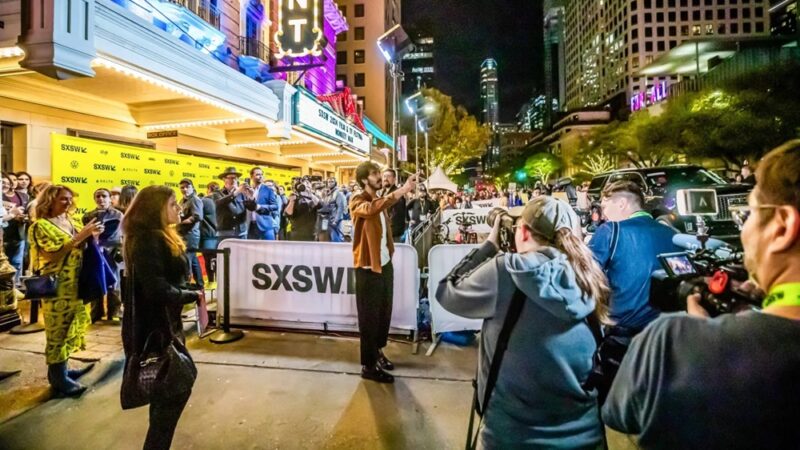
Like many people, I initially mourned the immediate losses. A long-awaited New York trip vanished overnight. My first in-person visit to South by Southwest disappeared as the pandemic escalated globally. Obviously, those cancellations paled in comparison to the severity of what the world was facing, but at the time it still felt like watching exciting pieces of my future dissolve in real time.
Ironically though, that same period also became a turning point professionally.
Because of the connections I had established leading into that Texas trip, distributors and studios suddenly knew who I was on a much wider scale. Smaller films – many of which were losing theatrical exposure due to lockdowns – still needed support, coverage and thoughtful discussion. And somehow, amidst all the uncertainty, people began trusting me with that responsibility.
I became sought after in ways I never anticipated.
That meant everything to me.
I take film journalism seriously. I take writing seriously. I think thoughtful criticism matters enormously, particularly in an era where discourse is increasingly flattened into reactionary noise. So to have people genuinely valuing my voice, my perspective and my ability to champion films during such a difficult time instilled a confidence in me that I had never truly possessed before.
At the exact same time this professional growth was happening, however, my personal life was quietly collapsing.
During lockdown, I was helping former friends establish a business initially rooted in genuinely good intentions: helping struggling restaurants deliver food at a lower cost than major delivery platforms. It started with optimism and community spirit. But slowly, cracks began appearing.
I wasn’t financially comfortable by any means, yet I contributed whatever I could – often more than the people presenting themselves as far wealthier than I was. I’ve always been a people pleaser to my own detriment. I wanted to help. I wanted to believe loyalty and kindness would be reciprocated.
Instead, I was manipulated.
The business evolved beyond food delivery into a larger establishment, and throughout that process I operated under the belief that I was genuinely considered a partner. That my voice mattered. That I was respected. That I was protected.
I wasn’t.
Any time I raised concerns, I was gaslit into believing I was the problem. I was told I was difficult. Dramatic. Harmful to the business. At one point I was even labelled a “cancer” simply for addressing legitimate issues.
It’s difficult to fully explain what prolonged emotional manipulation does to a person. It erodes your sense of worth piece by piece until eventually you begin questioning your own reality. And by the time I realised these individuals were actively making decisions that protected themselves while jeopardising my name and wellbeing, it was already too late.
They fled the country and left me carrying the fallout alone.
I don’t say this seeking sympathy. I say it because trauma has a way of isolating you from yourself.
Thankfully, this situation existed entirely outside my writing career. My work remained untouched. But privately, I was drowning. My mental health deteriorated in ways I never thought possible. There were days where the weight of humiliation, betrayal and exhaustion became so overwhelming that I genuinely struggled to see value in my own existence.
And during those moments, when I retreated inward and struggled with thoughts I never imagined entertaining regarding my own mortality, I had movies.
Of course I had people too. A core group of friends. My parents. My partner. They reminded me constantly that I was loved and supported, and I will spend the rest of my life grateful for that. But human support and personal coping mechanisms often coexist separately. One doesn’t replace the other.
For me, movies became survival.
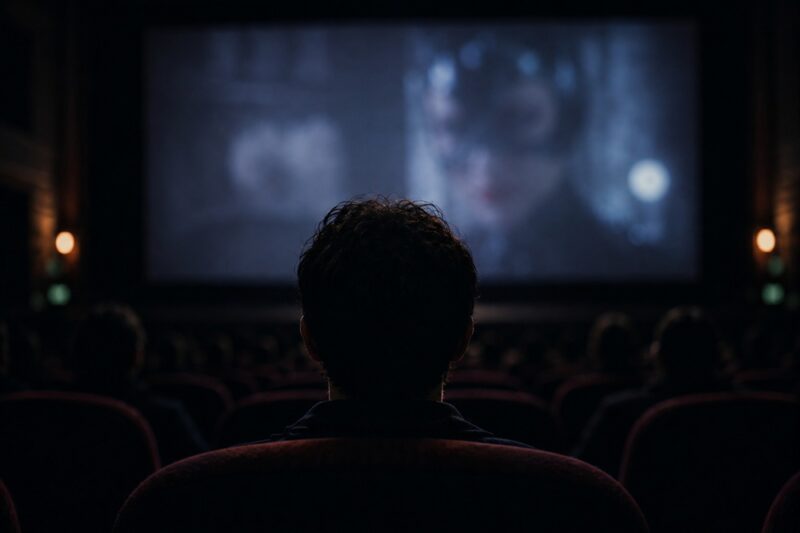
I could put on a film and disappear into another world for two hours. And strangely, during that period, it felt like I was discovering cinema all over again. Movies no longer existed merely as work or analysis or release schedules or interview opportunities. They returned to being pure emotional transport.
They reminded me why I fell in love with the medium in the first place.
And if I trace that feeling back to its earliest origin, it probably begins with Batman Returns and seeing Michelle Pfeiffer as Catwoman. That image burned itself into my brain as a child. The glamour, sadness, sensuality and tragedy of that performance fascinated me before I even fully understood why. It was one of the first moments I recognised movies could completely consume you emotionally.
That feeling never really left.
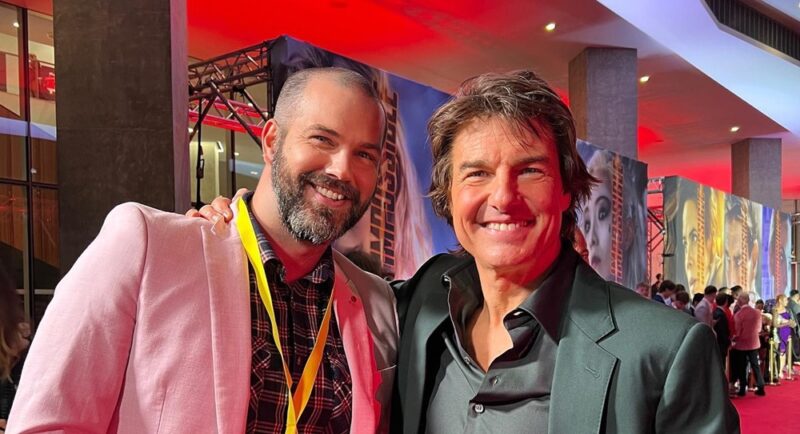
Even now, after years of reviewing films professionally and interviewing creatives I once only admired from afar, I still carry enormous awe for cinema. I never take any of it for granted. Not the screenings. Not the conversations. Not the opportunities. Because long before this became my profession, movies were already becoming part of my emotional language.
And I genuinely believe every film serves a purpose.
Even bad films.
Even difficult films.
Even movies that fail.
Every piece of cinema represents somebody trying to communicate something. A fear. A truth. A fantasy. A question. And engaging with that attempt – sincerely engaging with it – is part of what makes film such an endlessly rewarding artform.
That’s why thoughtful criticism matters to me. Not because criticism should be pretentious or exclusionary, but because movies deserve more than instant reactionary extremes. They deserve curiosity. Context. Compassion. Conversation.
The darkest period of my life was orchestrated by deeply manipulative people who attempted to strip me of my worth. Yet somehow, despite how bleak everything became, the glow of a movie screen still cut through that darkness.
Cinema gave me escape when my own mind became unbearable to sit inside. It gave me inspiration when I felt emptied out. It gave me perspective when my world felt painfully small. Most importantly, it reminded me there was still beauty, empathy and humanity worth connecting to.
So no, I don’t think movies are “just movies.”
I think art saves people more often than we realise.
Go experience the history of cinema. Watch films outside your comfort zone. Let yourself connect to stories sincerely and without irony. You never know when one might arrive at exactly the right moment in your life.
One certainly arrived for me.
