
Film critics making their own films can go a multitude of ways. Given the expected penchant for critiquing what they do – or don’t – expect out of a genre film, one could assume that their idea of a film would be, at the very least, acceptably serviceable. For Chris Stuckmann – a YouTube-based film critic – his much-hyped debut foray into filmmaking, Shelby Oaks, suggests promise, but it also can’t escape evident limitations as a first-time helmer, adhering to certain cliches and an unfortunate stumble in sticking the landing of his standard, but no less intriguing-enough horror effort.
One certainly can’t fault Stuckmann’s tenacity in seeing his vision come to fruition, with him raising over $1 million on Kickstarter, which, in turn, nabbed the attention of genre familiar Mike Flanagan (Doctor Sleep, TV’s The Haunting of Hill House), who then backed the production through his own Intrepid Pictures production company. With a first screening at 2024’s Fantasia Film Festival showcasing promise in its product, Neon picked up distribution, injected further dollars into proceedings (apparently for extra gore that the original budget couldn’t manage), and the rest – as they say – is history.
Given the hot streak the horror genre has been on in 2025, Shelby Oaks may have even more of an uphill battle to climb, with it inevitably being compared to not only the strongest examples of the genre, but other well-regarded titles in the multiple subsects it flirts with; found footage, investigative, and demonic possession. Of course, with Stuckmann making a name for himself in the YouTube space, it makes sense that Shelby Oaks incorporates such, with its opening 15 minutes-or-so dedicating itself to the found footage mentality (a likening to The Blair Witch Project feels inevitable) as it focuses on the main hook of its missing person case.
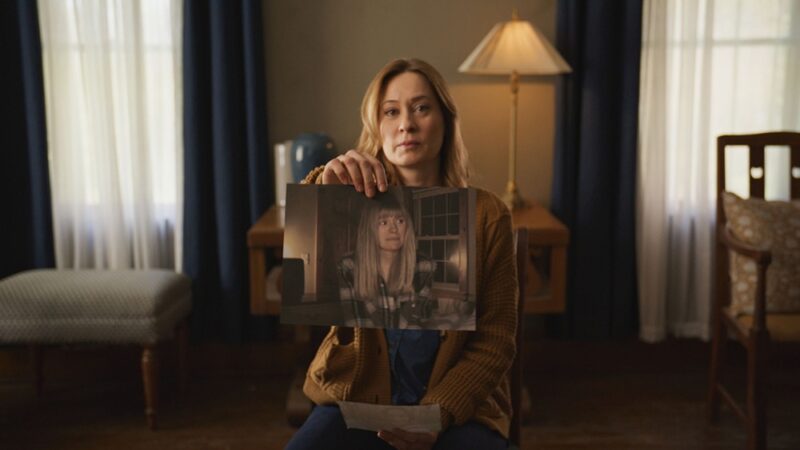
Said missing person is Riley Brennan (Sarah Durn), one quarter of a ghost-hunting crew who, with their YouTube show (“Paranormal Paranoids”), investigated a series of supposedly haunted locations and attractions in the titular town. We are treated to grainy, early 2000s camcorder imagery that suggests something sinister happened to sweet Riley, and when the other three members of the team are all found murdered, a manhunt begins to find Riley – presuming she isn’t the mastermind behind it. This opening act, which plays to Stuckmann’s wheelhouse familiarity of the online sensation mentality, teases something considerably supernatural, but, in perhaps what is the film’s most successful stylistic choice, the found-footage angle is jolted out of its own existence; in what is perhaps an example of the added gore, a particularly violent moment sets the story on its investigative path for Riley’s sister, Mia (Camille Sullivan), as the film shifts to a more straightforward manner of storytelling.
Whilst from hereon Shelby Oaks is a competently made film, it also can’t muster a lot of overt excitement, as it follows a pretty standard set of beats. It isn’t without its successful jump scares and effective creepiness in just what is responsible for Riley’s disappearance, but it also means that in Mia’s tenacity to find her, she makes a lot of frustrating “horror” decisions (of course she’s going into the abandoned halls of a known haunted prison by herself in the dark of night). Of course, so much of the fun of the horror genre is its leaning into such tropes, but Shelby Oaks doesn’t feel as if it has much of a sense of humour about itself, and when there are clear references to other, better horror films throughout – next to the aforementioned Blair Witch, you’ll spot Hereditary, Barbarian and Rosemary’s Baby as points of call – Stuckmann’s feature can’t help but suffer in comparison, intentional or not.
Stuckmann himself has always been such a positive force in film criticism – he’s basically said that if he doesn’t enjoy a film, he doesn’t see the need in detailing a negative review for it – and it could be because of such that critiquing Shelby Oaks feels even more blasphemous. This isn’t a bad film, it’s just one that can’t escape its limitations; and I’m speaking beyond its low budget. There’s so many moments of promise and neat execution throughout, but for every good there’s a bad, and the film’s finale is the roughest of its movements. Feeling a little too rushed and somewhat unsure as to how he wanted to end his own musings, Shelby Oaks ends on the kind of note that horror fans so often bemoan; it’ll ultimately be the truest calling of the good faith towards Stuckmann as to whether or not they’ll give him or the film’s choices a pass.
Whilst unable to reach ambitious heights and escape a certain “borrow from what you know” temperament, Stuckmann still displays proficiency as a filmmaker. It’s not as special as it truly could have been, but there’s always some uneven footing in the journey towards creative contentment.


THREE STARS (OUT OF FIVE)
Shelby Oaks is now screening in Australian theatres, before opening in the United States on October 24th, 2025.
