

I don’t think I’m alone in saying Fort Lauderdale has never been on my radar.
You’ll hear locals trying to grab a sense of casual coolness by referring to it as just “Lauderdale”, but that doesn’t quite roll off the tongue as “Chi-Town” or “Philly”. Try as they might, it’s hard to piece apart a trendy reputation when you’re sitting in the shadow of one of the most famous party cities in America.
Lauderdale is around a 40-minute drive up from Miami. And the further you tread up the beach, the more it does feel like you’re compromising on a good time for the sake of exploring somewhere new. But as I found out earlier this year, Fort Lauderdale has its own charms that set it apart from the 305.
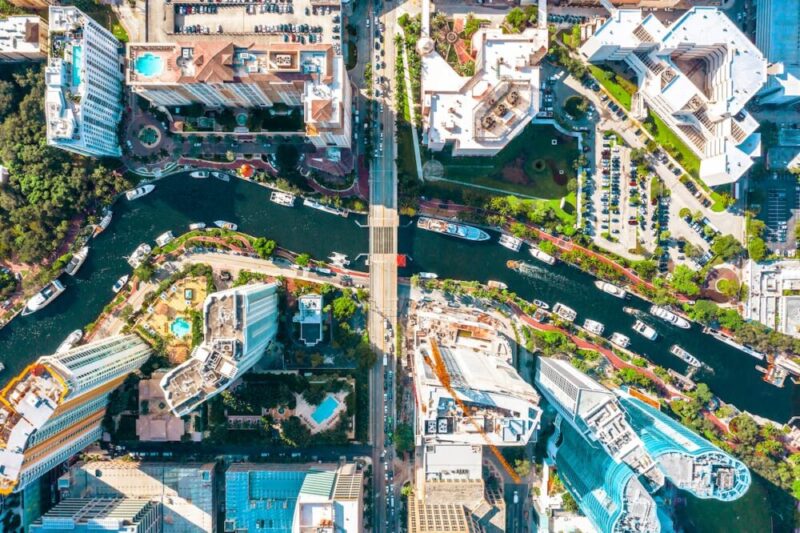
First off, it’s known as the Venice of America for a reason. Those glistening waterways are stunning – sparkling aquatic highways that give FTL its visual punch and hide many of its secrets. And it has to have secrets, right? Why else would it be a notorious spot of spring break parties when, on the surface, it looks and feels like a slow-paced village purposed for folks who have long aged out of Miami’s vivacious party scene?
As it turns out, there are plenty of places that should appeal to younger, more adventurous travellers. When they are taken with the more relaxed vibe, there’s a sense that Fort Lauderdale is much more than a Florida holiday that involves little beyond a hotel pool.
The Venice of America
Fort Lauderdale’s nickname, the “Venice of America”, sounds like the kind of ambitious tourism slogan that should be taken with a grain of salt. But there’s a surprisingly convincing case behind it.
Around 165 miles (265 kilometres) of inland waterways weave through the city, expanding to more than 300 miles across Greater Fort Lauderdale. Much of this network dates back to the Florida land boom of the 1920s, when developers began dredging canals through the region’s marshlands to create valuable waterfront real estate.
The result is a city where water has become inseparable from everyday life. Grand waterfront mansions sit alongside modest residential neighbourhoods, while enormous yachts cruise past restaurants where diners can arrive by boat. Even the roads occasionally surrender to passing vessels, with drawbridges lifting to accommodate marine traffic.
There’s something impactful about watching an enormous superyacht glide past someone’s backyard. And while the comparison with Venice is a little generous, particularly when it comes to architecture, Fort Lauderdale’s waterways give the city a character that would be difficult to replicate elsewhere in America.
One of the best ways to appreciate this is aboard the city’s Water Taxi, which connects waterfront attractions and restaurants along the Intracoastal Waterway and New River. It’s a practical transport service that doubles as an excellent sightseeing experience, especially around the extravagant properties of Millionaires Row.
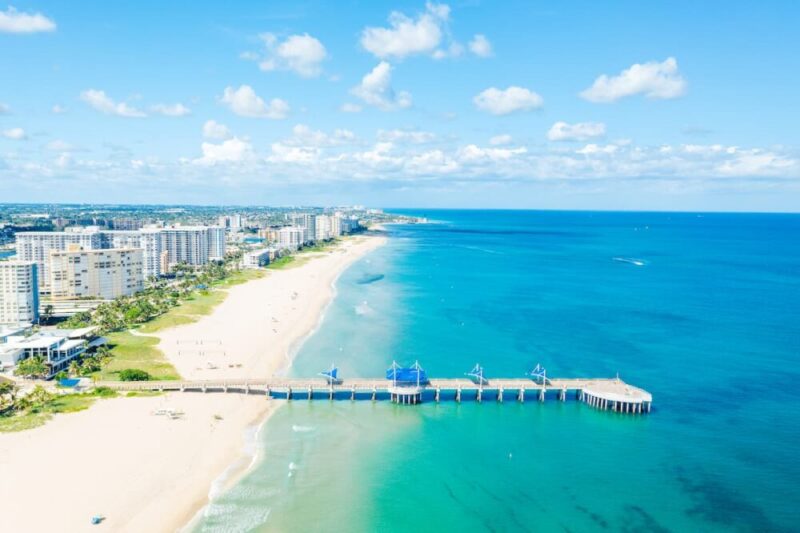
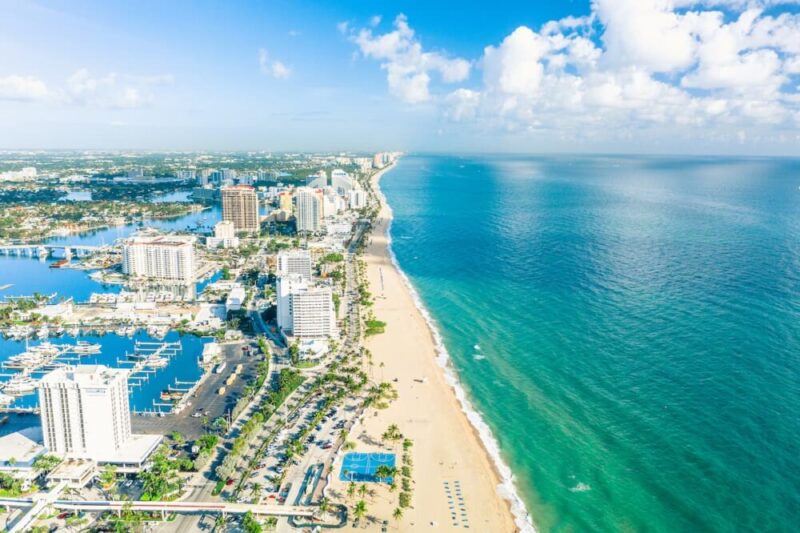
Then you’ve got the beach. Stretched out at a comfortable 3.2 kilometres, Lauderdale Beach offers a much more local vibe than Miami’s South Beach. It’s quieter, and the promenade isn’t as built up. It lacks the visual punch of Miami’s Art Deco architecture. But you’ll find a great pace along Las Olas Boulevard, with breweries and pubs standing next to waterfront restaurants and lifestyle hotels.
This makes FTL one of the few cities in the world where you get a sparkling beach culture and a massive inland canal system at the same time. That’s two distinct waterside lifestyles in one package, which is another strong mark in Fort Lauderdale’s favour when it comes to competing for the 35-55 demographic that may shy away from the faster pace of Miami.
Staying on the waterfront
Hilton Fort Lauderdale Marina is very well positioned for anyone wanting to make the most of Fort Lauderdale’s aquatic identity
Sitting directly on the Intracoastal Waterway, near Port Everglades, the waterfront hotel has its own marina and an on-site Water Taxi stop. That means guests can step outside and begin exploring the city’s canal network without having to organise a separate transfer.
It’s a distinct advantage in a destination where so much of the appeal is tied to being on the water. The marina also provides a natural vantage point for watching the steady movement of boats, while the hotel offers convenient access to Fort Lauderdale Beach and the city’s main attractions.
Anyone who has been to Venice would understand. Using a boat as your primary means of getting around, especially in a place where the journey between destinations can be just as interesting as the destinations themselves, is spectacular in itself.
Beyond the spring break reputation
Of course, Fort Lauderdale’s canals are only part of the story. The city has been working to distance itself from the rowdy spring break culture that once defined its international reputation, and there’s now considerably more to discover beyond the beachfront.
Las Olas Boulevard is a good starting point. The palm-lined thoroughfare has become the city’s social heart, with independent boutiques and restaurants giving visitors a reason to venture away from the sand. Nearby, the historic Bonnet House Museum & Gardens offers an eccentric glimpse into old Florida, while the Riverwalk connects several of the city’s cultural institutions along the New River.
Another enormous advantage is Fort Lauderdale’s proximity to the Florida Everglades. Just half an hour west of the city, you can find yourself in an entirely different world, surrounded by the vast subtropical wetlands that make up one of America’s most extraordinary ecosystems.
An airboat tour through the Everglades is easily one of the best things to do in Florida. Operators like Sawgrass Recreation Park take visitors skimming across the shallow water, with opportunities to spot wild alligators among the sawgrass. It’s an exhilarating experience, and one that makes Fort Lauderdale an especially appealing base for exploring South Florida.
What surprised me most was how comfortable Fort Lauderdale felt in its own skin. Miami can be exhausting, especially when every new restaurant opening seems determined to outdo the last. Fort Lauderdale has a more relaxed relationship with its waterfront lifestyle, and that makes it very enjoyable to explore, even if only for a day or two.
Perhaps Fort Lauderdale’s greatest challenge has been convincing travellers to look beyond a reputation formed decades ago. Spending time here certainly changed my perception, and I suspect plenty of visitors arriving with similar assumptions would come away pleasantly surprised.
After all, there aren’t many American cities where you can leave your hotel by boat in the morning and find yourself exploring alligator country by the afternoon. Fort Lauderdale has had that advantage all along.
I don’t think I can ever be content just visiting FTL and not popping down to South Beach (where one of my favourite hotels in America is located), but next time I’m down in The Sunshine State, I’m tempted to fly into FLL Airport first, spend two nights in Lauderdale, and then get my Miami fill.
Chris Singh stayed in Fort Lauderdale as a guest of Hilton, Visit Fort Lauderdale and the U.S. Travel Association.
Photos supplied by Visit Fort Laurderdale.
