

In his book Sacred Journeys in a Modern World, Roger Houdsen describes pilgrimage as a “prayer of the body as well as the mind”.
In their 1978 works, Victor and Edith Turner explored pilgrimage as a “liminal” experience, fashioning such epic inner journeys as “temporary breaks” from social structures that result in a sense of community, transformation and spiritual meaning.
Some of the greatest thinkers in history have examined the unique motivations and spiritual desires that compel one to go on a pilgrimage. I wouldn’t imagine these come from a particularly good place, either. It seems like wrestling with some inner conflict or darkness is what spurs people to tackle walks like Spain’s Camino de Santiago. Great pain creates great desire for renewal, community and reflection.
Thankfully, people have needed renewal, community and reflection for centuries now. Suffering is nothing new. And it’s often best addressed by ancient knowledge, foregoing modernity’s overcorrection to look at ways people have used big, elemental nature to heal big, elemental wounds.
Having such a loose structure from Point A to Point B gives pilgrims a contemplative path of discovery. In an essay on pilgrimage, Jerry R. Wright wrote that to be a pilgrim means “to follow in the footsteps of people across all continents and centuries, people who have traveled with spiritual intent and attention.”
As Wright puts it, “a pilgrimage is taken at the urging of [a] soul that hungers for sacred encounter, especially in times of personal or professional transition”.
Japan’s greatest walk
There are many great contemplative walks in Japan. There’s even an entire tourism product, Walk Japan, dedicated to these routes of renewal.
One of my many fond memories of travelling to this bountiful country is taking my mum to Tokyo around 2018. I spotted her texting my sisters, who were back home, about how surprising the country is.
“Everyone here is so warm and generous, I’m learning so much from Japan.”
It’s no surprise to see that Japan is now the number one destination for Australian travellers, and it seems the country is trending heavily in other markets as well. Yet I think the world’s love affair with this culture is just starting. The first two times are exciting. You discover the treasures of the Golden Route, hopping from the hyperkinetic energy of Tokyo through to the foodie favourite of Osaka and down to the deeply nourishing soul of Kyoto.
Subsequent visits reveal the country’s true character, touching on how uniquely restorative rural Japan can be. Nowhere is this more obvious than in the small prefecture of Ehime, one of Japan’s more overlooked regions on the island of Shikoku.
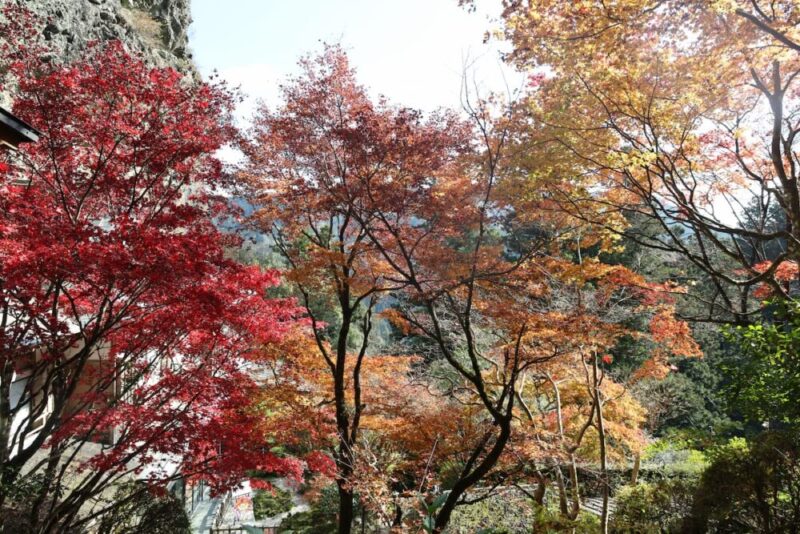
It’s hard to imagine nature as vivid. Ehime’s saturated autumn colours are aggressively bright and attractive, owing to a mix of coastal, temperate, and mountain trees. Driving the windy roads outside of Ehime’s biggest city, Matsuyama, blends Japanese cedar with cypress, pine, maple, cherry blossom trees, and Satsuma mandarin.
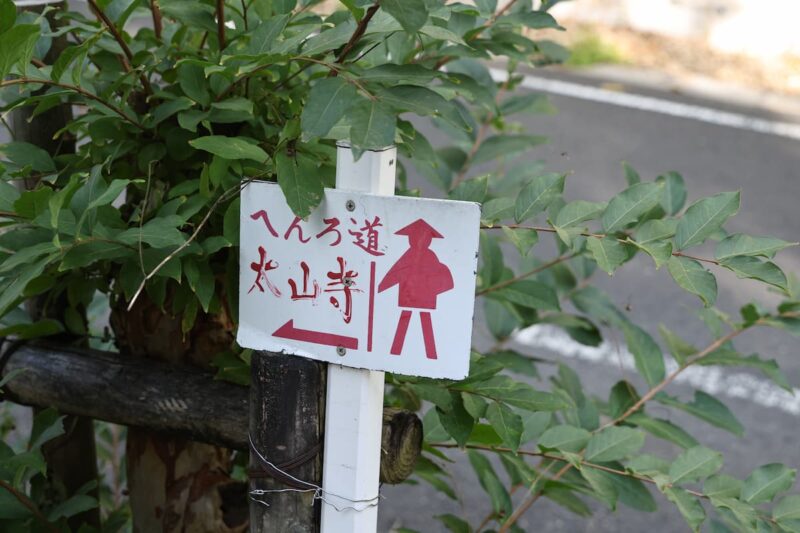
Between these colourful trees lie 26 temples. Some are carved into cliff faces, while others are located near small towns and by flowing rivers. Numbered from 40 to 65, they make up just one section of the Henro Trail, an 88-temple pilgrimage across the perimeter of Shikoku.
On foot, the 1,200km journey takes about 60 days to complete and mixes intense nature bathing with spiritual clarity, time-honoured ritual and a quiet untangling of the mind that mirrors the path itself.
What is the Henro Trail?
After studying Tantric Buddhism in 804, a Buddhist monk named Kobo Daishi, also known as Kukai, returned to Japan to found the Shingon school of Esoteric Buddhism. During this time, he spent much of it on Shikoku, engaging in ascetic training at the island’s various temples and caves. Tracing these 88 temples puts anyone in the footsteps of this mysterious monk and encourages devotion through repetition and ritual, as well as self-confrontation and eventual transformation.
That’s the idea of it, at least. And while I didn’t have 60 days to set aside to ring around the entire island, I used my brief time in Matsuyama wisely, visiting a handful of these temples to get an idea of what the Henro Trail can offer people, especially those in desperate need of peace and self-reflection.
The Heno Trail essentially works across four functions, each with its own Japanese name.
1. Dōgyō Ninin (同行二人)
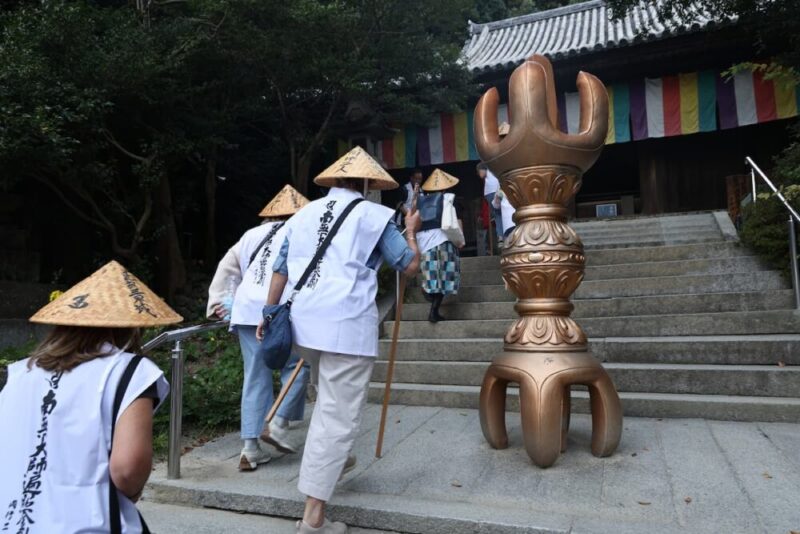
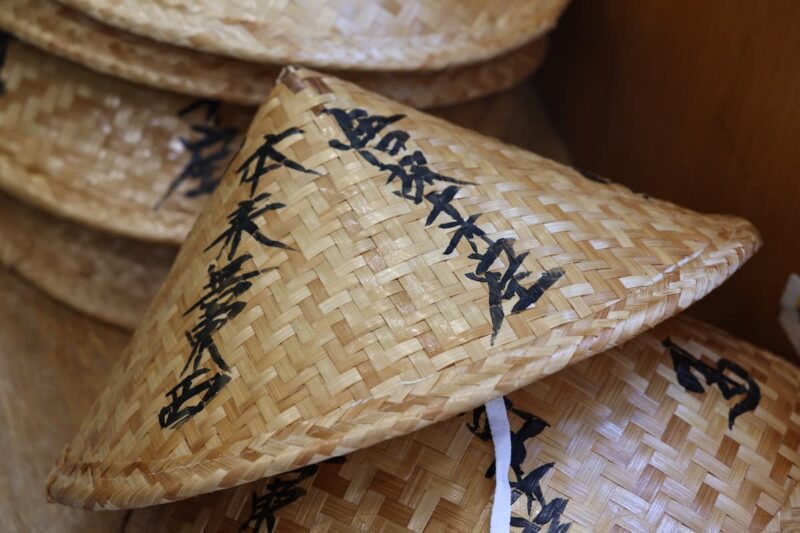
You walk “with two.” The belief is that Kobo Daishi is travelling alongside you. Whether taken literally or symbolically, it reframes solitude. You’re alone, but not. You’ll see this symbol branded on the wooden kongo-zue staff that pilgrims carry with them on the journey, and it’s also marked onto the conical hat that pilgrims can wear as part of the traditional Henro attire.
2. Shugyō (修行)
This is ascetic training. Not extreme suffering, but deliberate discomfort. The distance, the routine, the lack of convenience. The idea is that insight comes through sustained effort, not passive reflection.
3. Osettai (お接待)
Locals offer gifts or help to pilgrims. Food, money, a place to rest. It creates a quiet social contract between the walker and the community.
4. Circularity
Unlike point-to-point treks, this is a loop. There’s no clean “finish line” in the Western sense. Completion is less about arrival and more about what’s shifted by the time you return.
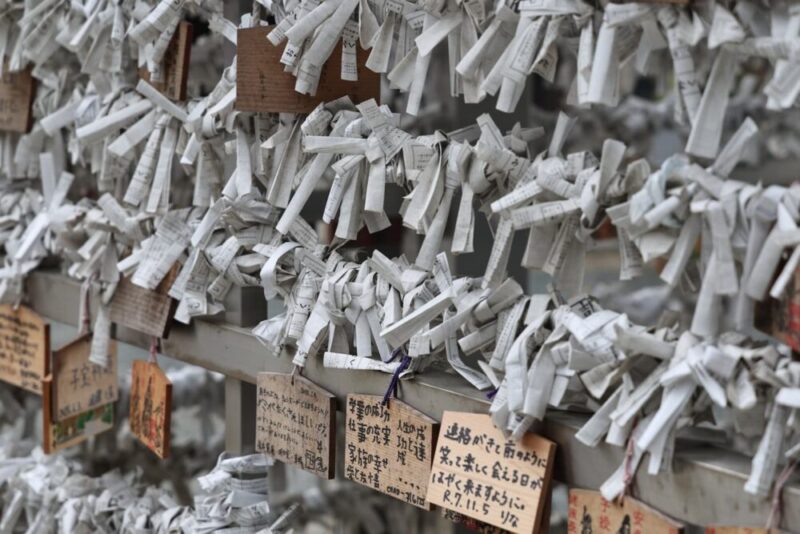
Kobo Daishi is the most enduring symbol across the Henro trail. Each temple has two main shrines, one of which is unique to the guardian deity of the temple, and one which represents Kukai. Pilgrims carry around a book of parchment slips so they can write names of lost loved ones, or wishes, and deposit them at each shrine.
Having only seven of these temples on my radar gave me just a small snippet of what the Henro trail offers, but Ehime was a good place to start. Each of the island’s four prefectures is tied to a certain stage of the journey, as per the following:
- Tokushima Prefecture = “Awakening”, temples 1-23
- Kochi Prefecture = “Ascetic Training”, temples 24-39
- Ehime Prefecture = “Enlightenment”, temples 40-65
- Kagawa Prefecture = “Nirvana”, temples 66-88
Ehime has the lion’s share of the temples; it’s also considered the most transformative section. Dramatic shifts from rugged mountains and coastal roads to urban centres like Matsuyama play more heavily on contrast. It’s also where deep rest comes for pilgrims, seeing as Matsuyama is home to the oldest onsen in Japan, the 3,000-year-old Dogo Onsen.
I didn’t have a linear experience of the trail, but having soaked in the healing waters of Dogo Onsen a few times now, I imagine the contrast between walking this epic trail and getting some time in the country’s most historic onsen takes wellness to a whole new level.
Matsuyama, a fascinating city as obsessed with orange juice as it is with onsen, has a few of these shrines in proximity. Isaniwa-jinja is only a short walk from Dogo Onsen and is typically the first shrine people would visit if they’re starting their Henro journey by flying into Matsuyama Airport.
That third element, O-settai, is the trail’s most interesting. Because Pilgrims are easily spotted, thanks to their staff, hat and white robe, locals are able to assist them with whatever they need. Need some sweets? Snacks? Citrus? Bottles of soda or chocolate bars? Having this epic journey through some of Japan’s wildest natural settings, while also knowing you’re completely taken care of by locals, brings the kind of assurance necessary to make a journey like this so impactful.
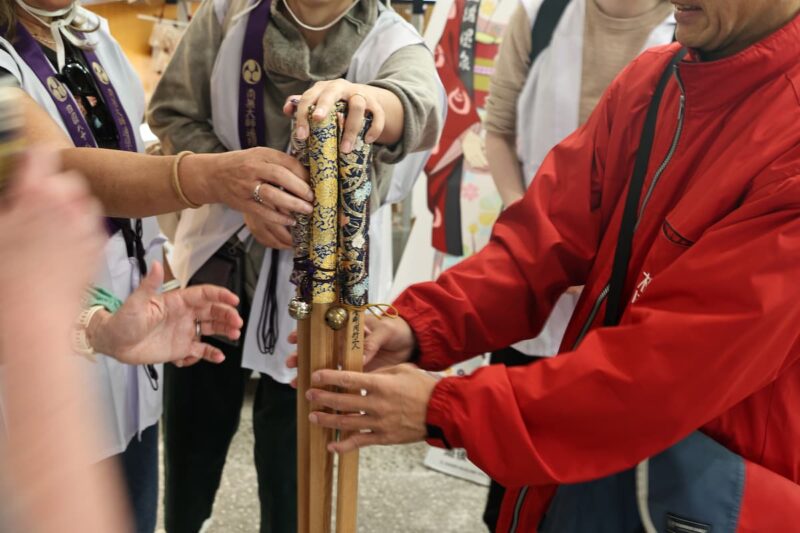
Dōgyō Ninin symbolises Kakai’s omnipresence. The monk is always walking with you when you’re on the Henro trail, ducking through shades of wisteria, pulling back on enormous rusted gongs to make the spirits aware of your presence, and climbing thick wooden ladders to hidden caves obscured by clouds of red and gold autumn leaves.
Shifting up some stone steps with my wooden staff, I pass pilgrims of all ages. Most of them, actually, are much older. I feel their smiles as they look up to each camphor tree that’s in turn raining down on them. There must be plenty of life sitting behind each of those faces, but self-reflection isn’t meant to be perceived by others.
Yet I feel it as I shuffle slowly up to the first shrine, which is carved into a cave. The stories being presented, in fragments and on parchment slips, must be like an endless scroll of tragedy and triumph. Kukai is the confidant for all these stories, the trusty abstract companion who is an ever-present figure at all of these temples, whether it’s in the form of statues or symbols.
The peak of wellness travel
I hear so much about wellness travel and the billions of dollars being thrown at it. Every smart person working in travel and hospitality is constantly trying to find new ways to introduce wellness into their offering, trying to get a slice of the very lucrative pie that comes with marketed metamorphosis.
Spiritual travel is considered a separate category. But when you think about it, is it really?
Wellness is about using tools – some abstract, some tangible, some natural – to promote better physical, mental and emotional health. This takes the form of conventional wellness offerings, like spas and gyms, as well as more modern and hyperspecific treatments like soundbathing and float therapy. Spiritual travel focuses on going deeper into the self, tending to the soul with deeper meaning and a desire for transformation through rituals, sacred sites, and often guided introspection.
You can see how these two can overlap. Meditation in spectacular locations, science-backed wellness retreats with a nature element. There are now many ways for people to harness the deep healing quality of spirituality in different ways.
The Henro trail doesn’t need to find a new way to do it. It’s been like this for centuries, with gentle rules to keep pilgrims steady while they attempt one of the most challenging, but rewarding, routes in the world.
Is the Henro trail the final boss of wellness travel? That might go to Spain’s Camino de Santiago, but that reputation could just as easily find its feet on this small Japanese island. If that’s the case – and I believe it is – then everyone’s currently on a path that’ll lead here one day.
All photos by Chris Singh.
The author travelled to Japan as a guest of Visit Ehime.
