
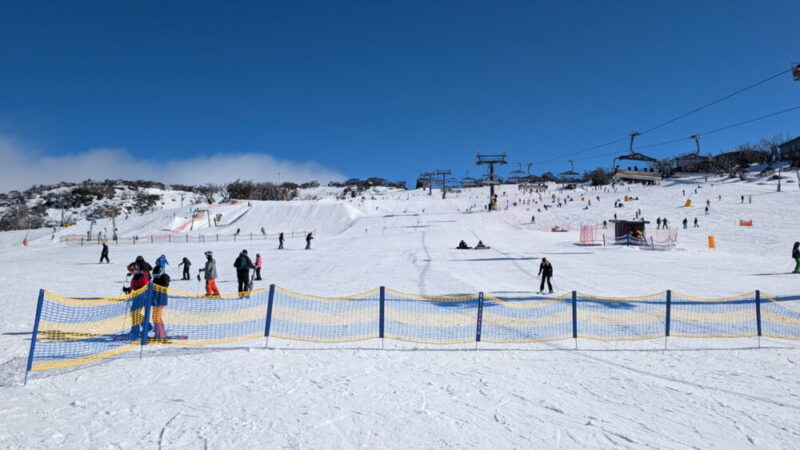
Australia may not be world-renowned for its snow, but when it comes to skiing, snowboarding, tobogganing and even just building a snowman, the name Perisher still manages to stand out. The Perisher Ski Resort isn’t just the biggest snowfield in Australia, at 1,245 hectares (3,076 acres) of carveable terrain, it’s the biggest in the southern hemisphere.
The first building in the area dates all the way back to 1939, with lifts opening in 1952. It wasn’t formalised as Perisher Ski Resort until 1995 and remains the spiritual centre of New South Wales’ Kosciuszko National Park. Home to 47 lifts, five terrain parks and somewhere in the vicinity of 120 runs – the longest of which is a three kilometres leg-burner – there’s no shortage of fun to be had by all ages and skills when the snow is good.
What’s even more noteworthy in the era of climate change, is that’s there’s plenty on offer even when the snow is frigid, so to speak. With 271 snow-making guns capable of creating almost 2m of snow over the season, there’s always plenty of white on the ground regardless. Plus, a range of surrounding activities and comfy lodges to indulge in.
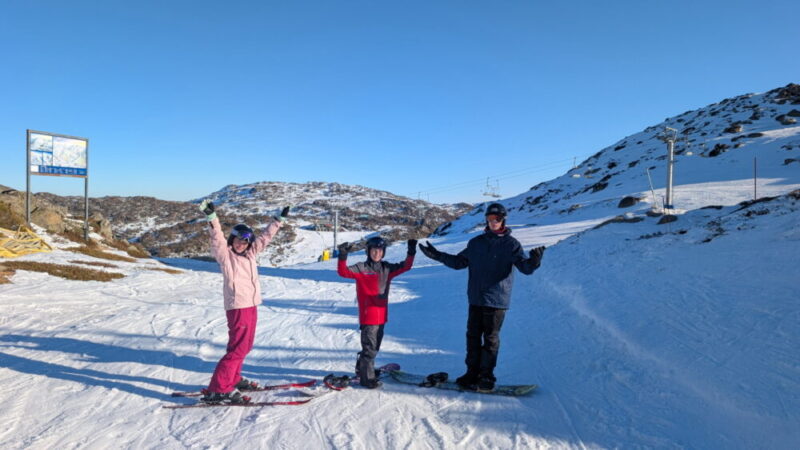
I just returned from a week down at the snow with my family – my beautiful wife and three mischievous kids. For the first three days, snow was scarce; for the last three it was plentiful – here is everything we learned.
How to Get to Perisher
Regardless of whether you come from the south via the Alpine Way, or from the north via Cooma and Berridale, you’re going to face the same challenge once you start approaching Jindabyne.
Choice one: you stump up for a National Park pass (annual or day), drive in and park at either Smiggin Holes, Perisher Front Valley or if you’re lucky enough to find a spot, Guthega. This is only useful for day trippers or people staying out of the resort village, for example in Jindabyne or its surrounds. Why? Because you cannot leave your car overnight in the parking lot.
Parking in the National Park is expensive, but convenient as your vehicle can act like a locker or fridge, which you can retreat to during the day for supplies. And leaving at the end of the day is easy.
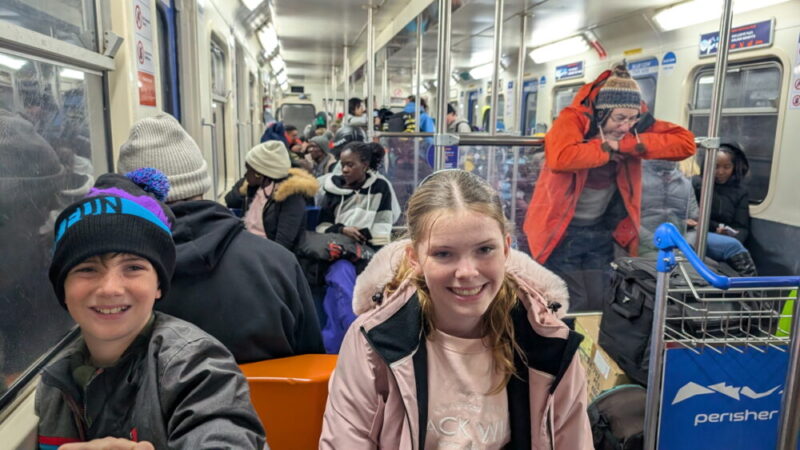
Choice two: you take the free parking at Bullocks Flat and catch the famous Skitube Alpine Railway into the centre of Perisher. This is your only option if you’re staying overnight in the Perisher village at one of the many lodges or hotels. But it’s also viable for day trippers as well, especially given that in busy times – notably weekends and school holidays – the Perisher parking lots fill up, and National Parks will, at some point, turn you away.
This happened multiple times during our trip, as we received a text from Perisher advising us as early as 8.00am that the parking lot was already full.
The Skitube from Bullocks Flat and Perisher is not automatically included with your lift pass. (The Perisher to Blue Cow is; more on that later.) It’s not cheap – news flash: very little is at the snow anywhere in the world. So, it’s worth doing the math on the Skitube versus a National Parks parking pass for a day trip, based on how many people are in your car.
I will say though, that the Skitube itself works well, is reliable and a wise choice if you’re not going to be heading in well before 9 am in busy periods. The parking is also safe and plentiful.
Pro Tip: If you do intend to catch the Skitube, buy the ticket beforehand with your lift pass as it’s a lot cheaper bundled than buying it at the gate.
Where to Stay
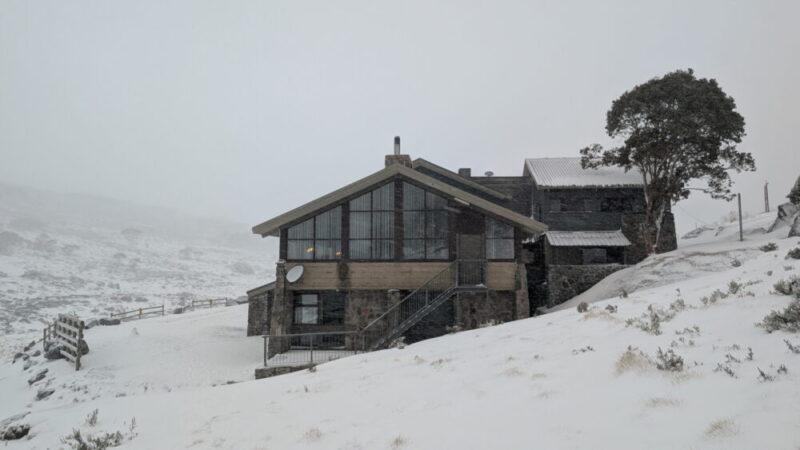
The big question! The reality is, you have choices ranging from a tent – yes, there are numerous campsites in the National Park open during the winter season – to a ski-in-ski-out luxury lodge.
Staying in Perisher Valley or Smiggin Holes itself is the most expensive option, whether you’re in backpacker-like dorms or enjoying fine-dining by the fire in premium accommodation. But nothing truly beats being able to walk out directly into the snow; especially if you can just jump straight onto a lift.
Outside of the village, there are the aforementioned campsites for tents, trailers and caravans. Then more accommodation as you journey back towards Jindabyne, from caravan parks to cabins, Airbnbs, hotels and more. Even past Jindabyne you’ll find farm stays, homes for rent and motels, with the price dwindling with the distance.
My advice is to make a call based on your intended slope time. If you want to ride from first lift to last, every day, get as close as possible. If you’re thinking about getting up there every other day, or maybe dedicating some time to snowball fights or tobogganing, then you can look further afield.
In this regard, I’ve previously stayed in a Discovery Parks Jindabyne cabin with the kids, and also the Pender Lea cabins near Crackenback. The Station, part of the Perisher / Vail Resorts group, is also a solid budget-friendly option.
On this latest trip, we stayed in the snow at the family-friendly Barrakee Lodge. It was excellent! Family-owned and run, it sits in North Perisher (serviced by the nearby lifts when snow allows) and offers excellent rooms with great beds, piping hot showers (trust me, you’ll want this) and a stunning view. There’s a wonderful kids’ club, a comfortable communal area filled with families and – best of all – an incredible fine-dining experience, with wonderful dinners and breakfast included.
Passes and Tickets
Pricing at Perisher Ski Resort isn’t straightforward. Day pricing can be dynamic based on demand; there are early bird prices; different rates for different days… then of course questions about what you might be bundling in with regards to the Skitube, rental gear, lessons and so forth.
The key figure you need to remember is five. Five is the magic number. If your intent is to visit Perisher for more than five days, either in one visit or through the season, then you should be considering the Epic Australia Pass.
Perisher Ski Resort is part of the global Epic Pass family, which is home to over 80 resorts around the globe, alongside other Aussie fields in Victoria’s Falls Creek and Hotham. The Epic Australia Pass is an unlimited, season-long pass, which also grants access (unlimited or capped depending on the resort) to the partner locations around the world.
Even for shorter stays there are compelling offers depending on how early you book (early bird tickets are already available for next season). For example, the Epic Australia 4-Day Pass or the Epic Beginner Bundle, the latter combining lessons, rentals and beginner lifts.
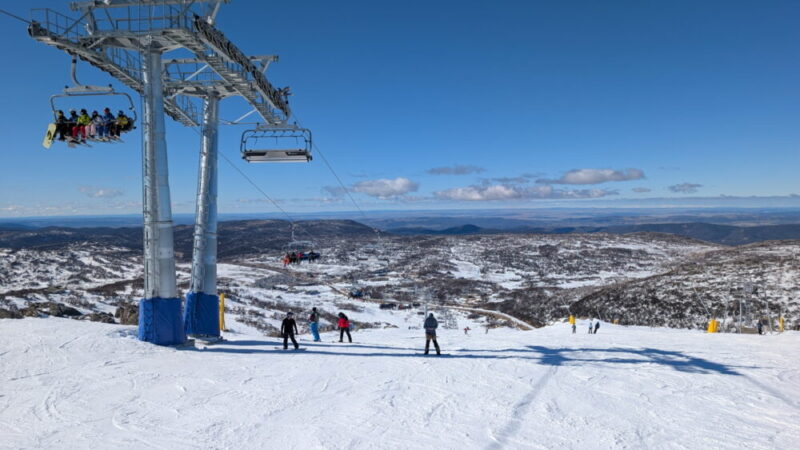
Alternatively, if you’re focusing in on the one experience, it’s best to pre-purchase your Perisher Lift Pass ticket online. You’ll be sent a QR Code, which, when scanned at Bullocks Flat or the valley terminal, will deliver you a hard plastic card. This is the Mountain Access Card, and it’s your gateway to all the lifts and any added extras you’ve bundled in.
It works seamlessly. Modern gloves even have a little card-sized pocket above the knuckles that, once the card is inserted, can see the lift gates read your access with minimal effort. We did have one card that found itself coded with the wrong ticket, and in less than ten minutes that was sorted at guest services by the friendly staff.
Rental Gear
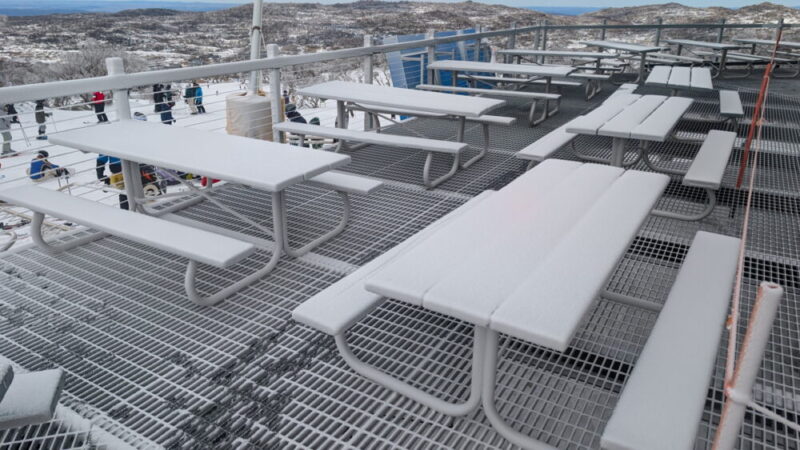
What do you need? Skis, boots, helmets, stocks, snowboards, clothes? It is all available to you in four key locations. Two are right on the slopes: the bottom floor of the main Perisher terminal and the Smiggin Holes terminal. One is at the Bullocks Flat Skitube terminal. While another is at The Station, in Jindabyne.
You pre-book what you need, and it’s recorded onto your Mountain Access Card, so picking up the gear is as simple as a tap. We used the Perisher Valley Terminal rental outlet and, like the others, it’s a well-oiled machine. Effectively a conveyor belt, that ships you from desk to desk as you move from your civilians into a kitted-out snow machine.
The gear is in solid condition. When we first arrived, the slope conditions were not great, with rocks, grass and trees regularly shaking hands with hire gear. Despite this, the gear all five of us received was in good nick and felt quite modern. It’s base level, of course, but more than suitable for most people’s needs.
Timing is everything, however. You want to pick up your gear the day before you hit the slopes, which is welcome from mid-afternoon. But if that’s a super busy day or period, then the available stock is naturally low.
I arrived at midday on a Saturday… probably the worst time! As a 194cm yeti with size 12 feet, I’m well off the steep slope on the bell curve – long, wide boards aren’t as common.
I was impressed by the effort the staff went to, however, to meet my needs. They ended up shipping a board my size up from Bullocks Flat so I had something for the afternoon to take on the mountain. Then the next day, when I returned with some grievances on its performance, they immediately switched me over to a newer board that was excellent!
Ski Lessons
At the risk of tooting my own horn, after 45 years or so on the slopes, I’m a long way from needing lessons. My kids and wife, however, were going into their third year when we hit Perisher. Lessons are an expense, and I was unsure if they needed them or not.
Like everything at Perisher, there’s a stack of options to choose from. From three-day lesson bundles to one-offs; from half-day to full day; private or group; as well as Smiggin Holes or Perisher. Here’s what I learned.
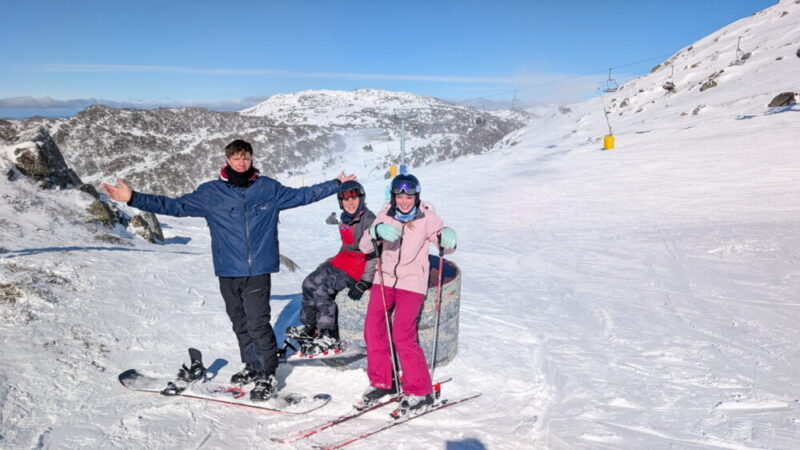
We did three half-days for the kids at Perisher (two snowboarding and one skiing), and one half-day for my wife at Smiggin. Regardless of the location, the meet-up areas are easily accessible, clearly signposted and right near the terminal. Flags allow you to pick the skill level you think you are at, but plenty of staff are on hand to help you align with the lesson that will best suit your needs.
The staff are excellent! They nailed all my tribe’s needs and got them into the exact spot they needed to be, even if that changed over successive days. The results were very noticeable, too. I saw clear improvement in all of them, and it was great watching them set goals for themselves each morning – “I want to parallel turn” or “I want to do a 180” – and then see them achieve it.
The end of each lesson comes with a solid debrief from the instructor, too. I was really happy with the whole lesson experience and the proof was in the pudding. Come day four, I was riding to the top of Mount Perisher with all three of my kids (the youngest being 10) and coming down the black runs. So good!
Best for Beginners
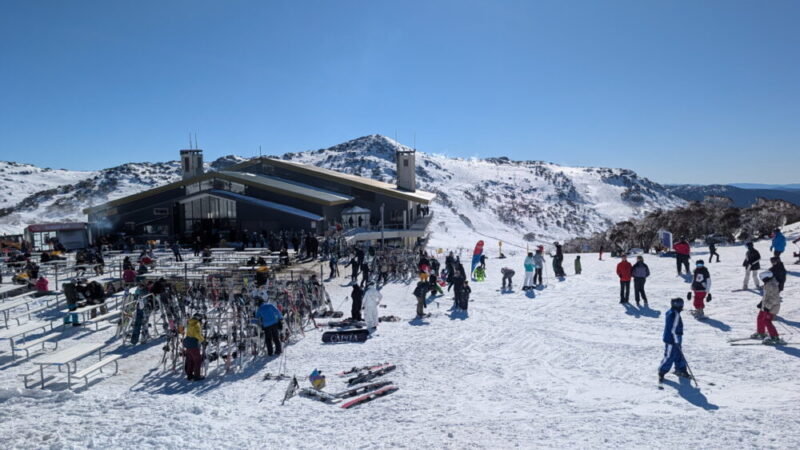
You’d be forgiven for thinking that Perisher Front Valley would be your first port of call, but in my experience, it’s more of an intermediate slope. With Mount Perisher leaning even more advanced. For beginners, and in particular first timers, you’re much better off at Smiggin Holes. Not just for your lesson location, but even just to get your feet in the powder.
Once you level-up from there and can handle a chairlift, I’d then highly recommend Blue Cow. It also has some very tame first-timer slopes and magic carpets, but also some slightly more challenging runs straight down from the terminal. These still have a gentle gradient, but will allow you more scope for speed and turns.
The key feature of these two areas is that they don’t have experts flying past you at kamikaze speeds, which can really ratchet up the anxiety as you are getting started.
Once you’re comfortable, then Perisher Front Valley would be your next step!
The Areas
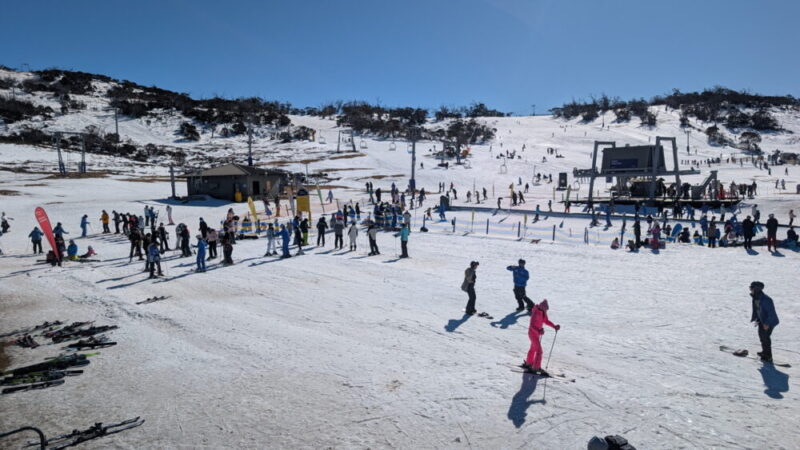
The Perisher Ski Resort is broken into four main areas; from my experience skiing and snowboarding them with my kids, here is how I would break them down.
Perisher Front Valley
The iconic face of Perisher is where most of the action happens, for better or worse. It’s the most accessible, which means it generally has the biggest crowd. But it’s also huge and does a good job moving the masses up over ridges and higher into the mountains. It all culminates at Mt Perisher, which at 2054m above sea level, is only a footy field off Kosciuszko’s country-leading height, and you can get a chairlift almost to the very top.
I’d call Front Valley an intermediate to advanced option, due to its gradient and reliance on chairlifts and steep T-bars. Not to mention four of the terrain parks are here, albeit ranging from beginner boxes to challenging grinds and, ultimately, death-defying jumps.
The Village Eight (or V8) Express chairlift was always our first port of call, right near the terminal. It’s efficient at getting everyone up the front slope, from which you can get one run in to loosen the limbs, or traverse to wider-set lifts, which will take you higher up the mountain.
If you do get up to the top of the Quad Express chair, the Happy Valley and Pleasant Valley runs offer a lovely intermediate experience with plenty of off-piste adventures to explore. Alternatively, traverse over to Mount Perisher, for longer runs, more of a back country feel and steeper descents.
On Tuesday and Saturday nights, large floodlights turn the front slopes near the terminal into a night skiing experience for those who can brave the cold. It’s quite the experience and immerses you into the slopes in a whole new way.
Blue Cow
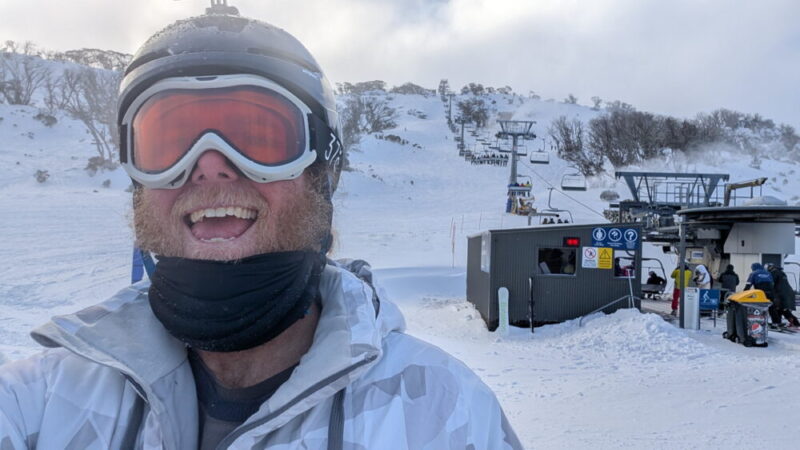
Blue Cow is my personal favourite. It’s about a 10 minute Skitube ride out of the Perisher Terminal, but the trains come every 30 minutes or so, ensuring it’s a bit of a commitment. As such, and because Blue Cow gets plenty of sun early in the day, I like to head straight there to maximise my time on the slope.
Why do I like it? It’s far less crowded and has runs that suit all skill levels. I’ve already mentioned the beginner-friendly run. But for intermediates, the Rollercoaster and Excelerator trails give a long, windy route all the way to the bottom of the valley. They’re super fun.
At the top of the mountain, you can challenge yourself by coming straight down the main face of Zali’s, where the advanced fly past at startling speeds. Or you can head over the back, where awesome runs like Kamikaze and Outer Limits provide a snaking, multi-faceted journey that will burn your muscles, but delight your senses. With plenty of opportunities to veer off for a woodland adventure if you’re up for it.
There is the option, should snow allow, to take the run back towards Perisher. It’s long and zigzags down to lifts, then back up, then down again; but it’s an adventure. Worth doing at least once!
Smiggin Holes
Often looked down upon by veterans as the kiddie park, Smiggin Holes isn’t to be ignored. Sitting at the lowest altitude of the four areas, it’s effectively an amphitheatre lined by several lifts and runs. They’re not awfully long, or steep, but they’re safe, uncrowded and connected. And not without jumps, rocks and trees off the runs for the adventurous.
Lifts here are much mellower, relying more on J-bars (we used to call them a pomma), although there are T-bars and a chairlift, too.
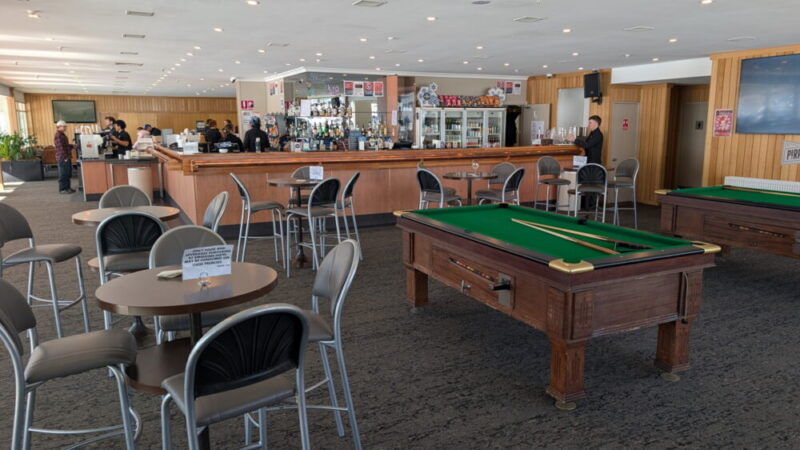
Best of all for parents, you can pretty much see the entire space from the pub, meaning the kid you put in fluorescent pants is always clearly identified at a glance… through the bubbles of your champagne.
Smiggin Holes does have its own parking lot and accommodation options, with a free shuttle that takes about 10-minutes and runs consistently through the day to and from Perisher’s Front Valley. It’s easy to get from one to the other.
And as a sidenote, it’s the cheapest of the four locations, too. Food and booze costs about 15 to 20 percent less here in my experience. Plus, on Wednesday nights it has a fireworks display.
Guthega
Guthega is Perisher’s smallest and quietest area, often thought of as the “hidden gem.” It’s also the most sensitive to snow and with no machines churning out the good stuff, during my visit, sadly, it never opened. As such, I can’t give you any firsthand information.
Had it been available, I would have accessed it from Blue Cow, but you can also drive to it directly and park with a National Parks Pass – although parking is limited. Don’t expect a huge terminal or village experience here, however. It’s isolated from the main hubs, so it attracts intermediate to advanced riders who want to be out of the chaos.
Its isolation and gradient means it’s ill-suited to beginners.
Tobogganing in Perisher
If you’re considering a visit to Perisher simply to see the snow, maybe build a snowman and even go on a toboggan ride, you’re not alone – many do! However, it’s only tolerated in one location – Tube Town. That’s where the practice of hurtling down a slope on a sled can be enjoyed.
You cannot hire a toboggan at Perisher Valley, and any attempt to ride one on the main slopes will be greeted swiftly with a demand to stop. But on the map, you will find an area designated to tobogganing, right next to the carpark. This decent length, if shallow gradient, slope is away from the runs used by skiers and snowboarders, and does not require a pass to be used.
Remember to grab a toboggan on the way through to Perisher, with options available in Jindabyne and Cooma.
Where to Eat
Nothing quite works up a hunger (and a thirst) like a day on the mountain, and you won’t be left wanting for options… if you can afford it. Expect resort prices wherever you look, but at least it’s hot and filling, with solid serving sizes.
At Smiggin Holes, there’s a full bistro-like cafeteria selling fast food staples on the bottom floor of the terminal. Upstairs, a bar offers drinks with a spectacular view, pizzas and pub fare. There’s also a burger joint.
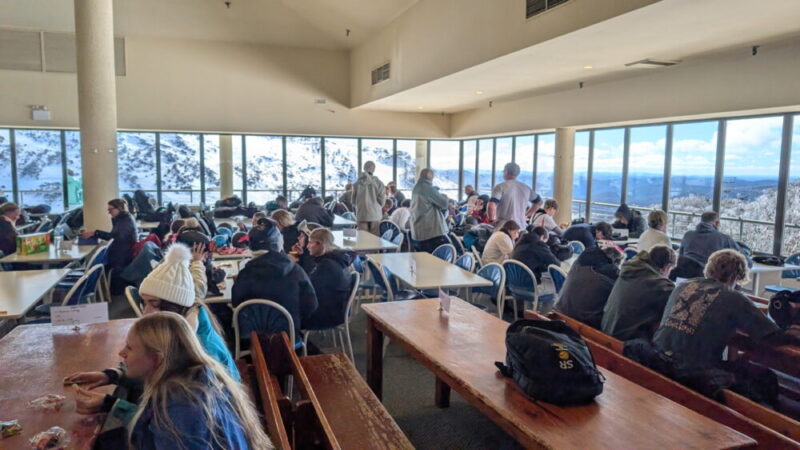
The Blue Cow terminal is similar, with a classic coffee and savoury café on the mid-floor, and a huge bistro experience up the top with sweeping near-360-degree views over the mountain. There’s a bar, a bistro and various snack foods on offer here.
Perisher Valley is where you’ll find the most amount of choice. The Skitube terminal has Aldo’s Pizza (which also doubles as a bar and café), as well as a somewhat famous doughnut shop and a fast-food takeaway joint. You’ll also find a FoodWorks here – similar to an IGA supermarket – which is the best value place in town for supplies.
Beyond the Snow
Not every day is about hitting the slopes. Sometimes the snow or weather isn’t quite up to scratch, or you need a day off to let muscles recuperate. Maybe you’re simply on the journey with friends and family! Thankfully, there’s plenty of other options to consider.
Outside of the restaurants and bars, you’ll find live music experiences, the Tube Town snow play area and less adrenaline-led pursuits like cross-country skiing and snowshoeing. There are backcountry tours to be had, or you can catch a snowcat on a day trip up to Charlotte’s Pass.
The front valley comes alive on Tuesday and Saturday nights, with firework displays and night skiing to watch on the floodlit slopes. The colourful bangs shift to Smiggin Holes on Wednesday nights.
Finally, you can catch the Skitube back to the parking lot and spend a day in the nearby Crackenback area (which has walks, equestrian experiences and a distillery) or Jindabyne itself, with its beautiful lake, shops, bike riding and dam.
About the Drive to Perisher
For most visitors to Perisher Ski Resort, it starts and ends with a long drive. For us, it’s a good seven-hour stint from the northside of Sydney. But we met families that had driven from as far afield as Townsville!
What you want to do is maximise your time on the slopes and minimise the investment in expensive snow accommodation. My recommendation is to consider a stay in Canberra as you come out of Perisher.
Canberra is about a 2.5-hour drive from Bullocks Flat. We’ve now become accustomed to staying on the slopes right up until 4pm on our final day, then dropping off the rental gear, heading back to Bullocks Flat and then jumping in the car. After a full day (and week) of exercise and energy, trying to drive all the way back to Sydney is ill-advised. I’ve done it… but it’s not safe.
Instead, we stop in Canberra and usually order Pizza or similar. Then have a nice, slow start the next morning catching up on sleep. We then spend a day exploring the national capital slowly as we recoup before driving home the day after.
It’s a great way to end the trip and our last hotel choice, the Hyatt Hotel Canberra, was magnificent. It’s got a wonderful history, incredible architecture, fantastic food, and – best of all for sore muscles – an indoor, heated swimming pool with hot tub and sauna. The location is perfect, too.
But obviously, there are many other options to consider, depending on your budget.
Chris Stead travelled as a guest of Vail Resorts, for more information visit Perisher Ski Resort
