

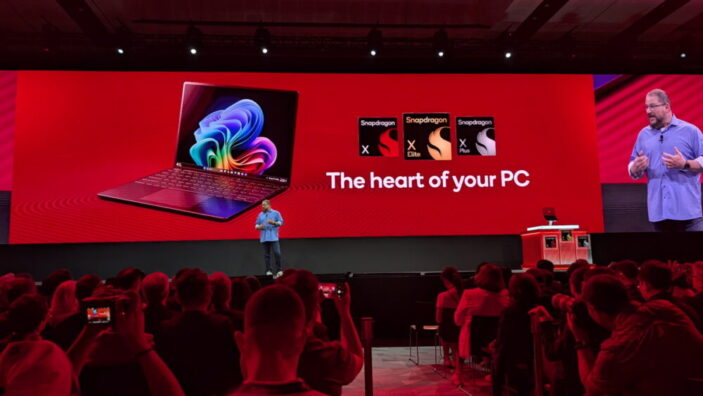
Qualcomm believes the way we think about a PC user interface is about to be disrupted and that Snapdragon will lead the way.
For generations of laptop users, when it came to your choice of CPU, it was a two-horse race. You either went with AMD or Intel. How quickly things can change. In little more than a year, a new player has burst into the PC market, building on its success in the mobile space.
Qualcomm claims to have grabbed a 9-percent market share already, a feat CEO Cristiano Amon claims was expected to take nine years. He says as much in his keynote at Computex 2025, addressing a crowd of tech enthusiasts inspired by an AI-driven future.
I’m in Taipei, Taiwan, for the event. Not only to be a part of the keynote, but to spend many days with Qualcomm’s head brass as they detail to collected journalists their vision for the future and their explanation as to why Snapdragon will be the next big disrupter in consumer PCs.
Building around AI
AI has been a buzz word for a while, ad nauseum. But not for the right reason. It’s been glorified by gimmickry, shallow forays that may wow in the moment, but fail to paint the full picture of AI’s true depth. Typical of emerging technologies in- to use technology vernacular – their first generation.
Yes, the AI can summarise a website for you. Now it can make an image. It can even help you plan an exciting family vacation. Nice, but what’s next?
Qualcomm’s timing for entering the laptop space isn’t by chance. It’s about AI. The company’s Snapdragon, Snapdragon X and Snapdragon X Elite chips aren’t just about the CPU, but about the NPU. The neural processing unit.
A CPU is all about the processing, a GPU is all about the graphics and an NPU is all about the AI. Or in short, ensuring there is a dedicated power resource available for your laptop’s AI to do its thing. A resource on-device, not in the cloud. Not paywalled. Not available only when you’re online.
Qualcomm isn’t alone; its competitors are doing the same thing. As a result, we’re moving into an era where software developers can rely on their customers having access to an NPU and therefore justify the investment of building AI into their programs. This, as they say, has let the genie out of the bottle.
How Qualcomm’s AI is benefitting you now
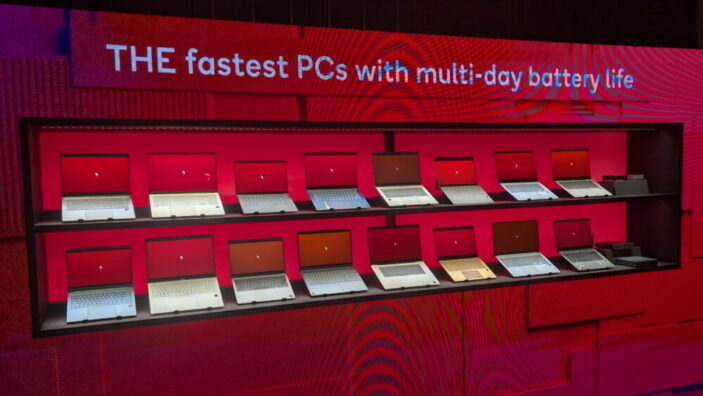
Indeed, since Snapdragon launched into the PC space mid-2024, its number of compatible apps has tripled to over 200, including almost all of the top 100 most popular pieces of software. Laptops using the chip are benefiting from over 50 NPU-related features. And over 1400 games have jumped on board, most recently Epic Games with its blockbuster hit Fortnite.
If you have a new laptop, namely anything post-June 2024, then you are already benefiting greatly from AI. How often do you find yourself now opening Copilot+ instead of Edge or Google Chrome? You will have also noticed big improvements in battery life. The Qualcomm-powered Snapdragon ASUS Zenbook A14 touts 32-hours of battery, while being one of the lightest laptops in the world.
This is possible because the on-device AI is able to identify what you’re using, when you’re using it, and pull back on the power drain of software that isn’t required in any given moment. In the same way, AI can puppeteer resources when playing video games, allowing for productivity PCs to suddenly offer decent entertainment experiences, too. Even when running off battery.
This is a genuine evolution, not an iteration. Laptops that have long battery life without sacrificing power, and are even more svelte than their predecessors. So then, what does Qualcomm believe is the next step.
A new OS for productivity
Qualcomm sees AI becoming not a part of a user interface, but the interface itself: cross-device and bespoke to each user. Read that again. It’s a statement that grows exponentially on you the more you peel back the layers of what it could mean. For better or worse, that’s our future in a nutshell.
As I spoke with the likes of Alex Katouzian (Group General Manager, Qualcomm) and Kedar Kondap (SVP & GM, gaming) and Rahul Patel (Automotive GM) at Computex, I began to fit the puzzle pieces together of where Qualcomm and the industry at large is taking us.
If you think of the modern user interface, it’s Windows, its Android, its IOS, or similar. It’s a benign host in which there is a catalogue of apps, each competing for resources and your time. The same for everyone.
Now imagine opening your PC or your phone; popping on your smart glasses or smart watch; or even just looking at the screen on your fridge, and feeling like they are all the one device. A device that has developed a language, a conscious, based on you. Different from everything else out there.
An AI not connected to the cloud or isolated into singular software. Not waiting for you to acknowledge its existence in order to operate. But literally the system in which your digital life is operating: AI as the platform.
Qualcomm points to smart glasses as an early example of what this experience will feel like. Smart glasses don’t have an operating system in the traditional sense: you only engage with them via AI. You talk to them.
Seen this Snapdrgaon movie before?
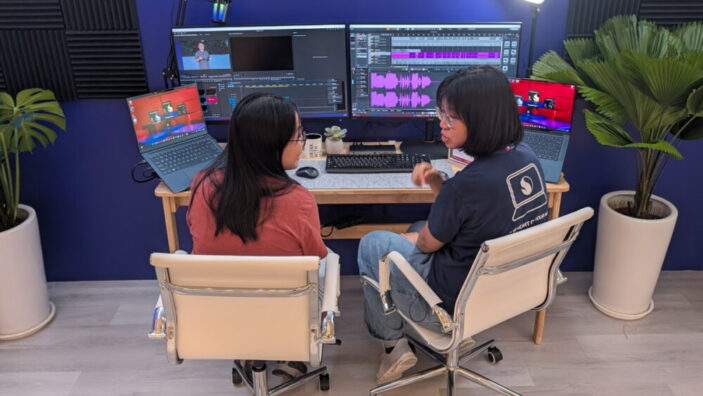
Walking through the exhibition floors of Computex and watching developer after developer show off how they intend to leverage the new AI-driven era of CPUs, like Qualcomm’s Snapdragon, was scary. I’m not going to lie. Life tends to imitate art and what was not long ago found only in bleak sci-fi movies and books, will be very real in the coming years.
Qualcomm views it all through the lens of productivity. As more developers leverage NPUs like Snapdragon, the ecosystem from which the AI can better understand human language will grow with it.
Like many streams coming down a mountain, as they join up, they become rivers. Then lakes. And ultimately oceans. Every time a consumer buys a new AI-driven laptop, it has got another point of contact with a person: a teacher.
New use-cases will emerge and with them, new devices we haven’t dreamt of yet. Entire categories of products. Ultimately Qualcomm believes we will see AI on every single device, each leveraging the other for knowledge, but only connected in the context of a single human user.
This is Qualcomm’s vision for the future and what Snapdragon’s next generation of chips will be built to facilitate. For better or worse.
