
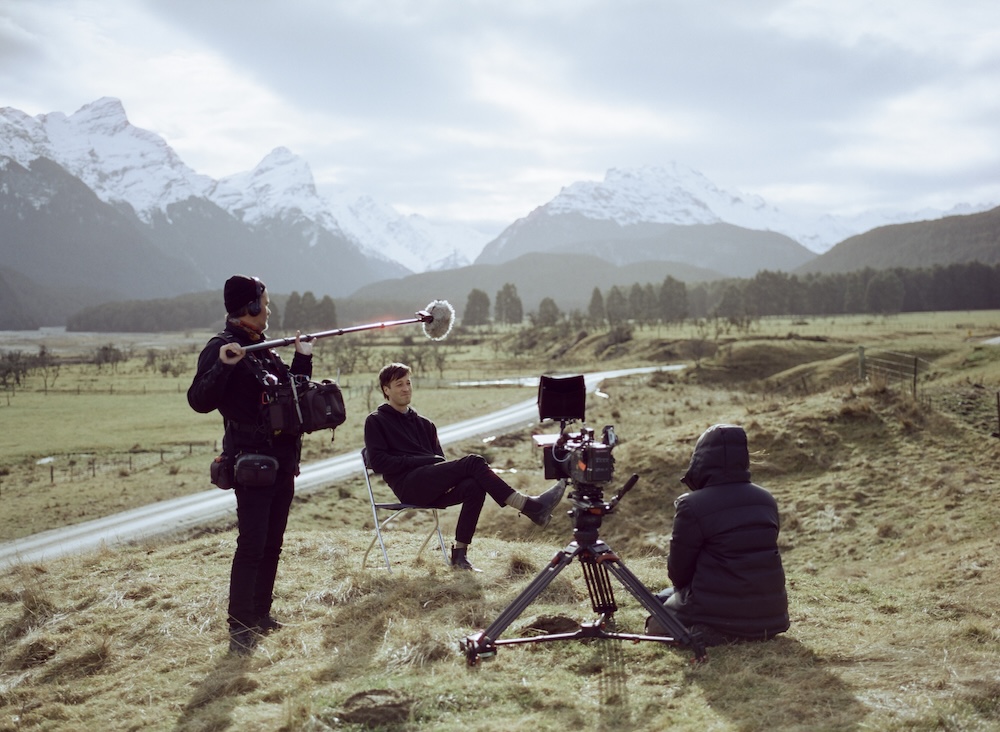
Upcoming NZ director Ursula Grace Williams has created a playful and revealing story, documenting Marlon Williams‘ four-year journey of creating an album recorded in his native te reo Mãori language. The album, Te Whare Tīwekaweka, is a blend of Marlon’s familiar country folk tunes and the rhythmic styles of traditional Māori music. Williams was recently showcasing the movie at the Adelaide Film Festival. We had the opportunity to discuss the making of the album, including his collaboration with fellow Kiwi singer Lorde, as well as the challenges of touring and creating music.
In the beginning of the movie, there’s a scene of you in your childhood home that had been damaged in the earthquake. What were your thoughts at that time?
Marlon Williams: There’s a lot going on there. I was 21 when the earthquakes hit. In a lot of ways, it really changed my social life. I ended up moving to Melbourne because of the earthquakes. It was a sort of turning point in a personal way and the town history. Mum’s house has still got some bits of damage that need fixing up. The time scale is so massive, and you’re like, the scale of your own life to contend with. The city does it at its own pace. So yes, lots of different learnings about it.
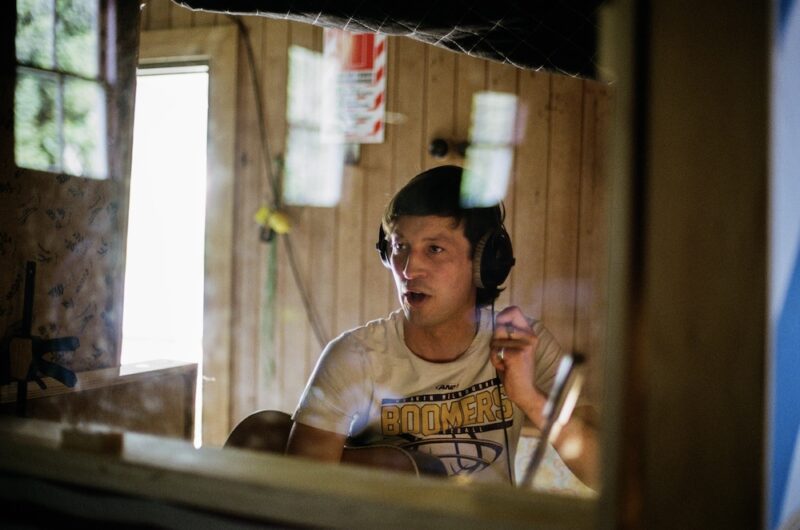
One thing that struck me in the documentary, was one of the stories about how it takes just one generation to lose a language, but three generations to recover it. And in a way, it’s like the earthquake, it happens quickly, but it takes so long time to recover from it.
I think, also the building, like the structure and the skylines of the city, is what holds the memory of the cultural identity. So, that’s similar in that way, buildings and language, share that.
What was your motivation for doing an album in Māori language?
It’s always been there, and I’ve always loved singing about it. So, it was just when the best time was really, and I think coming out of Covid, out of lockdown, it brought me home and kept me in that part of the world. So, I think everything was just leading towards that being the best time to do it. Then I met KOMMI, who I ended up writing the record with, I couldn’t have done it without them. So just everything is sort of lined up at that time.
I saw you play at Harvest Rock back in ‘23, and I was blown away when you sang in Māori. It was so powerful and honest. That must have been about when you were in the midst of recording the album.
Yeah, it’s been nice, sort of drip-feeding bits of Māori into the set over the last few years, sort of inoculating my audience to go on with, with viral things again. On my last record, there was little bits of, Māori words thrown in here and there. Yeah. It’s just kind of trying to buy yourself a bit of room to do different things,
How did the documentary come about?
It came about because I met the director (Ursula Williams) at a mutual friends dinner. We were having polite chit chat, and I told her about making this record and my plans to do it. Fastidious and personal, she is; within a couple of weeks, she had sent me this big pitch for the documentary, and we had a better catch up. I was convinced that it was a story worth telling, and she should be the right person to tell it.
How did it feel having like a camera following you around?
I went through different phases with it. At the beginning it was tough, then I sort of got used to it. Then I realised how long it was going to be. I thought realistically this is going to be a four-year journey. Wow, a big chunk of my life. So yes, I went a lot of complicated ways with it.
There were some quite personal things in the movie. Did you have any say on what was allowed or not allowed?
I had right of veto. But I really didn’t want to use it. The idea was that I’ll make the record, and then she makes her version of her view of it. There were maybe a couple of times I had a very light veto on things.
In my mind, it made it more real. You can tell that this is a genuine documentary. It’s not been glossed over or anything like that, there’s a robustness there.
That comes from fully trusting someone and trying to make a rule for yourself that you’re not going to get in the way.
It’s played at several festivals already. Have you been in the audience?
No, no, I haven’t watched it since some of the New Zealand premieres. It’s that weird thing where you go and intro the film and then go and have a drink or have some dinner while the film’s playing, then come back. It’s that weird thing where everyone else has just watched a film and you haven’t, like, an information dump about my life. They’re a different beast when you go back and talk to them afterwards.
It’s quite different to being up on stage performing. This is somebody’s interpretation of your life and someone’s interpretation of that.
Totally, it’s both. It’s both more and less honest than performing is, you know.
You collaborated with Lorde on “Kāhore He Manu E.” How did that come about?
Well Ella [Lorde] had said years ago that if ever I wanted her to sing on anything that she would be more than happy to. I think I had that in mind, when I went to write that song, I could just hear her voice. So, she sort of helped me write the song. I sang on her Te Deum, Māori, EP. So, we’d set up the precedent of singing Māori together. I was very stoked she returned the favour.
How was it touring with someone like her? Did it give you a different perspective on touring?
I’m sort of a student of touring, and I’m fascinated by the different ways in which people are able to (and have to) tour. I’m used to doing things pretty well in the middle of the pack, from the extremes of touring like Taylor Swift to not knowing where you’re sleeping every night. It was fascinating to watch how she conducts herself on tour. Pop stars are athletes. It was like watching an athlete in terms of her regiment and her commitment.
So, writing songs in Māori, do you think it has more expression? How was it learning and writing a song in a different language?
I wouldn’t say it’s got more expression. I just think it’s just, something. It was a new and novel way to think about the phrasing, and it’s its own beast. I got a lot of inspiration from new forms and new sounds. It’s a phonetically led album. Obviously, because I’m still not fluent in Māori, it had to be sound that was leading me around, and that can lead you into some strange places conceptually, when you’re going sound first and meaning second. It was a fun experiment in writing, and purely in writing.
Has it shaped the way you approach writing your songs? Has it given you different insights into the way you would write other songs in the future?
All new songs give you more info about how to write a song. The act of trying to write in another language, it shows you a sort of universal truth. You resonate with certain universalities, certain things that hold true across music. And then, realising where things don’t align, and where and when there’s mismatches. It was just really intriguing to go through that process. I’m sure it’ll affect the way I write in the future.
I plan to normalise Māori into my output, I guess. I’m stretching a tent peg further out. So, the room of possibility is getting bigger and bigger as to what might go under the under the hood. So that’s, I think, the right way to make music. I think we’re at a place in the western culture where we’re really keen to hear other stories and different ways of doing things from around the world. I think appetite for strangeness is generally a lot higher. By the same token, there’s an equal and opposite reaction against it too. You know, there’s the sort of isolationist, nationalistic politics going on. So, things are running pretty hot.
It’s a certain interesting time in the world, where we’ve got access to everything, yet there’s still undiscovered worlds that we can find.
It’s great because while I’m talking about what Māori does for my musical brain, it’s just different ways of seeing world in general. Just great for the brain to see the sort of the contingency of your own culture. And realise that there’s a lot of different ways to skin a cat. It’s great.
Check out the details of Marlon Williams album Te Whare Tīwekaweka and documentary on the Madman website
Cover image by Tim Flower
