

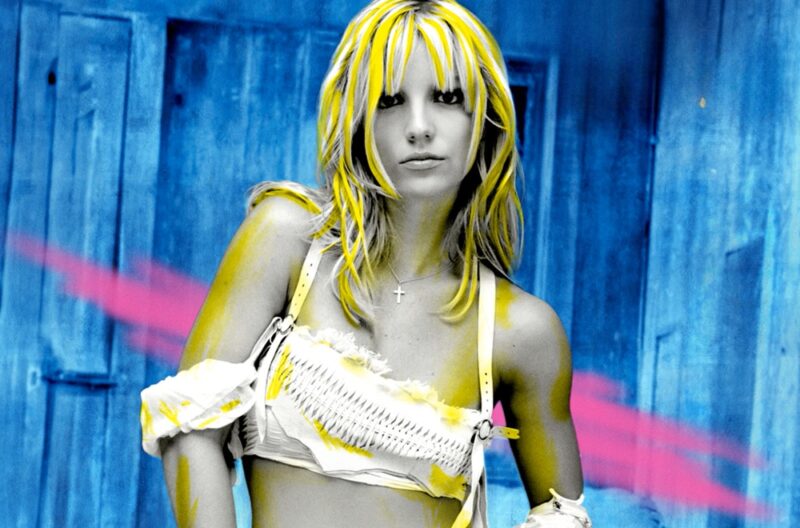
There are pop stars, there are superstars, and then there is Britney Spears. An artist whose cultural impact has long transcended the music itself, Spears possessed that almost indefinable quality that comes along perhaps once in a generation. She wasn’t merely selling records or setting trends; she was shaping the very language of pop culture, commanding an extraordinary level of fascination that few artists before or since have managed to replicate.
And if her first two albums established her as the undisputed princess of pop, her third, the appropriately self-titled Britney, was the moment she began rewriting the rules of her own kingdom.
Released on October 31st, 2001, Britney arrived at a fascinating crossroads in Spears’ career. At just 19 years old, she had already achieved the kind of commercial success most musicians could only dream of. Her 1999 debut, …Baby One More Time, and its record-breaking 2000 follow-up, Oops!… I Did It Again, had transformed the former Mickey Mouse Club performer into a global phenomenon. But with that success came an increasingly suffocating public perception, one that seemed determined to preserve her as an innocent teenage fantasy while simultaneously scrutinising every indication that she was growing up.
Britney was her answer.
Twenty-five years later, the album feels less like a conventional third release and more like a declaration of independence, even if the freedom Spears was seeking would ultimately prove far more complicated than anyone could have imagined.
And few lead singles have so emphatically announced an artist’s transformation as “I’m a Slave 4 U”. Produced by The Neptunes, the track was a startling departure from the polished Europop formula that had made Spears famous. Gone were the immediately explosive choruses and familiar Max Martin hooks, replaced by a slinky, hypnotic fusion of funk, R&B and minimalist electronic production.
Its layered, breathy vocals, unconventional structure and almost deliberately restrained chorus were the antithesis of what audiences had come to expect from a Britney Spears single, which is what precisely made it so extraordinary.
Even today, when pop artists are seemingly encouraged to reinvent themselves with every album cycle, “I’m a Slave 4 U” sounds remarkably daring. There is an assurance to its refusal to conform, a confidence in its groove and sensuality that few performers at Spears’ level of commercial visibility would have risked at the time. It wasn’t interested in delivering the biggest chorus in the room. It wanted to make the room move.
And then there was the music video.
With its sweat-drenched choreography, humid atmosphere and Spears’ increasingly commanding physicality, the Francis Lawrence-directed visual remains one of the defining music videos of the early 2000s. Every movement felt deliberate, every glance charged with an understanding of the camera, and every frame reinforced the arrival of a performer whose confidence had seemingly caught up with her phenomenal celebrity.
Of course, the song’s cultural immortality was cemented at the 2001 MTV Video Music Awards, where Spears writhed with a live albino Burmese python draped across her shoulders. The snake, the choreography, the sheer audacity of the spectacle: it was an instantly iconic performance that continues to serve as a benchmark for pop showmanship.
It wasn’t simply a memorable awards-show moment. It was the kind of performance that becomes part of the collective cultural memory, referenced and revisited decades after the fact. And what makes it all the more remarkable is that Spears was still a teenager.
For all the attention afforded to the album’s more provocative presentation, Britney was never exclusively about sexual awakening. Its greatest strength was how it captured the contradictions of a young woman attempting to establish her identity while the world insisted on defining it for her.
Nowhere is this more apparent than on “Overprotected”.
On its surface, the Max Martin and Rami Yacoub production was a natural continuation of Spears’ established pop sound, complete with an irresistible melody, punchy production and the kind of chorus that had become her commercial signature. But beneath that familiar sheen was something considerably more revealing.
Here was a young woman demanding the right to make her own decisions, to experience her own mistakes and to exist beyond the expectations imposed upon her.
In 2001, it was an accessible coming-of-age anthem. In the wake of everything subsequently revealed about Spears’ life, particularly the 13-year conservatorship that controlled her personal and professional affairs, its lyrics have acquired an almost unbearable poignancy. What once sounded like a teenager expressing frustration at being sheltered now feels eerily prophetic.
The song’s Darkchild remix, meanwhile, offered an altogether different energy. Rodney Jerkins‘ harder-edged production transformed the track into a muscular R&B-inflected statement, accompanied by a video that showcased some of the most electrifying choreography of Spears’ career.
Its celebrated dance breakdown remains a masterclass in physical expression, and the sequence has taken on additional significance through Spears’ later reflections on her relationship with Justin Timberlake. The anger and heartbreak she channelled into her performances during that period lend the routine an emotional intensity that extends beyond its technical brilliance.
There is something particularly affecting about revisiting that footage today. Spears was so often dismissed as a manufactured pop product, yet her ability to communicate through movement was extraordinary. Even when she wasn’t writing every lyric or producing every beat, she understood how to make the music unmistakably hers.
And while “I’m Not a Girl, Not Yet a Woman” may have been considered the album’s most overt statement of adolescent uncertainty, its emotional sincerity has only become more apparent with time.
Co-written by Dido and featured prominently in Spears’ 2002 feature film debut Crossroads, the ballad offered a gentler counterpoint to the album’s more provocative material. It captured that uncomfortable space between youth and adulthood, where independence is desired but certainty remains elusive.
The song was almost painfully literal in its messaging, but perhaps that was the point. Spears wasn’t pretending to have everything figured out. She was asking for the opportunity to discover who she might become.
One of the most rewarding aspects of revisiting Britney is recognising just how much of her future musical identity was already taking shape beyond its singles. “Lonely“, with its sharp rhythmic production and defiant lyrical attitude, remains one of the album’s most underrated moments. There is an unmistakable Janet Jackson influence in its harder-edged R&B sensibility, while its dismissive treatment of an unworthy romantic partner offers a refreshing contrast to the more innocent love songs of Spears’ earlier catalogue.
Similarly, “Let Me Be” feels like a thematic companion to “Overprotected”, its understated confidence reinforcing the album’s recurring demand for autonomy.
Both tracks flirt with the urban-influenced rhythms and more adventurous production choices Spears would explore more extensively on 2003’s In the Zone, and eventually push into darker, more experimental territory on 2007’s now-revered Blackout.
Yet Britney never entirely abandoned the bubblegum-pop sensibility that had made her a household name.
“Cinderella” and “Bombastic Love” retain the melodic immediacy and theatrical romanticism of her earlier material, while “That’s Where You Take Me” offers a dreamy, electronically textured sweetness. The disco-infused “Anticipating“, meanwhile, remains an irresistible slice of carefree pop, its celebration of female friendship feeling like a spiritual descendant of Madonna’s “Holiday”.
Even the album’s more divisive moments contribute to its appeal.
Her cover of “I Love Rock ‘n’ Roll” may not have reinvented the Joan Jett classic, but its playful swagger and association with Crossroads made it another recognisable chapter in Spears’ visual and musical evolution.
And then there’s “Boys”.
Another Neptunes production, the original album version leaned into a restrained, flirtatious R&B groove, while its later single remix replaced the original bridge with a Pharrell Williams feature, creating a more overtly playful exchange. The accompanying video, released in conjunction with Austin Powers in Goldmember, further demonstrated Spears’ ability to navigate the intersection of music, cinema and celebrity with seemingly effortless ease.
What becomes increasingly evident across the album’s running time is Spears’ remarkable instinct for melody and musical character. Even when navigating different producers, genres and lyrical perspectives, she maintained a recognisable sonic identity. It was a quality that critics didn’t always appreciate at the time, particularly when so much attention was directed towards her image rather than her artistry.
If Britney was the album that demonstrated Spears’ evolving musical ambition, the accompanying Dream Within a Dream Tour was the production that revealed the staggering extent of her abilities as a live performer.
Often regarded by fans as one of the greatest pop concert productions ever staged, the tour was a breathtaking fusion of theatrical storytelling, elaborate staging, demanding choreography and visual innovation. From its dreamlike opening sequences to the now-legendary finale that saw Spears performing beneath a spectacular curtain of falling water, the show elevated the traditional pop concert into something approaching a full-scale theatrical experience.
It was audacious, physically demanding and astonishingly ambitious, particularly for an artist still in the earliest years of her career. Spears herself has reflected fondly on the production, identifying it in her memoir, “The Woman in Me”, as her favourite tour. It’s easy to understand why.
The Dream Within a Dream Tour captured a performer operating at an extraordinary level of precision and charisma. Her choreography was intricate without sacrificing personality, her command of the stage seemingly instinctive, and her ability to anchor such an enormous production spoke to an artistic authority that was frequently overlooked.
It also represented a moment when the machinery surrounding Spears appeared to be working in service of her talent, rather than overwhelming it; watching footage today, it’s difficult not to marvel at the sheer scale of what she was achieving before her 21st birthday.
Part of the excitement surrounding the album’s 25th anniversary is the opportunity to revisit not only the music that defined the original release, but also material that has occupied an almost mythical place in Britney fandom for years.
The anniversary reissue brings together familiar B-sides, alternate versions, promotional recordings and previously unreleased tracks, offering a broader appreciation of the creative sessions that produced Britney. For longtime fans, some of these recordings have already achieved cult status.
“Intimidated“, the Janet Jackson-inspired B-side originally included on the “I’m a Slave 4 U” CD single, is a particularly welcome inclusion, its rhythmic confidence sitting comfortably alongside the album’s more adventurous R&B material.
The Darkchild remix of “Overprotected” and the single version of “Boys” are similarly essential additions, representing two distinct examples of how Spears’ music could be reimagined without losing its personality.
Then there’s “Right Now (Taste the Victory)“, the tropical, celebratory Pepsi anthem associated with the 2002 FIFA World Cup campaign. Though originally existing outside the album’s official track listing, its inclusion recalls an era when Spears’ commercial reach was practically unparalleled, with her presence extending across music, film, fashion and global advertising.
“She’ll Never Be Me”, a pop recording co-written with Timberlake, is another intriguing piece of the puzzle, offering a glimpse into the material that emerged from one of the most heavily scrutinised celebrity relationships of the period.
Perhaps most exciting, however, are the previously unheard recordings “Am I a Sinner”, “When I Say So” and “My Big Secret”, the latter another collaboration with The Neptunes. For years, these titles have circulated among dedicated fans as part of the mythology surrounding Spears’ recording sessions: songs known by name, discussed in fan communities and imagined through the possibilities of what they might have sounded like.
Their official arrival is more than a simple exercise in nostalgia. It allows listeners to better understand the range of material Spears was exploring during a particularly transformative period, while reinforcing just how much creative experimentation was taking place behind the album’s carefully constructed commercial presentation.
For an artist whose unreleased catalogue has inspired decades of speculation, the opportunity to finally hear these recordings in an official capacity is something of a pop archival event.
Twenty-five years on, Britney deserves to be celebrated not simply as a transitional album between the teenage phenomenon of …Baby One More Time and the more artistically adventurous woman of In the Zone, but as a defining achievement in its own right; A snapshot of a once-in-a-generation talent at the peak of her cultural influence, beginning to assert the independence that would become such a crucial part of her story.
The world may not have been ready to let Britney Spears grow up. But listening to Britney today, it’s abundantly clear that she was already moving ahead of it.
Britney (with “She’ll Never Be Me” inclusion) is now available to stream on all major music platforms. The Britney 25th Anniversary Edition will be available to stream from November 6th, 2026.
