

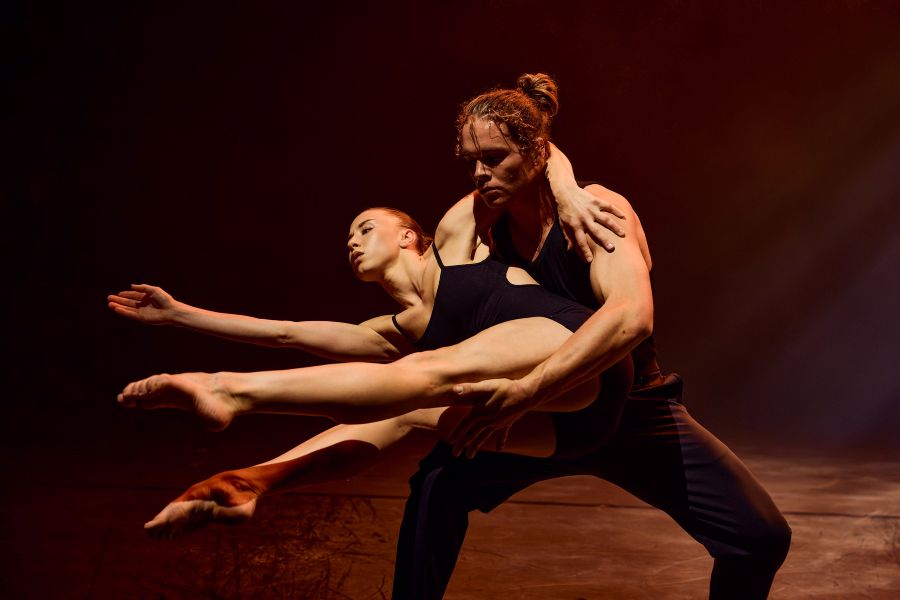
Triptych at the Sydney Opera House is a celebration of movement and light, told through three short works: Prologue, Unfolding and Epilogue. Artistic Director and choreographer Lewis Major comments that the three pieces are “built from the simple wish to keep making.” But there is nothing simple about Triptych.
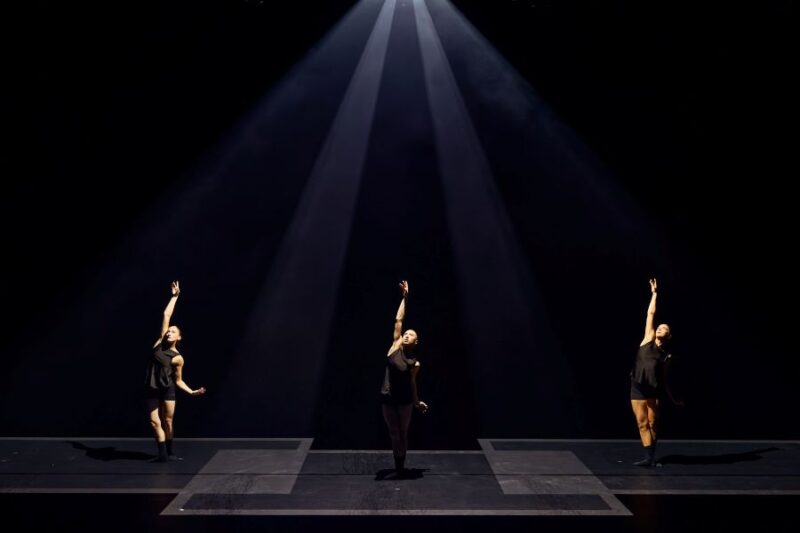
Prologue sets the tone of the evening with three dancers (Elsi Auricht-Faulks, Felicity Chadwick and Tahlia Russell) performing in unison. A stunning combination of modern dance and ballet, each dancer maintains a solid centre, their arms elongated and fluid. The lighting and visual design by Fausto Brusamolino is exceptional. Light and sound work together to create incredible visual effects. At moments, it appeared as if each performer was moving on their own stage, trapped within a prism of light.
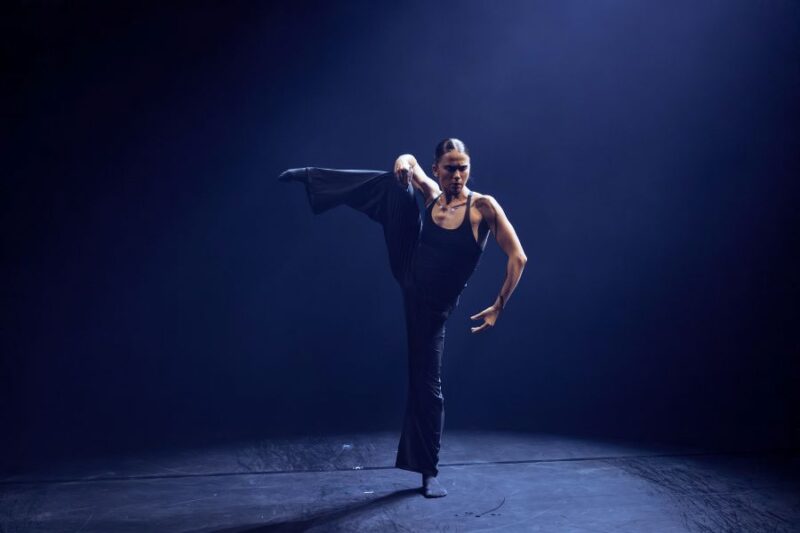
Epilogue: Act 1 – Lament begins with a solo performance by Felicity Chadwick. As she moves around the stage she uses a marker to draw across her body. Up one arm, across the chest and down the other side – Chadwick’s movements are mesmerising. The marker becomes an extension of her arm, once again elongating her limbs in a way that feels entirely organic.
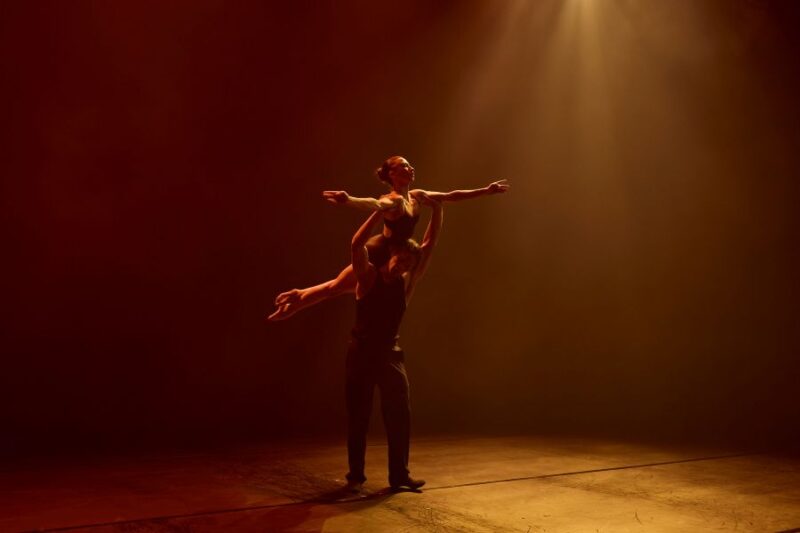
As she exits, a pas de deux begins with Alexander Abbot and Elsi Auricht-Faulks. The performance is emotive and vulnerable. Intense strength is demonstrated through a series of classic lifts and precise movement. The lighting design by Frankie Clarke creates a warm cocoon around the couple as they find themselves entwined. It is a superb example of partnered dancing.
As light sweeps across the stage, the four dancers (Abbot, Auricht-Faulks, Chadwick and Russell) begin to emerge in pieces. The darkness hides as much as the light reveals and it is within this contrast that they begin to move. Unfolding slowly builds power and momentum through heightened, controlled movement. The lighting and visual design by Brusamolino is extraordinary and contributes greatly to what makes this work so unique.
There are moments when the light ripples and fractures around the dancers as they move in slow, steady strokes, creating the illusion of being underwater. However, perhaps the most powerful act of visual trickery occurs when the light begins to spin in a circle. As the performer moves in time with the illumination, it miraculously appears as if the stage itself is spiralling. It is truly remarkable.
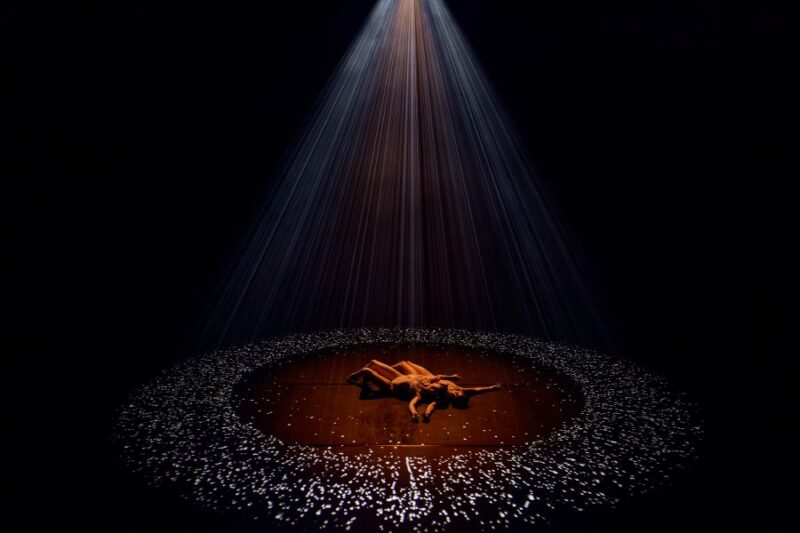
Epilogue: Act 2 begins slowly. Auricht-Faulks’ movements are restrained as the haunting sounds of Clair de Lune begin to permeate the space. As her limbs extend a white powder of flour-like consistency begins to drift off her body. Controlled at first, Auricht-Faulks’ movements become more fluid, the pace heightened. There is, again, a focus on elongated arm extension, reaching, searching, striving for something beyond the dark. Clarke’s lighting design heightens each movement and the way the powder floats and encases her body. The effect is dramatic and like nothing I’ve ever seen before.
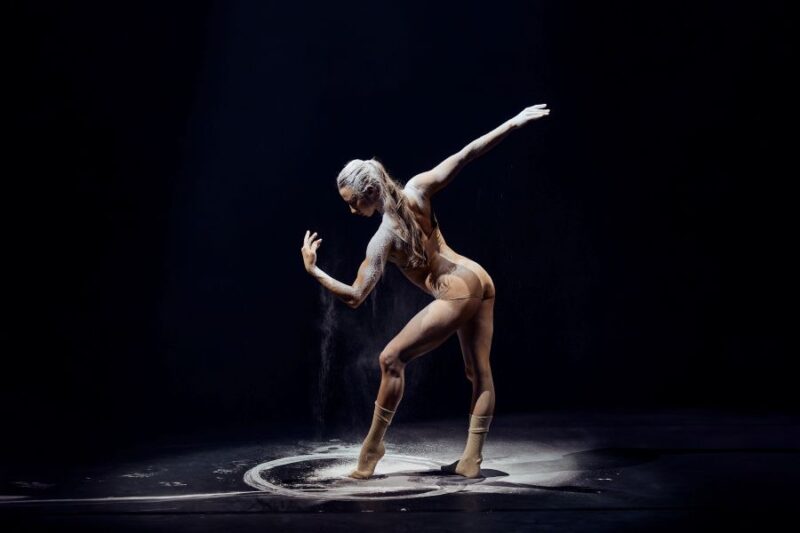
There is a sense of classicism contained within the chosen aesthetic, like the Venus de Milo come to life (and with arms), or Degas’ Little Dancer. The piece is hauntingly beautiful and demonstrates a clever interpretation of movement and how it can be depicted on stage.
Triptych is a revelation. Each performance feels like a study in strength and beauty. Light reflecting off muscle, creating patterns and making each motion magical. The work presents a perfect hybrid of music, light and movement in a way that you are not likely to forget.

FIVE STARS (OUT OF FIVE)
Triptych runs at the Sydney Opera House until 19 September 2026.
For more information and to purchase tickets head to the Sydney Opera House website.
Reviewer attended on 16 September 2026.
Photos: Daniel Boud
