

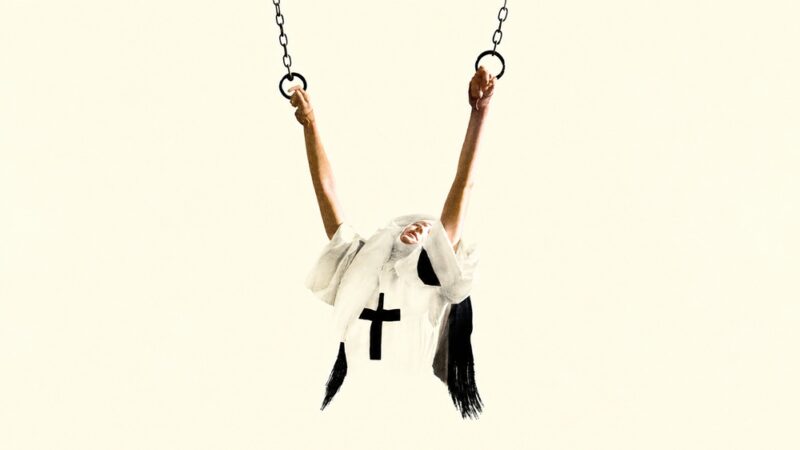
Few films have courted controversy quite as enthusiastically as Ken Russell’s The Devils, and even fewer have emerged from decades of censorship feeling quite so alarmingly relevant. First released in 1971, Russell’s feverish examination of religious fanaticism, sexual repression and institutional corruption has long existed under the shadow of its own notoriety, with its most provocative sequences removed before audiences could experience the filmmaker’s uncompromising vision. Now restored in glorious 4K, this extraordinary piece of cinema can finally be appreciated in all its confrontational, gloriously excessive splendour. And while the boundaries of what audiences are willing to accept on screen have shifted considerably over the intervening 55 years, The Devils remains genuinely disturbing, frequently outrageous and unexpectedly moving. More remarkably, beneath its blasphemous imagery and delirious theatricality lies a remarkably intelligent political tragedy whose observations about the manipulation of faith and the dangers of unchecked authority have lost none of their potency.
Set in 17th-century France and inspired by the infamous Loudun possessions, the film centres on Father Urbain Grandier (Oliver Reed), a charismatic, womanising priest whose determination to protect his city’s religious independence places him in the crosshairs of Cardinal Richelieu (Christopher Logue) and his political ambitions. When Sister Jeanne (Vanessa Redgrave), the physically afflicted superior of a local convent, develops an obsessive sexual fascination with Grandier, her frustrated desires become the foundation for accusations of witchcraft and demonic possession. What follows is an increasingly grotesque campaign of persecution, as religious hysteria is deliberately manufactured to justify the destruction of a man who has become inconvenient to those in power. Russell understands that the most frightening aspect of this story isn’t the possibility of supernatural evil, but the ease with which supposedly righteous individuals can manufacture it. Grandier is hardly an innocent in the conventional sense, yet his imperfections make his eventual moral courage all the more affecting. Reed is magnificent, balancing the character’s arrogance and sensuality with a gradually emerging spiritual conviction that lends the film an emotional weight its reputation might not suggest.
If Reed provides the film with its humanity, Redgrave supplies its wonderfully unhinged psychological intensity. Her performance as Sister Jeanne is nothing short of astonishing, requiring a level of physical commitment, emotional exposure and complete abandonment of vanity that very few performers would willingly embrace. She is at once pitiable, frightening, ridiculous and deeply tragic, a woman whose internalised shame and desperate longing have curdled into something profoundly destructive. Redgrave never allows Jeanne to become merely a grotesque caricature, even when Russell pushes her behaviour towards the furthest extremes of absurdity. Instead, she finds an uncomfortable vulnerability beneath the character’s increasingly fevered delusions, making her both an instrument of persecution and a victim of the very institution she serves. It is a performance of extraordinary fearlessness, and one that becomes even more impressive when considered alongside the film’s relentlessly heightened tone. That Russell can accommodate such theatrical excess without entirely sacrificing psychological complexity speaks to the remarkable control beneath his apparent madness.
Visually, The Devils is a staggering achievement, its meticulously constructed world feeling simultaneously historical, futuristic and nightmarishly artificial. Derek Jarman‘s extraordinary production design transforms religious spaces into imposing environments of blinding white surfaces and oppressive geometry, their clinical sterility standing in unsettling contrast to the increasingly chaotic behaviour unfolding within them. Russell’s camera rarely seems content to simply observe, instead plunging into the hysteria with an almost confrontational enthusiasm, while the elaborate costumes, feverish editing and jarring musical compositions contribute to an atmosphere of escalating madness. And then, of course, there is the infamous “Rape of Christ” sequence, one of the most notorious casualties of the film’s original censorship; the film’s local R18+ release in place for this alone. Restored to its intended place, it is a sight to behold in its sheer brazenness and gleeful blasphemy, a deliriously grotesque eruption of religious imagery and sexual frenzy that feels designed to offend practically every conceivable sensibility. Yet its inclusion is far from gratuitous. Juxtaposed against Grandier’s quieter expression of genuine faith, the sequence exposes the extraordinary hypocrisy of those who claim spiritual authority while indulging their most destructive impulses. Its restoration doesn’t simply make the film more shocking; it makes Russell’s intentions considerably clearer.
Perhaps the greatest surprise in revisiting The Devils is just how much of its darkness is accompanied by an almost wicked sense of humour. Russell recognises the inherent absurdity of supposedly devout men behaving with such theatrical depravity, and there are moments when the escalating exorcisms and performative displays of righteousness become so outrageously excessive that laughter feels like the only reasonable response. That comedy, however, gradually gives way to something far more devastating as the spectacle of manufactured possession becomes an excuse for humiliation, torture and ultimately murder. The transition is masterfully handled, forcing audiences to confront their own complicity in finding entertainment within the madness before revealing its horrifying consequences. For all the graphic sexuality and violence that contemporary cinema and television have increasingly normalised, The Devils still possesses a uniquely unsettling quality. Its provocations aren’t merely concerned with what the human body can endure or expose, but with how easily shame, desire and moral certainty can be weaponised against it. In an era of manufactured outrage, ideological extremism and public figures exploiting fear to consolidate authority, Russell’s vision feels less like a historical curiosity than an unnervingly recognisable reflection of the present.
What ultimately elevates The Devils beyond its scandalous reputation is the genuine compassion buried beneath its extravagant cruelty. For all his apparent delight in offending religious sensibilities, Russell isn’t attacking faith itself so much as those who corrupt it for personal and political gain. Grandier’s journey from self-indulgent provocateur to a man prepared to suffer for his convictions gives the film an unexpectedly profound emotional centre, while its final images of destruction carry a sorrow that lingers long after the more sensational sequences have faded. The restoration is undoubtedly cause for celebration, allowing the richness of Russell’s visual imagination and the full force of his artistic intentions to be experienced as they deserve. But it also serves as a reminder of how frequently challenging art is diminished by the very institutions it seeks to question. Outrageous, audacious, occasionally exhausting and utterly fearless, The Devils is a masterpiece of confrontational filmmaking that refuses to behave, apologise or make itself comfortable for its audience. More than half a century later, its capacity to shock remains remarkable. Its capacity to make us think, however, is what makes it essential.

FIVE STARS (OUT OF FIVE)
Ken Russell’s The Devils is screening in Australian theatres from October 29th, 2026.
